
FOMO (Fear of Missing Out)

FOMO: The Psychology That Drives Crypto Markets

FOMO (Fear of Missing Out) is responsible for more bad crypto decisions than any technical analysis could prevent. It’s the emotional trap that turns rational people into panic buyers.

FOMO is the anxiety that others are experiencing rewarding experiences from which one is absent. In crypto, it manifests as the urgent need to buy tokens that are rapidly increasing in price, often at the worst possible moment.

How FOMO Works in Crypto

Social media amplifies FOMO dramatically. Seeing others post gains from tokens you don’t own creates psychological pressure to join the party, regardless of fundamentals.

FOMO buying typically happens at peaks. When everyone’s talking about a coin and prices are parabolic, that’s usually when retail investors feel the strongest urge to buy.

This emotion-driven buying often coincides with smart money selling, creating the classic “buy high, sell low” pattern that destroys retail wealth.
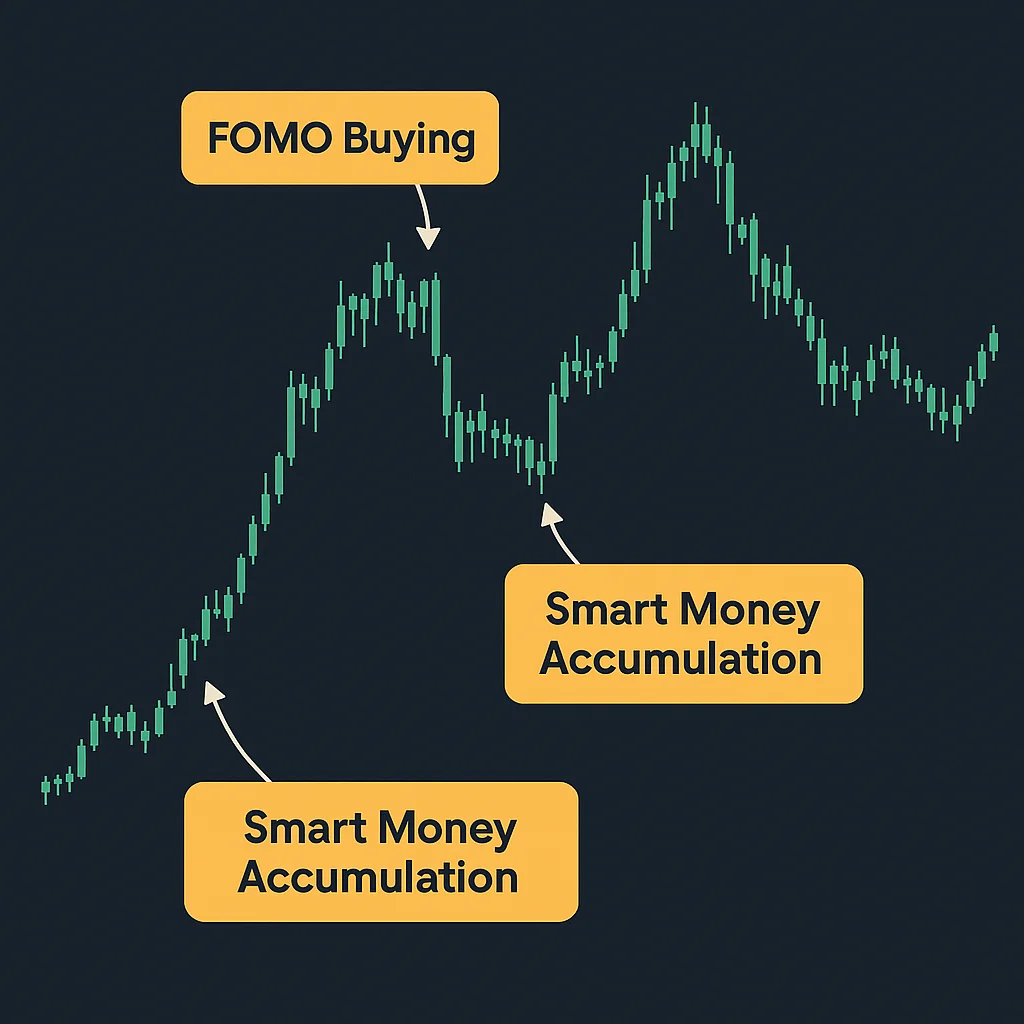
Price chart showing FOMO buying at peaks and smart money accumulation during dips

Real-World Examples

  • GameStop/Dogecoin 2021 – Retail FOMO drove massive price spikes followed by crashes
  • NFT mania – People buying expensive JPEGs at peaks due to social pressure
  • Altcoin season – Rotating FOMO between different “hot” tokens

Why Beginners Should Care

FOMO is your enemy in crypto markets. The time to buy is when nobody’s talking about crypto, not when your barber is giving you trading advice.

Develop systems to counter FOMO – dollar cost averaging, predetermined buy levels, and taking profits systematically. Emotional decisions in volatile markets typically lose money.

Related Terms: FUD, Bull Market, Pump and Dump, Diamond Hands

Back to Crypto Glossary

Similar Posts

  • Layer 1

    Layer 1: The Foundation Blockchain Layer 1 refers to the base blockchain protocol that processes transactions and maintains consensus. It’s the foundation that everything else builds on top of. Layer 1 (L1) is the main blockchain network that handles transaction processing, consensus, and security independently without relying on other blockchains. These are the foundational networks…

  • Price Feed

    Price Feed: Real-Time Market DataPrice feeds provide real-time cryptocurrency market data to applications and smart contracts that need current asset values. They're like financial news tickers that continuously update with the latest stock prices, but for digital assets and automated systems.Price feed refers to continuous streams of current market prices and trading data that supply…

  • Hardware Wallet

    Hardware Wallet: Your Crypto’s Personal Vault If you’re serious about crypto, you need a hardware wallet. It’s the difference between keeping cash in your wallet versus storing it in a bank vault. A hardware wallet is a physical device that stores your cryptocurrency private keys offline, away from internet hackers. Think of it as a…

  • Slippage

    Slippage: The Cost of Market Impact Slippage is the difference between expected and actual trade prices. It’s the tax you pay for moving markets when your trade is large relative to available liquidity. Slippage occurs when the execution price of a trade differs from the expected price due to market movement or insufficient liquidity. Large…

  • Hot Wallet

    Hot Wallet: Convenience Over Security Hot wallets are your everyday crypto spending accounts. They’re connected to the internet for easy access, but that convenience comes with security trade-offs. A hot wallet is a cryptocurrency wallet that maintains an active internet connection, allowing for quick and easy transactions. Think of it as your crypto checking account…

  • Derivatives

    Derivatives: Financial Contracts Based on Underlying AssetsCryptocurrency derivatives are financial contracts whose value depends on underlying crypto assets. They're like betting on sports outcomes instead of playing the game yourself.Derivatives are financial instruments that derive their value from underlying cryptocurrency assets, enabling trading, hedging, and speculation without direct ownership of the base assets. These include futures,…