
Tokenization

Tokenization: Converting Assets into Digital Tokens

Tokenization transforms real-world assets into blockchain-based tokens that can be traded, divided, and managed digitally. It’s like turning everything into tradeable game pieces.

Tokenization is the process of converting ownership rights to assets into digital tokens on a blockchain. This enables fractional ownership, easier trading, and programmable functionality for traditionally illiquid or indivisible assets.

How Tokenization Works

Asset representation creates digital tokens that correspond to ownership stakes in physical assets, intellectual property, or financial instruments.

Fractional ownership enables dividing expensive assets like real estate or artwork into smaller, more affordable investment units.

Smart contract automation can handle distributions, voting rights, and other asset management functions through programmable code.
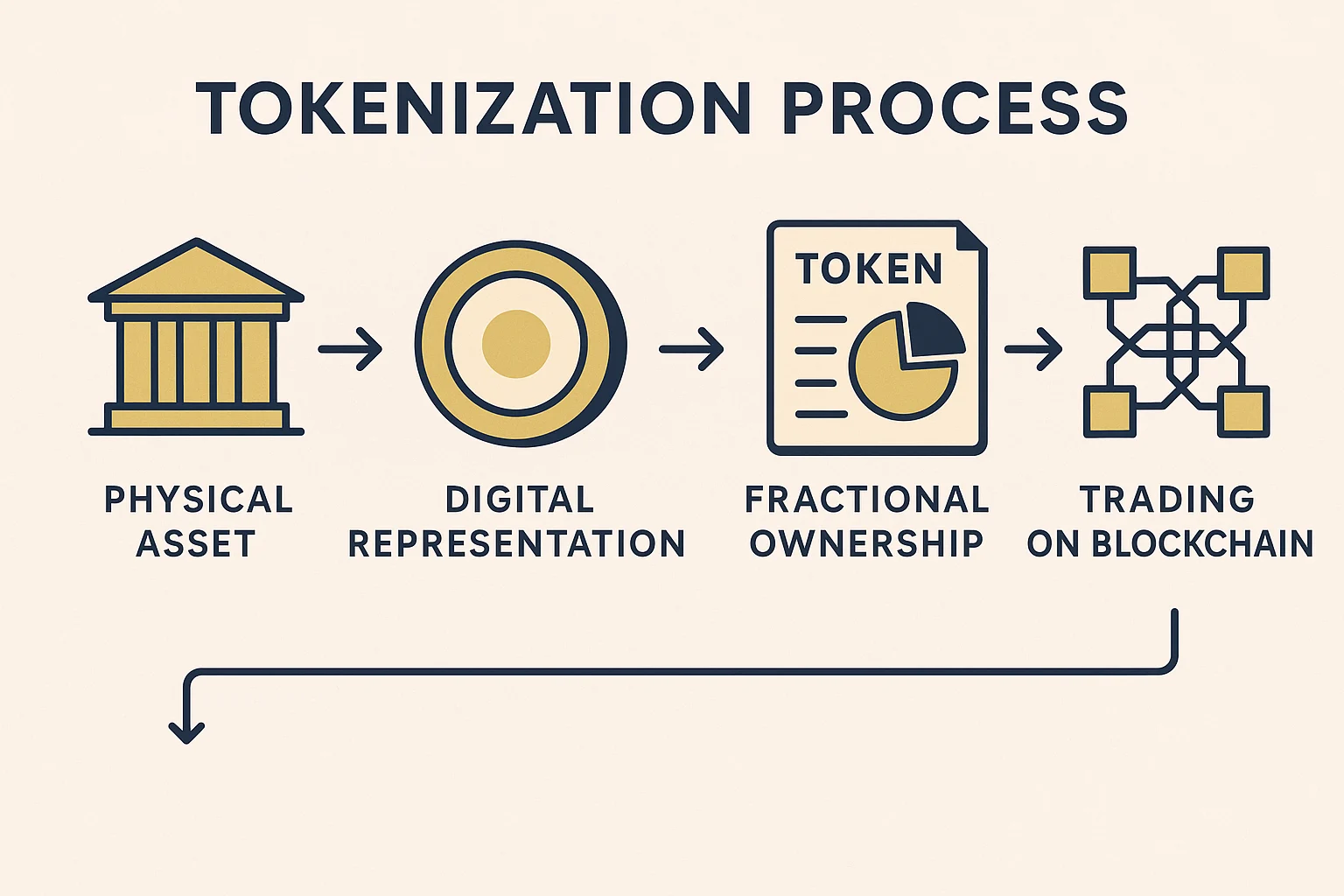
Infographic showing tokenization process: physical asset, digital representation, fractional ownership, and blockchain-based trading

Real-World Examples

  • Real estate tokens representing ownership shares in commercial or residential properties
  • Art tokenization enabling fractional ownership of expensive paintings or collectibles
  • Company equity tokens that provide ownership stakes and voting rights in businesses

Why Beginners Should Care

Access expansion to investment opportunities previously available only to wealthy individuals or institutions through fractional ownership.

Liquidity improvement for traditionally illiquid assets that can now be traded 24/7 on global markets.

Regulatory complexity as tokenized assets often fall under securities regulations that vary by jurisdiction and asset type.

Related Terms: Security Token, Fractional Ownership, Asset Backing, Digital Securities

Back to Crypto Glossary

Similar Posts

  • Fee Sharing

    Fee Sharing: Distributing Protocol RevenueFee sharing distributes a portion of protocol revenues to token holders, stakers, or other participants. It's like getting dividends from a company you own shares in.Fee sharing refers to mechanisms that distribute portions of protocol fees, transaction costs, or other revenues to token holders or network participants. This creates direct financial incentives…

  • Hash Function

    Hash Function: One-Way Mathematical TransformationHash functions are mathematical algorithms that convert input data into fixed-size output strings in a way that's easy to compute forward but practically impossible to reverse. They're like digital fingerprints for data.A hash function is a mathematical algorithm that takes input data of any size and produces a fixed-size output (hash)…

  • Quadratic Funding

    Quadratic Funding: Democratic Resource AllocationQuadratic funding uses mathematical formulas to allocate resources based on community preferences while preventing wealthy individuals from dominating funding decisions. It's democracy with math.Quadratic funding is a mechanism for allocating resources that gives more weight to the number of contributors than the amount contributed, using quadratic formulas to prevent wealthy individuals…

  • Cross-Chain Communication

    Cross-Chain Communication: Blockchain InteroperabilityCross-chain communication enables different blockchain networks to exchange information and coordinate actions seamlessly. It's like having universal translators that allow people speaking completely different languages to have detailed conversations and work together on complex projects.Cross-chain communication refers to protocols and technologies that enable different blockchain networks to share data, transfer assets, and…

  • Delegation

    Delegation: Assigning Voting or Staking RightsDelegation allows token holders to assign their voting power or staking rights to other participants while retaining ownership. It's like giving someone your vote without giving them your tokens.Delegation refers to assigning voting rights, staking authority, or other token-based powers to third parties while maintaining ownership of the underlying tokens. This…

  • Whitelisting

    Whitelisting: VIP Access to Token Sales Whitelisting gives select addresses permission to participate in exclusive token sales or access restricted features. It’s crypto’s version of the velvet rope at exclusive clubs. Whitelisting is the process of pre-approving wallet addresses for participation in token sales, exclusive features, or special privileges within crypto projects. Only whitelisted addresses…