
Gas Token

Gas Token: Optimizing Transaction Costs

Gas tokens store cheap gas for later use when network fees are high. It’s like buying gasoline when prices are low and using it when prices spike.

A gas token is a cryptocurrency designed to optimize transaction costs by storing cheap gas during low-demand periods for use when fees are expensive. These tokens exploit gas refund mechanisms to provide cost savings.

How Gas Tokens Work

Storage optimization involves executing transactions that store data when gas is cheap, then clearing that storage when gas is expensive to receive refunds.

Arbitrage mechanism captures value from gas price differences over time, allowing users to effectively “buy” gas at low prices for future use.

Refund exploitation uses Ethereum’s gas refund system where clearing storage returns gas to transaction senders, reducing effective transaction costs.
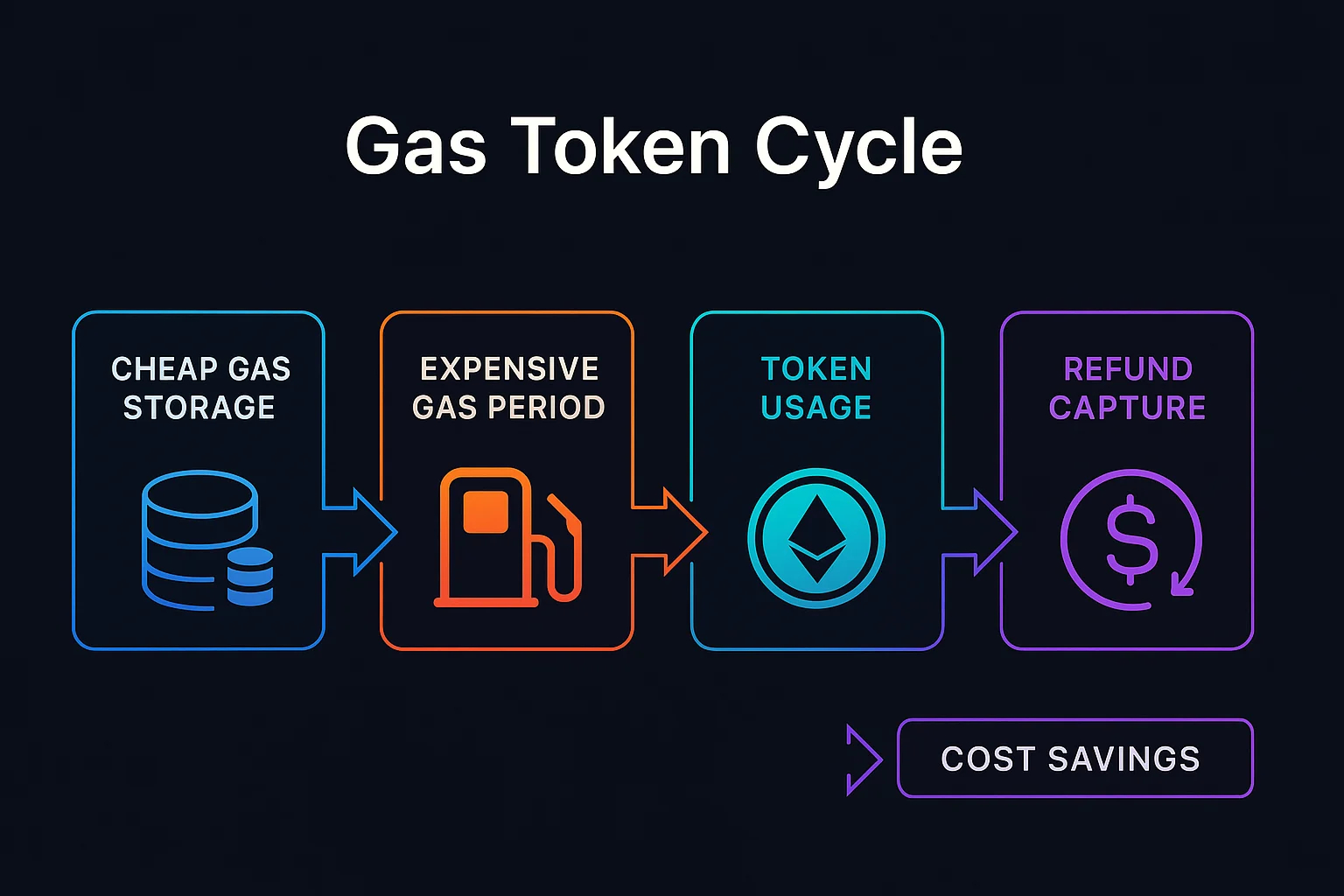
Gas token cycle showing cheap gas storage, high gas period usage, token burn refund, and cost savings

Real-World Examples

  • CHI token was designed specifically for gas optimization before EIP-3529 limited its effectiveness
  • GST2 provided gas savings through storage manipulation strategies
  • Various DeFi protocols have integrated gas optimization mechanisms into their operations

Why Beginners Should Care

Cost optimization strategies for regular DeFi users who can save significant amounts during high gas fee periods.

Technical complexity requires understanding gas mechanics and optimal usage timing to achieve meaningful savings.

Reduced effectiveness after Ethereum upgrades that limited gas refund mechanisms, making historical gas tokens less useful.

Related Terms: Gas Fees, Gas Optimization, Storage Refund, Transaction Cost

Back to Crypto Glossary

Similar Posts

  • Voting

    Voting: Decentralized Decision MakingVoting in cryptocurrency enables token holders to participate in governance decisions that shape project direction and protocol changes. It's like being a shareholder who can vote on company decisions, except the company is a decentralized protocol owned by its users.Voting refers to the democratic process where cryptocurrency token holders express preferences on…

  • State Channel

    State Channel: Off-Chain Interaction Highways State channels enable instant, low-cost transactions between parties by moving interactions off-chain while maintaining blockchain security. It’s like having a private highway between two cities. A state channel is a two-way communication channel between blockchain users that enables off-chain transactions with on-chain security guarantees. Participants can transact instantly and cheaply,…

  • Community

    Community: Decentralized Project StakeholdersCommunity refers to the users, developers, investors, and supporters who participate in and contribute to cryptocurrency projects. They're like the citizens of a digital nation working toward common goals.Community encompasses all stakeholders who participate in cryptocurrency projects including users, developers, investors, validators, and supporters who collectively contribute to project success. Strong communities drive…

  • Derivatives

    Derivatives: Financial Contracts Based on Underlying AssetsCryptocurrency derivatives are financial contracts whose value depends on underlying crypto assets. They're like betting on sports outcomes instead of playing the game yourself.Derivatives are financial instruments that derive their value from underlying cryptocurrency assets, enabling trading, hedging, and speculation without direct ownership of the base assets. These include futures,…

  • zk-SNARKs

    zk-SNARKs: Zero-Knowledge Proof Technologyzk-SNARKs are cryptographic proofs that verify information without revealing the underlying data. They're like proving you know a secret without telling anyone what the secret actually is.zk-SNARKs (Zero-Knowledge Succinct Non-Interactive Arguments of Knowledge) are cryptographic proofs that allow verification of computations without revealing the inputs or intermediate steps. This enables privacy and scalability…

  • Consensus Layer

    Consensus Layer: Agreement Coordination SystemThe consensus layer coordinates agreement among network participants about the valid state of the blockchain. It's like having a voting system that everyone trusts to make fair decisions.The consensus layer is the component of blockchain architecture responsible for coordinating agreement among network participants about transaction validity and blockchain state. This layer ensures…