
Crypto Vesting Schedule

Crypto Vesting Schedule: Gradual Token Release

Vesting schedules control when team members, investors, or community members can access their allocated tokens. It’s like having a time-locked savings account that prevents dumping.

A crypto vesting schedule defines when and how allocated tokens become available for use, typically spreading releases over months or years to prevent market dumping. Different stakeholders usually have different vesting terms based on their role and contribution timing.

How Vesting Schedules Work

Time-based releases unlock predetermined percentages of tokens at regular intervals, such as monthly or quarterly distributions over 2-4 years.

Cliff periods require waiting a minimum time before any tokens become available, ensuring initial commitment before any rewards are accessible.

Performance milestones may trigger additional unlocks based on project achievements, user adoption, or revenue targets rather than pure time passage.
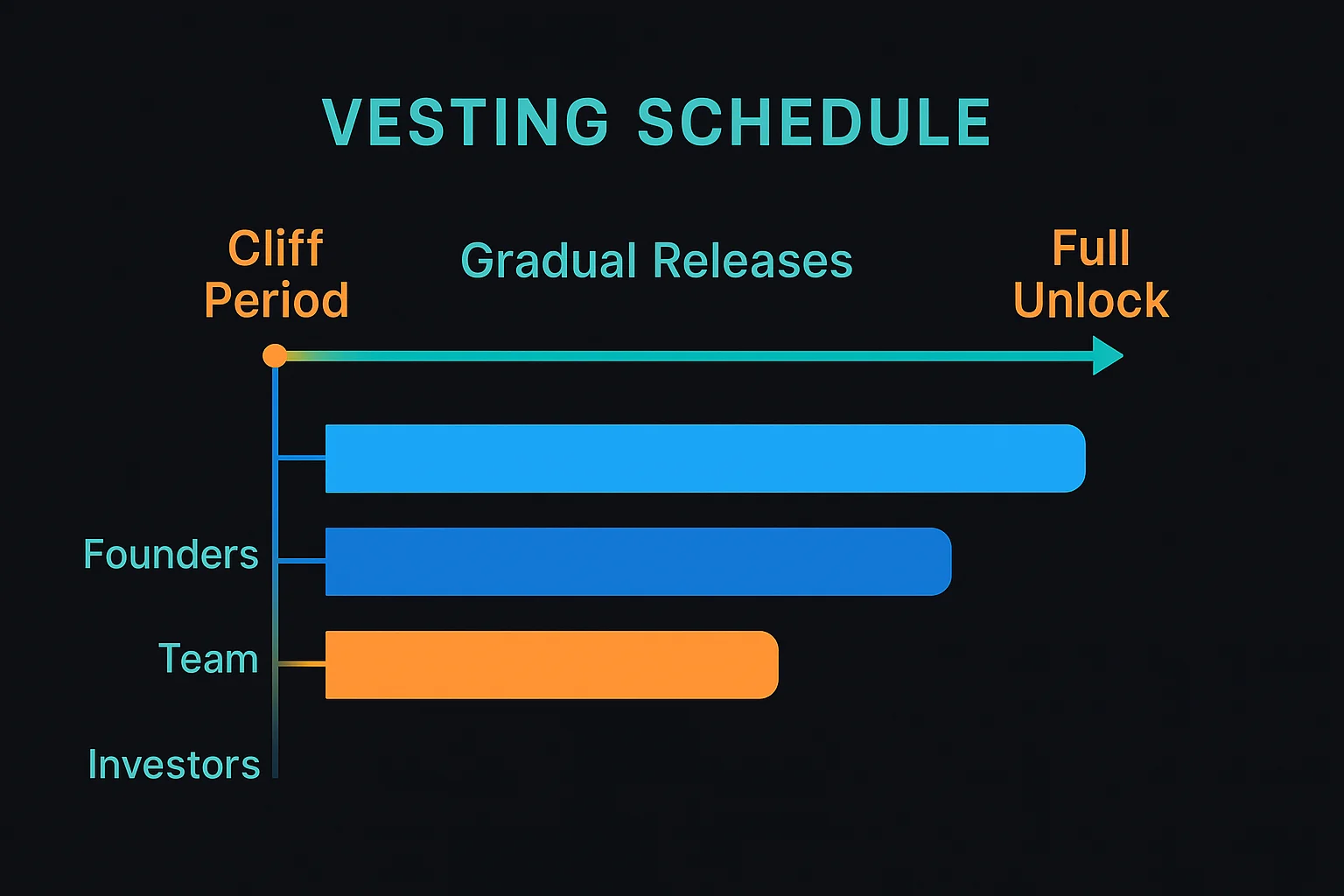
Vesting schedule timeline showing cliff period, gradual token releases, and full unlock across founders, team, and investors

Real-World Examples

  • Team allocations often have 1-year cliffs with 4-year total vesting to ensure long-term commitment
  • Investor tokens may have shorter 6-month cliffs with 2-year vesting periods
  • Community rewards sometimes have no cliffs but longer overall vesting to encourage participation

Why Beginners Should Care

Market pressure understanding helps predict potential selling pressure as large token allocations become available for trading.

Team incentives alignment through long vesting periods suggests teams are committed to long-term project success rather than quick exits.

Investment timing considerations around major vesting events that could significantly impact token prices through increased supply.

Related Terms: Token Allocation, Lock-up Period, Team Incentives, Supply Schedule

Back to Crypto Glossary

Similar Posts

  • Back Running

    Back Running: Following Profitable TransactionsBack running involves placing transactions immediately after profitable transactions to capture secondary opportunities. It's like following successful traders to pick up the crumbs they leave behind.Back running is a MEV extraction strategy where bots place transactions immediately after profitable transactions to capture residual value or secondary opportunities. This technique exploits the predictable…

  • Difficulty

    Difficulty: Mining Competition AdjustmentDifficulty refers to how hard it is to mine new blocks in proof-of-work cryptocurrencies, automatically adjusting to maintain consistent block times. It's like a video game that gets harder when you're doing too well and easier when you're struggling.Difficulty describes the measure of how computationally challenging it is to find valid proof-of-work…

  • Data Availability Layer

    Data Availability Layer: Ensuring Information Access Data availability layers ensure that blockchain data remains accessible for verification without requiring full nodes to store everything. It’s like having a library system where you can verify any book exists without storing them all. A data availability layer guarantees that blockchain transaction data is published and remains accessible…

  • ICO

    ICO: Initial Coin OfferingAn ICO is a fundraising method where new cryptocurrency projects sell tokens to early investors. It's like an IPO for stocks, but for new cryptocurrency tokens instead of company shares.An Initial Coin Offering (ICO) is a fundraising mechanism where cryptocurrency projects sell tokens to investors to raise capital for development and operations. ICOs…

  • Voting

    Voting: Decentralized Decision MakingVoting in cryptocurrency enables token holders to participate in governance decisions that shape project direction and protocol changes. It's like being a shareholder who can vote on company decisions, except the company is a decentralized protocol owned by its users.Voting refers to the democratic process where cryptocurrency token holders express preferences on…

  • Regulatory Risk

    Regulatory Risk: Government Policy UncertaintyRegulatory risk refers to potential losses from government policy changes affecting cryptocurrency legality, taxation, or usage restrictions. It's like the risk that traffic laws might change and make your car illegal to drive.Regulatory risk encompasses potential negative impacts from government actions including bans, restrictions, taxation changes, or new compliance requirements affecting…