
HODL

HODL: The Art of Doing Nothing

HODL started as a typo but became crypto’s most important investment strategy. Sometimes the best move is not moving at all.

HODL means holding cryptocurrency long-term regardless of short-term price volatility, derived from a misspelled “hold” in a 2013 Bitcoin forum post. It represents the strategy of buying and holding rather than actively trading.

How HODL Works

Time arbitrage leverages crypto’s long-term growth trends while avoiding the stress and fees of constant trading. HODLers believe in underlying technology adoption over short-term price movements.

Emotional discipline prevents panic selling during crashes and FOMO buying during peaks. HODLing removes timing decisions that most retail traders get wrong.

Dollar cost averaging often accompanies HODL strategies – consistently buying fixed dollar amounts regardless of price to smooth out volatility over time.
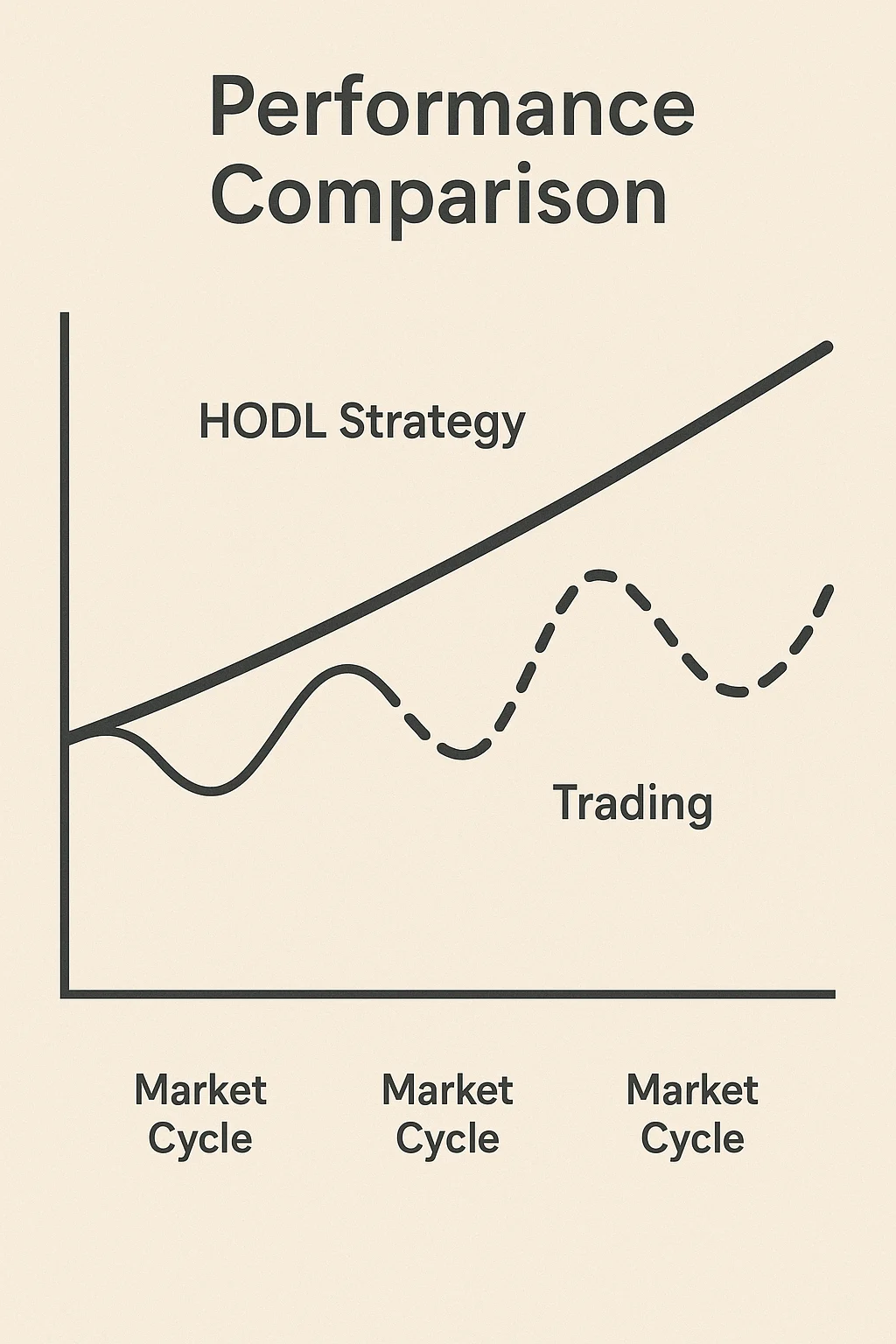
Line chart comparing HODL strategy with trading over multiple market cycles, showing steady gains for HODL and volatility for trading

Real-World Examples

  • Early Bitcoin adopters who held through multiple 80%+ crashes are now wealthy
  • Ethereum holders from 2016 experienced massive gains despite severe volatility
  • “Bitcoin pizza guy” spent 10,000 BTC on pizza in 2010 – worth $300+ million today

Why Beginners Should Care

HODLing beats trading for most people. Studies show active traders typically underperform simple buy-and-hold strategies after accounting for fees and taxes.

Psychological benefits include reduced stress from daily price watching and elimination of complex timing decisions that even professionals struggle with.

Tax advantages in many jurisdictions favor long-term holding over short-term trading, reducing overall tax burden on crypto gains.

Related Terms: Diamond Hands, DCA, Bull Market, Bear Market

Back to Crypto Glossary

Similar Posts

  • Vesting Schedule

    Vesting Schedule: Gradual Token ReleaseA vesting schedule controls when tokens become available to holders over time rather than all at once. It's like a salary that gets paid out in installments to ensure long-term commitment.A vesting schedule is a predetermined timeline that controls when cryptocurrency tokens become available for use, sale, or transfer. These schedules prevent…

  • Fractional Ownership

    Fractional Ownership: Shared Asset OwnershipFractional ownership enables multiple people to own portions of expensive assets that would be difficult to purchase individually. It's like buying a slice of expensive real estate instead of the whole property.Fractional ownership refers to dividing ownership of assets into smaller portions that can be owned by multiple parties, typically enabled…

  • Social Recovery

    Social Recovery: Community-Based Account RecoverySocial recovery allows regaining access to cryptocurrency accounts through trusted contacts rather than relying solely on seed phrases. It's like having friends hold spare keys to your house.Social recovery is a wallet security mechanism that enables account recovery through a network of trusted contacts rather than requiring users to manage seed…

  • Wallet Recovery

    Wallet Recovery: Restoring Access to Lost FundsWallet recovery enables regaining access to cryptocurrency holdings when primary access methods fail. It's like having backup keys to your digital safe when you lose the originals.Wallet recovery encompasses methods for restoring access to cryptocurrency wallets when devices are lost, passwords forgotten, or primary authentication fails. Proper recovery planning prevents…

  • Native Interop

    Native Interop: Built-in Cross-Chain CommunicationNative interoperability refers to blockchain networks designed from the ground up to communicate with other chains without requiring external bridges or intermediaries. It's like speaking multiple languages fluently.Native interoperability describes blockchain architectures that include cross-chain communication capabilities as core features rather than external additions. These systems can interact with other networks through…

  • Cross-Chain Bridge

    Cross-Chain Bridge: Connecting Blockchain Islands Cross-chain bridges move assets between different blockchains, connecting isolated cryptocurrency ecosystems. They’re the highways between blockchain cities, but sometimes the bridges collapse. A cross-chain bridge is a protocol that enables the transfer of tokens, data, or smart contract calls between different blockchain networks. Bridges solve blockchain interoperability by creating connections…