
Intent-Centric Protocols

Intent-Centric Protocols: What You Want, Not How

Intent-centric protocols let users specify desired outcomes while the system figures out how to achieve them. Instead of manually executing swap steps, you just say “I want USDC” and the protocol handles everything.

Intent-centric protocols allow users to express desired end states rather than specific transaction sequences. Users declare what they want to achieve, and sophisticated solvers compete to find the most efficient execution path.

How Intent-Centric Protocols Work

Intent declaration specifies desired outcomes like “swap my ETH for at least 1,800 USDC” without defining the specific DEXs, routes, or steps required.

Solver competition involves multiple parties competing to fulfill intents at the best possible prices, creating market-driven optimization.

Execution abstraction hides complex multi-step operations from users, who only see the final result rather than intermediate transactions.
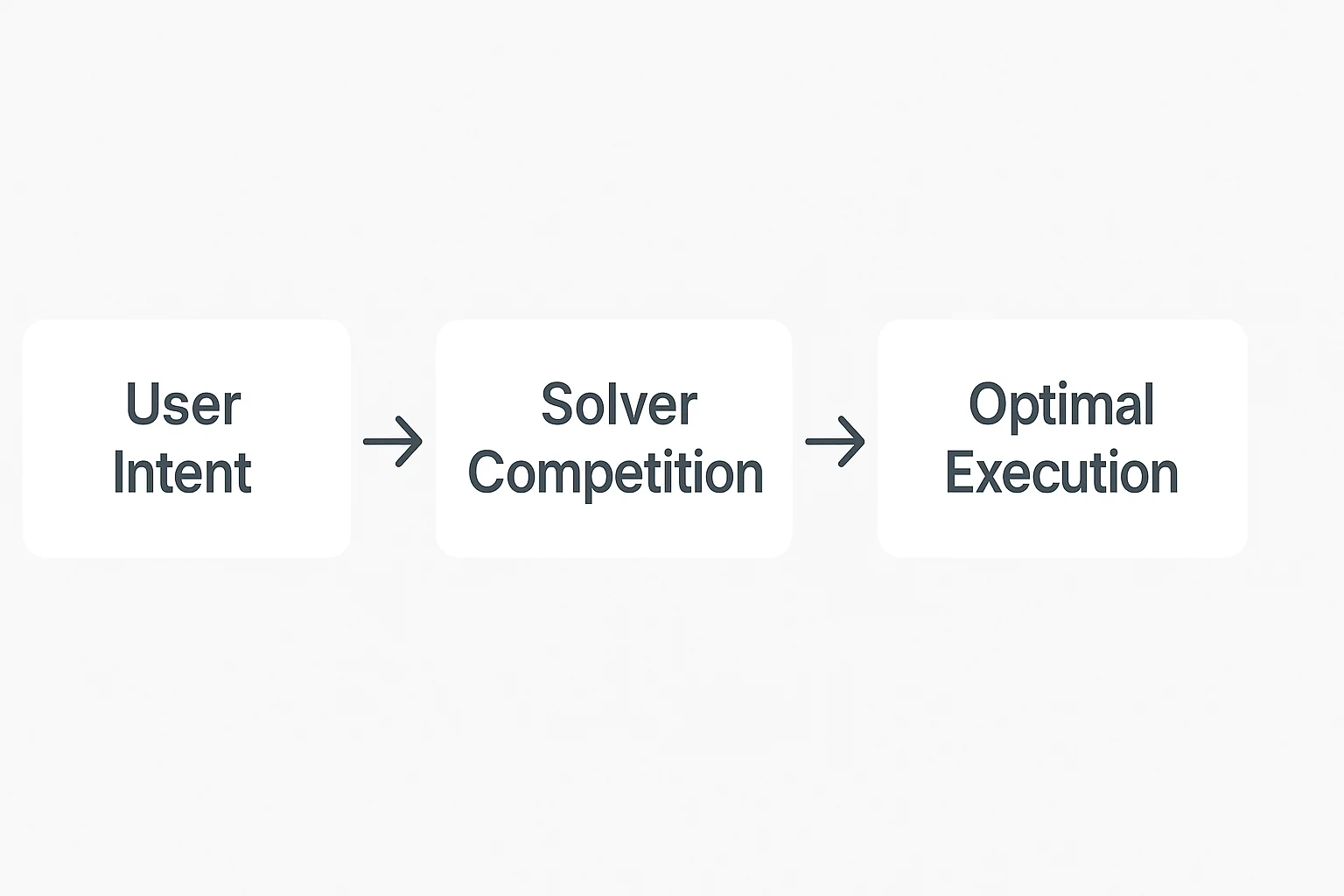
Intent-centric workflow showing user intent leading to solver competition, optimal execution, and desired outcome.

Real-World Examples

  • CoW Protocol uses intent-based trading with solver competition for better prices
  • 1inch Fusion combines intent expression with automated execution optimization
  • UniswapX enables gasless swaps through intent-based order matching

Why Beginners Should Care

Simplified complexity eliminates the need to understand optimal routing, slippage management, and multi-step DeFi operations.

Better execution through solver competition often achieves better prices than manual transaction construction.

Reduced friction makes DeFi more accessible by hiding technical complexity behind simple intent expressions.

Related Terms: MEV Protection, Solver Network, Order Flow

Back to Crypto Glossary

Similar Posts

  • EVM Compatibility

    EVM Compatibility: Ethereum Code EverywhereEVM compatibility allows blockchain networks to run Ethereum applications without modification. It's like having different computers that can all run the same software.EVM compatibility refers to blockchain networks that can execute Ethereum smart contracts and support Ethereum-based applications without requiring code changes. This enables easy migration and cross-deployment of Ethereum applications.How EVM…

  • Single-Sided Staking

    Single-Sided Staking: Simplified Yield Farming Single-sided staking lets you earn yield on individual tokens without providing liquidity pairs or facing impermanent loss. It’s like earning interest on a savings account without loan risk. Single-sided staking allows users to stake individual tokens to earn rewards without needing to provide paired assets or manage liquidity pool positions….

  • Utility Token

    Utility Token: Digital Tools with PurposeUtility tokens provide access to specific products, services, or features within blockchain ecosystems. They're like arcade tokens that let you play specific games or use certain services.A utility token is a cryptocurrency designed to provide access to a product, service, or feature within a specific blockchain ecosystem rather than serving…

  • Gas Price

    Gas Price: Cost of Ethereum ComputingGas price determines how much you pay per unit of computational work on Ethereum. It's like setting the hourly rate for blockchain computing services.Gas price is the amount of cryptocurrency (usually measured in gwei) that users are willing to pay for each unit of gas consumed by their Ethereum transactions. Higher…

  • Token Economy

    Token Economy: Digital Asset EcosystemsToken economies are systems where digital tokens serve as medium of exchange, store of value, and incentive mechanisms within specific ecosystems. They're like creating your own mini-economy with digital money.A token economy refers to an ecosystem where cryptocurrency tokens facilitate economic activity, incentivize participation, and coordinate behavior among participants. These economies can…

  • Scholarship

    Scholarship: Educational Funding for Crypto LearningScholarship programs provide financial support for cryptocurrency and blockchain education. They're like grants that help people access learning opportunities they might not otherwise afford.Scholarship refers to financial assistance programs that support cryptocurrency and blockchain education through funding for courses, conferences, research, or degree programs. These programs increase access to specialized education…