
Sharding

Sharding: Splitting Networks for Speed

Sharding divides blockchain networks into smaller pieces that process transactions in parallel. It’s like adding more checkout lanes at the grocery store – same capacity, faster service.

Sharding is a scaling technique that splits a blockchain network into smaller, parallel chains called shards that process transactions independently. Each shard handles a subset of all transactions, dramatically increasing total network throughput.

How Sharding Works

Parallel processing allows multiple shards to process different transactions simultaneously instead of every node processing every transaction sequentially.

State partitioning divides account balances and smart contract data across shards so that most transactions only need to touch one shard for validation.

Cross-shard communication handles transactions that involve accounts or contracts on different shards, requiring coordination between multiple shard chains.
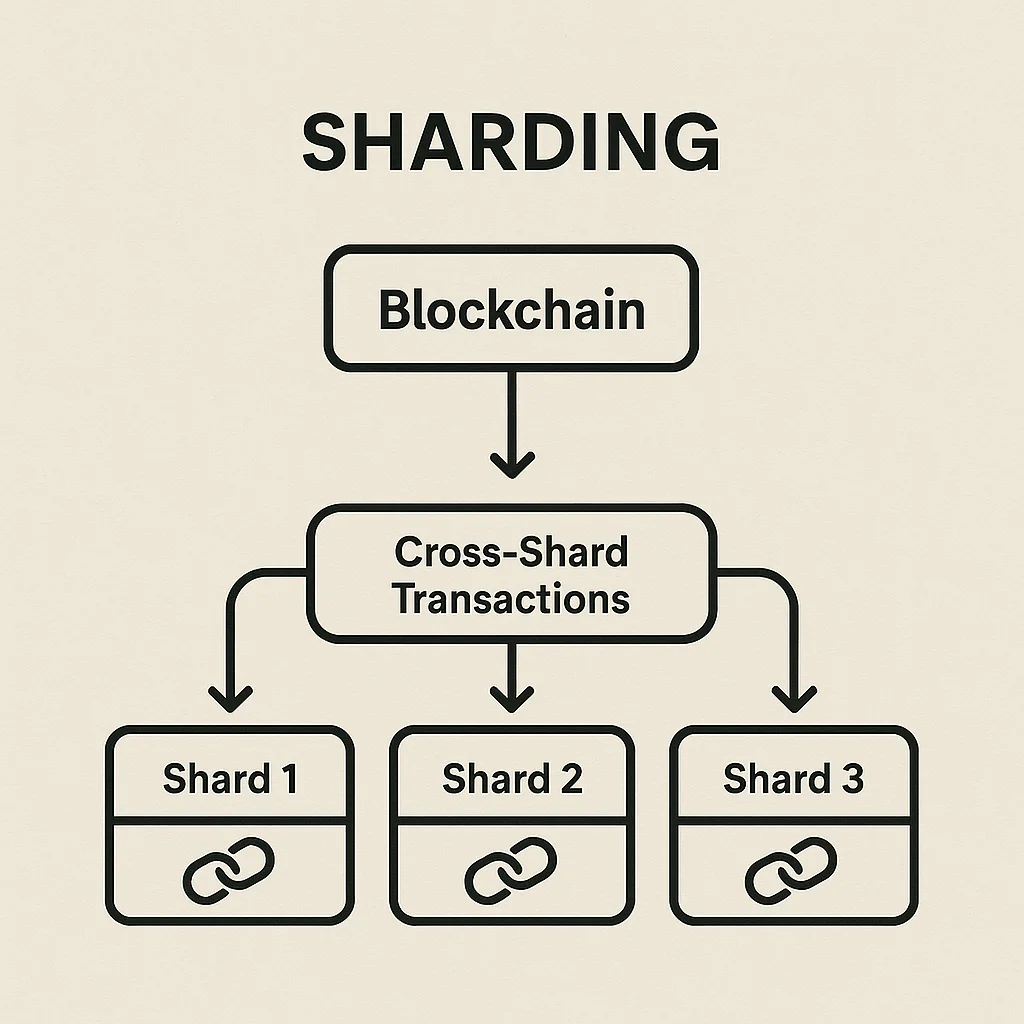
Diagram showing blockchain sharding with a main blockchain splitting into multiple parallel shards and cross-shard transaction bridges

Real-World Examples

  • Ethereum 2.0 plans 64 shard chains to increase transaction capacity dramatically
  • Zilliqa implemented sharding from launch, processing thousands of transactions per second
  • Near Protocol uses dynamic sharding that adjusts capacity based on network demand

Why Beginners Should Care

Scalability solutions like sharding aim to reduce transaction fees and confirmation times that currently limit blockchain adoption for everyday use.

Complexity increases with sharding as developers must consider cross-shard interactions and users might face different experiences depending on which shard their transactions use.

Security trade-offs exist since individual shards have less security than the full network, requiring careful design to prevent shard-specific attacks.

Related Terms: Layer 2, Scalability, Throughput, Cross-Chain

Back to Crypto Glossary

Similar Posts

  • Computational Mining

    Computational Mining: Earning Through Processing PowerComputational mining involves providing computer processing power to networks in exchange for cryptocurrency rewards. It's like renting out your computer's brain for digital money.Computational mining refers to using computer hardware to perform calculations for blockchain networks or distributed computing projects in exchange for cryptocurrency payments. This enables monetizing spare computing resources.How…

  • Fee Sharing

    Fee Sharing: Distributing Protocol RevenueFee sharing distributes a portion of protocol revenues to token holders, stakers, or other participants. It's like getting dividends from a company you own shares in.Fee sharing refers to mechanisms that distribute portions of protocol fees, transaction costs, or other revenues to token holders or network participants. This creates direct financial incentives…

  • Governance Attack

    Governance Attack: Exploiting Democratic Decision SystemsA governance attack involves manipulating blockchain governance mechanisms to make malicious changes to protocols. It's like rigging an election to pass laws that benefit you at everyone else's expense.A governance attack refers to exploiting voting or decision-making mechanisms in blockchain protocols to implement changes that benefit attackers while harming other…

  • Security Token

    Security Token: Regulated Digital AssetsSecurity tokens are cryptocurrency tokens that represent ownership in real-world assets and are subject to securities regulations. They're like digital stock certificates that comply with financial laws.Security tokens are cryptocurrency tokens that represent ownership stakes in real-world assets and are subject to securities regulations and compliance requirements. These bridge traditional finance with…

  • Reputation System

    Reputation System: Building Digital TrustReputation systems track and score user behavior to enable trust and coordination in decentralized environments. They're like credit scores but for overall trustworthiness and competence.A reputation system records and evaluates user actions, contributions, and behavior to create trustworthiness scores that enable cooperation in decentralized systems. These systems help identify reliable participants without…

  • Price Stability

    Price Stability: Maintaining Consistent ValuePrice stability refers to maintaining consistent cryptocurrency values over time with minimal volatility. It enables practical use as medium of exchange and store of value.Price stability describes the characteristic of maintaining relatively constant value over time with limited price fluctuations. This stability is essential for practical cryptocurrency adoption in payments and savings.How…