
Intent-Centric Protocols

Intent-Centric Protocols: What You Want, Not How

Intent-centric protocols let users specify desired outcomes while the system figures out how to achieve them. Instead of manually executing swap steps, you just say “I want USDC” and the protocol handles everything.

Intent-centric protocols allow users to express desired end states rather than specific transaction sequences. Users declare what they want to achieve, and sophisticated solvers compete to find the most efficient execution path.

How Intent-Centric Protocols Work

Intent declaration specifies desired outcomes like “swap my ETH for at least 1,800 USDC” without defining the specific DEXs, routes, or steps required.

Solver competition involves multiple parties competing to fulfill intents at the best possible prices, creating market-driven optimization.

Execution abstraction hides complex multi-step operations from users, who only see the final result rather than intermediate transactions.
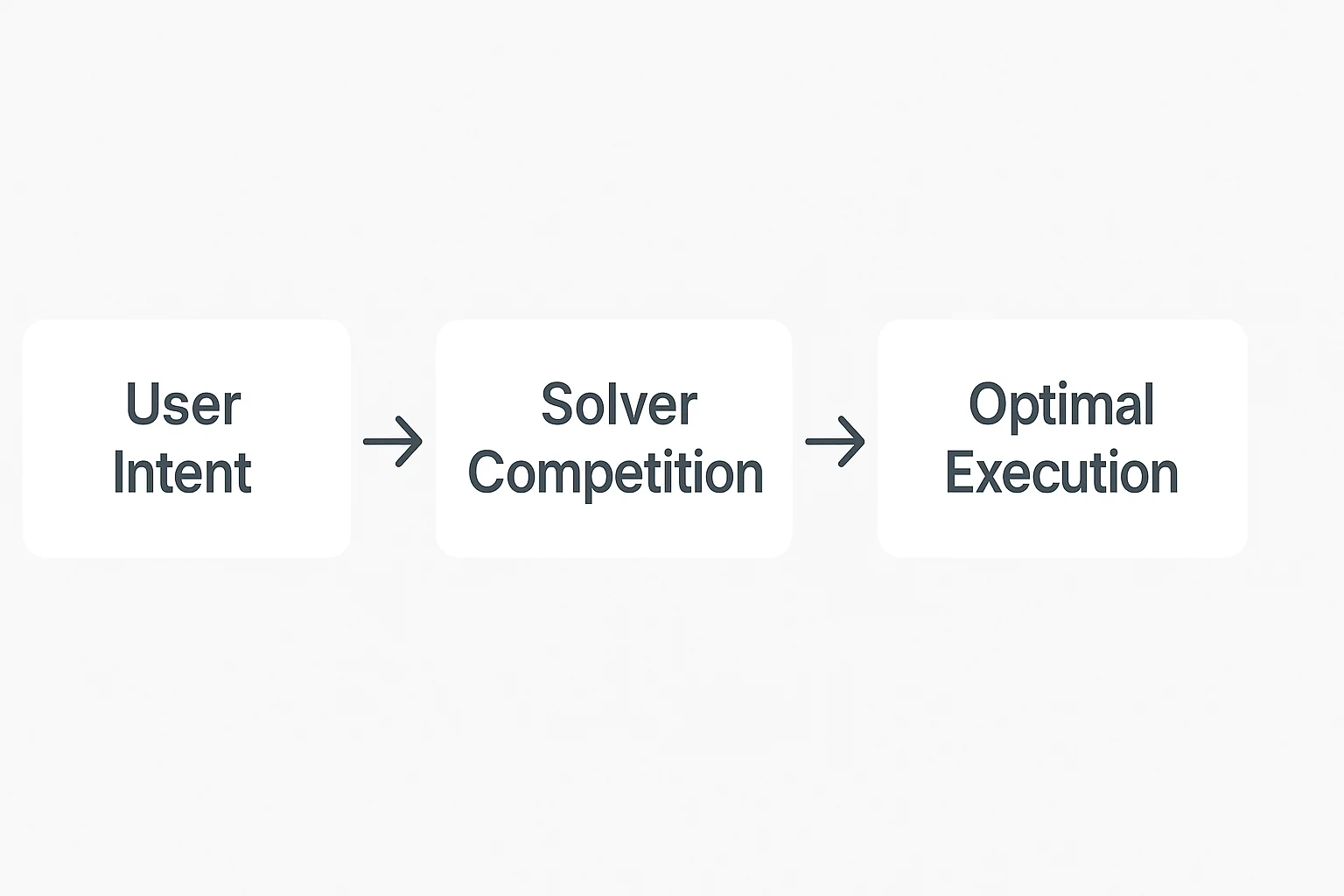
Intent-centric workflow showing user intent leading to solver competition, optimal execution, and desired outcome.

Real-World Examples

  • CoW Protocol uses intent-based trading with solver competition for better prices
  • 1inch Fusion combines intent expression with automated execution optimization
  • UniswapX enables gasless swaps through intent-based order matching

Why Beginners Should Care

Simplified complexity eliminates the need to understand optimal routing, slippage management, and multi-step DeFi operations.

Better execution through solver competition often achieves better prices than manual transaction construction.

Reduced friction makes DeFi more accessible by hiding technical complexity behind simple intent expressions.

Related Terms: MEV Protection, Solver Network, Order Flow

Back to Crypto Glossary

Similar Posts

  • CoinJoin

    CoinJoin: Bitcoin Transaction MixingCoinJoin combines multiple Bitcoin transactions into single transactions to obscure the connection between inputs and outputs. It's like mixing your laundry with other people's to make it harder to tell which clothes belong to whom.CoinJoin is a Bitcoin privacy technique that combines multiple transactions from different users into a single transaction, making…

  • Block Building

    Block Building: Transaction Assembly ProcessBlock building is the process of selecting and organizing transactions into blocks that will be added to the blockchain. It's like a chef choosing ingredients and assembling them into a complete meal that satisfies both taste and nutritional requirements.Block building refers to the process where miners or validators select, order, and…

  • Leverage

    Leverage: Borrowing Money to Amplify TradesLeverage lets you control larger positions than your actual capital by borrowing funds from exchanges or platforms. It's like using a lever to lift heavy objects – small movements create big effects.Leverage in cryptocurrency trading allows borrowing funds to increase position sizes beyond available capital, amplifying both potential profits and…

  • Smart Contract

    Smart Contract: Code That Enforces Agreements Smart contracts are why crypto is bigger than just digital money. They’re agreements that execute themselves automatically when conditions are met. A smart contract is computer code that automatically executes agreement terms when predetermined conditions are satisfied. No lawyers, no courts, no arguing – just math and code enforcing…

  • Gas Limit

    Gas Limit: Setting Your Transaction Budget Gas limit is the maximum amount of gas you’re willing to spend on a transaction. Set it too low and your transaction fails. Set it too high and you overpay for simple operations. Gas limit is the maximum amount of computational work (measured in gas units) that a user…

  • Token Incentives

    Token Incentives: Rewarding Desired BehaviorToken incentives use cryptocurrency rewards to encourage specific behaviors or participation in networks and protocols. They're like loyalty points that actually have real value and utility.Token incentives refer to mechanisms that distribute cryptocurrency tokens to users who perform desired actions or contribute value to networks and protocols. These align user behavior with…