
Appchain

Appchain: Application-Specific Blockchains

Appchains are blockchains designed for single applications or use cases rather than general-purpose smart contracts. They’re like having a dedicated highway for one type of vehicle instead of mixed traffic.

An appchain is a blockchain optimized for a specific application or use case rather than supporting general-purpose smart contracts. This specialization enables better performance, lower costs, and features tailored to specific needs.

How Appchains Work

Single-purpose optimization allows appchains to remove unnecessary features and optimize for specific use cases like gaming, payments, or social media.

Custom consensus mechanisms can be designed for specific application requirements rather than using generic blockchain consensus suitable for all applications.

Direct value capture enables applications to capture MEV and transaction fees directly rather than paying them to general-purpose blockchain validators.
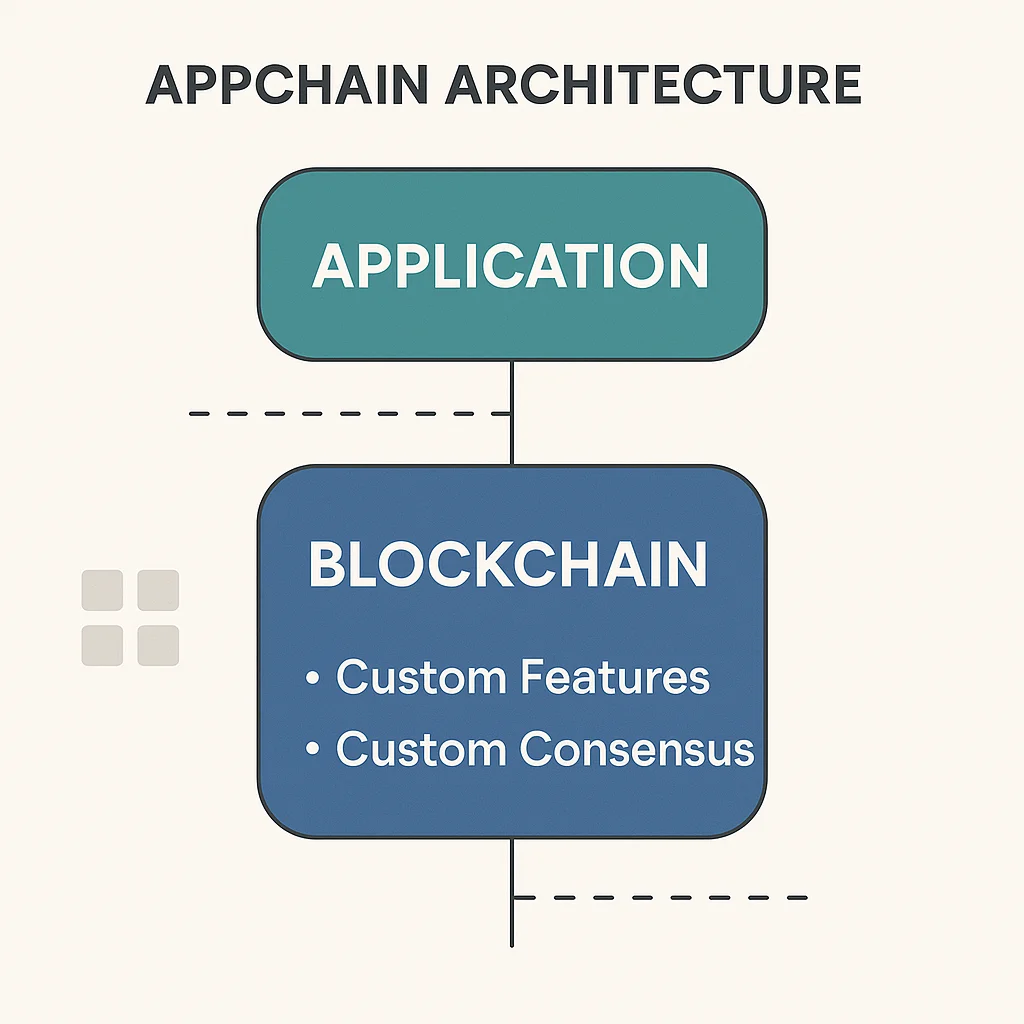
Appchain architecture diagram showing a specialized blockchain optimized for a specific application with custom features and consensus.

Real-World Examples

  • DYdX v4 runs on its own appchain optimized for derivatives trading
  • Immutable X provides a gaming-focused chain with NFT-optimized features
  • Cosmos ecosystem enables easy appchain creation through the Cosmos SDK

Why Beginners Should Care

Better performance from specialization can provide faster transactions, lower fees, and features impossible on general-purpose chains.

Sovereignty benefits give applications full control over their blockchain parameters, governance, and economic models.

Fragmentation concerns as appchains may reduce composability and liquidity compared to applications sharing common infrastructure.

Related Terms: Cosmos, Sovereignty, Application Layer,

Back to Crypto Glossary

Similar Posts

  • Bot Trading

    Bot Trading: Automated Market ParticipationBot trading involves using automated software programs to execute cryptocurrency trades based on predetermined strategies and market conditions. It's like having a tireless assistant that trades for you around the clock.Bot trading refers to using automated software to execute cryptocurrency trades, monitor markets, and implement trading strategies without constant human supervision. These…

  • Light Client

    Light Client: Lightweight Blockchain AccessA light client provides blockchain access without downloading the entire blockchain history. It's like having a summary instead of reading the entire encyclopedia.A light client is a blockchain node that maintains network connectivity and basic functionality without storing the complete blockchain history or state. This enables resource-constrained devices to participate in blockchain…

  • Altcoin

    Altcoin: Every Cryptocurrency That Isn’t Bitcoin “Altcoin” literally means “alternative to Bitcoin.” Some are innovative improvements, others are marketing experiments, and many are outright scams. An altcoin is any cryptocurrency other than Bitcoin. The term covers everything from Ethereum’s smart contract platform to obscure meme coins with dog themes. How Altcoins Work Each altcoin attempts…

  • Credentials

    Credentials: Proof of Identity and QualificationsCredentials are verifiable proofs of identity, qualifications, or achievements that can be digitally verified without contacting issuing authorities. They're like diplomas that anyone can instantly authenticate.Credentials refer to digital or physical documents that prove identity, qualifications, achievements, or authorizations, increasingly being tokenized and verified through blockchain technology. These enable trustless verification…

  • Merkle Tree

    Merkle Tree: Efficient Data Verification Merkle trees enable efficient verification of large datasets without downloading everything. They’re like having a fingerprint for an entire library that proves any book belongs. A Merkle tree is a binary tree structure where each leaf represents a data element and each branch contains cryptographic hashes of its children. The…

  • Supply Schedule

    Supply Schedule: Token Issuance TimelineA supply schedule defines when and how many new tokens will be created over time. It's like a release calendar that shows exactly when new cryptocurrency will enter circulation.A supply schedule is a predetermined plan that specifies the timing and quantity of new token issuance over time. This schedule provides transparency about…