
Wallet Signature Spoofing

Wallet Signature Spoofing: Fake Authorization Attacks

Wallet signature spoofing tricks users into signing malicious transactions that appear legitimate but actually authorize harmful actions. It’s like signing a contract where the fine print changes after you sign.

Wallet signature spoofing involves presenting misleading information about transaction contents to trick users into signing authorizations for unintended actions. Attackers exploit user interface vulnerabilities or social engineering to gain unauthorized access.

How Signature Spoofing Works

UI manipulation displays fake transaction details while the actual signature authorizes completely different actions than what users believe they’re approving.

Contract switching presents legitimate contracts for inspection but substitutes malicious contracts at signature time before users can detect the change.

Social engineering combines technical deception with psychological manipulation to pressure users into quickly signing without careful verification.
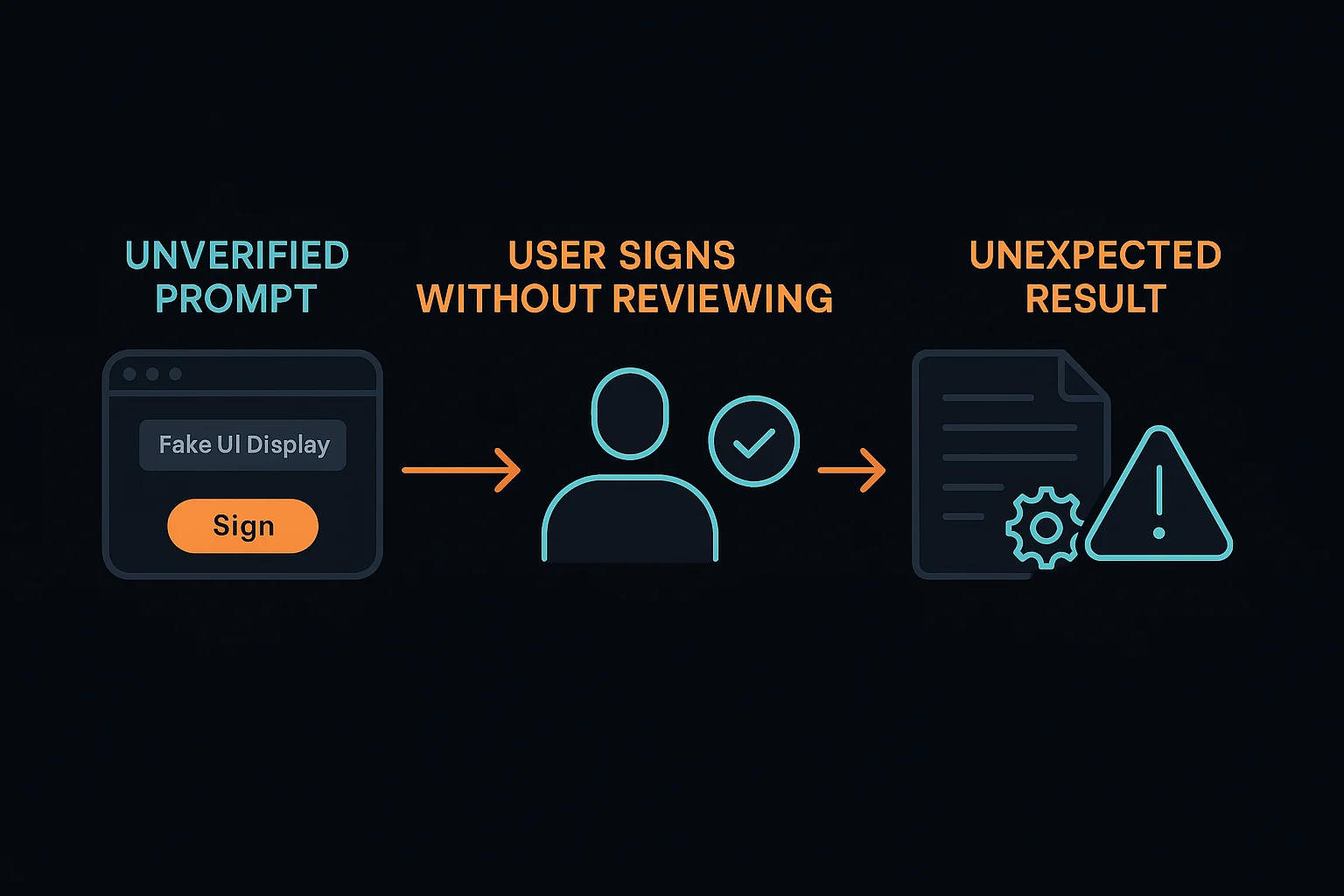
Infographic showing how an unverified prompt can lead to a user signing an unintended transaction

Real-World Examples

  • Fake NFT marketplace signatures that actually approve unlimited token spending
  • Phishing websites that spoof popular DeFi protocols to steal user authorizations
  • Malicious browser extensions that modify transaction data after users review but before signing

Why Beginners Should Care

Verification importance requires carefully checking all transaction details, contract addresses, and permissions before signing any wallet transactions.

Hardware wallet benefits provide additional verification steps that make signature spoofing attacks more difficult to execute successfully.

Recovery challenges since spoofed signatures can grant extensive permissions that enable ongoing fund theft until manually revoked.

Related Terms: Phishing Attack, Transaction Verification, Hardware Wallet

Back to Crypto Glossary

Similar Posts

  • Lockup Period

    Lockup Period: Temporary Access RestrictionsLockup periods prevent token holders from selling or transferring their holdings for specified time frames. It's like having a certificate of deposit that you can't cash out early.A lockup period is a predetermined time frame during which cryptocurrency holders cannot sell, transfer, or access their tokens. These restrictions are typically enforced through…

  • Validator Set Rotation

    Validator Set Rotation: Dynamic Network Security Validator set rotation periodically changes which nodes validate transactions, preventing long-term centralization and maintaining network security through diversity. It’s like jury rotation for blockchain consensus. Validator set rotation is a mechanism that periodically changes which validators are active in securing a blockchain network. This prevents permanent centralization and ensures…

  • Liquid Restaking

    Liquid Restaking: Flexible High-Yield Staking Liquid restaking combines the capital efficiency of liquid staking with additional yield from securing multiple networks. It’s like having your cake and eating it too, but with slashing risks. Liquid restaking allows staked assets to secure additional protocols while remaining liquid through tokenized representations. Users can earn enhanced yields from…

  • Community

    Community: Decentralized Project StakeholdersCommunity refers to the users, developers, investors, and supporters who participate in and contribute to cryptocurrency projects. They're like the citizens of a digital nation working toward common goals.Community encompasses all stakeholders who participate in cryptocurrency projects including users, developers, investors, validators, and supporters who collectively contribute to project success. Strong communities drive…

  • MEV (Maximal Extractable Value)

    MEV (Maximal Extractable Value): The Hidden Tax on DeFi MEV is the extra profit that miners and validators can extract by reordering, including, or excluding transactions within blocks. It’s like cutting in line at the blockchain cafeteria. Maximal Extractable Value (MEV) is the additional profit that block producers can capture by strategically ordering transactions, beyond…

  • State Channel

    State Channel: Off-Chain Interaction Highways State channels enable instant, low-cost transactions between parties by moving interactions off-chain while maintaining blockchain security. It’s like having a private highway between two cities. A state channel is a two-way communication channel between blockchain users that enables off-chain transactions with on-chain security guarantees. Participants can transact instantly and cheaply,…