
Modular Execution Layer
Modular Execution Layer: Specialized Transaction Processing
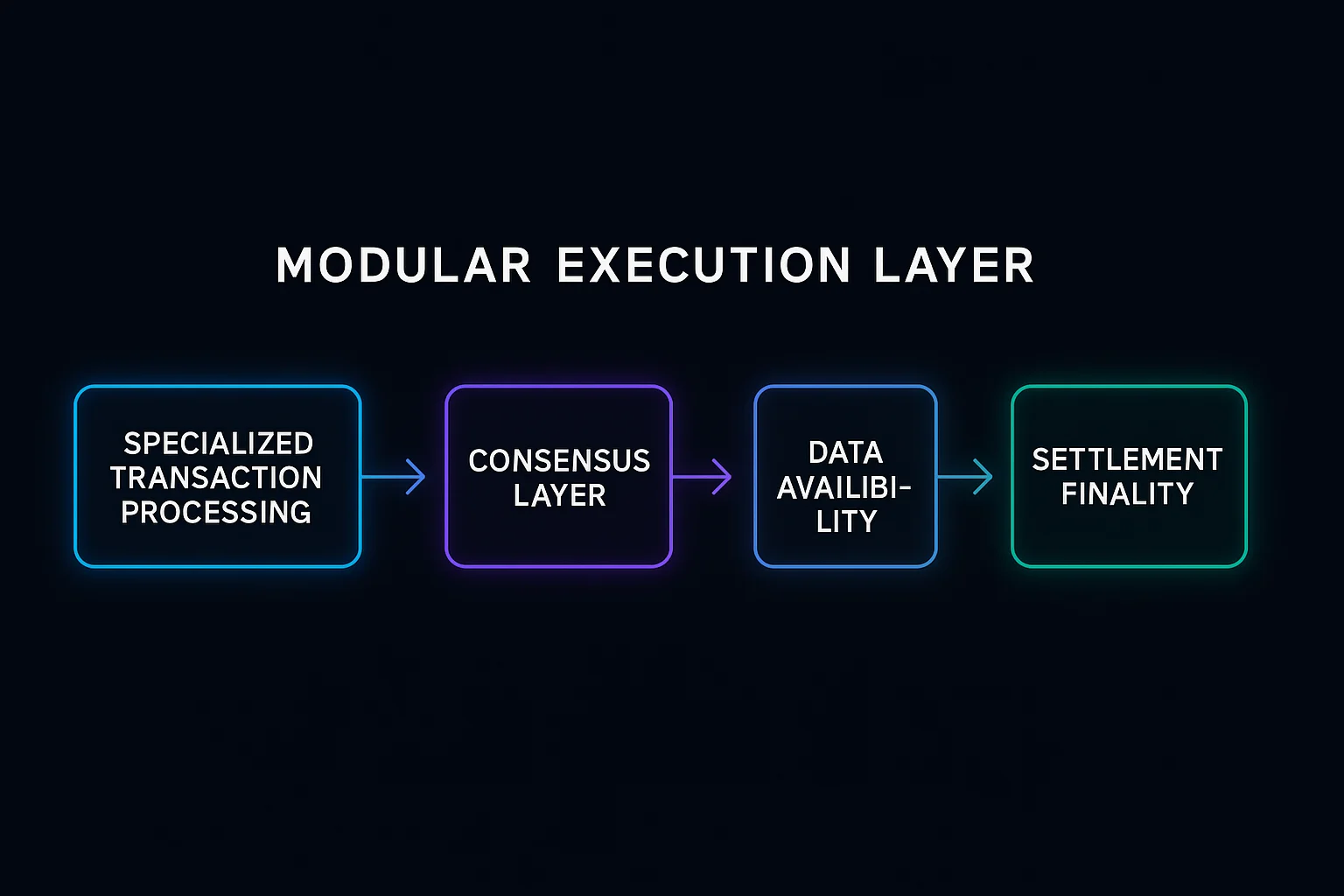
Modular execution layers handle transaction processing separately from consensus and data availability. It’s like having specialized assembly lines instead of one worker doing everything.
A modular execution layer is a specialized blockchain component that focuses solely on processing transactions and executing smart contracts while relying on other layers for consensus and data availability. This separation enables optimization for specific execution requirements.
How Modular Execution Works
Execution specialization optimizes specifically for transaction processing speed, smart contract efficiency, or particular application requirements.
Layer separation enables using different consensus mechanisms, data availability solutions, or settlement layers while maintaining execution compatibility.
Scalability improvements through parallel execution environments that can process more transactions than monolithic blockchain architectures.
Real-World Examples
- Fuel Network provides optimized execution for high-throughput applications
- Eclipse offers Solana execution with Ethereum settlement and Celestia data availability
- Movement Labs builds Move-based execution layers for various blockchain stacks
Why Beginners Should Care
Performance optimization through specialization can dramatically improve transaction speed and reduce costs compared to general-purpose chains.
Flexibility benefits as execution layers can be swapped or upgraded without changing other parts of the blockchain stack.
Complexity trade-offs as modular architectures require understanding interactions between multiple specialized components.
Related Terms: Modular Blockchain, Execution Environment, Layer Separation