
Cross-Chain Messaging

Cross-Chain Messaging: Inter-Blockchain Communication

Cross-chain messaging enables smart contracts on different blockchains to communicate and trigger actions across networks. It’s like having a universal translator for blockchain conversations.

Cross-chain messaging allows smart contracts on different blockchain networks to send data, trigger functions, and coordinate actions across multiple chains. This enables true interoperability beyond simple asset transfers.

How Cross-Chain Messaging Works

Message protocols standardize how different blockchains can communicate, including data formats, verification methods, and delivery confirmation.

Relay networks transport messages between chains through validators, oracles, or specialized infrastructure that monitors multiple networks.

Verification systems ensure message authenticity and prevent manipulation through cryptographic proofs, multi-signature schemes, or consensus mechanisms.
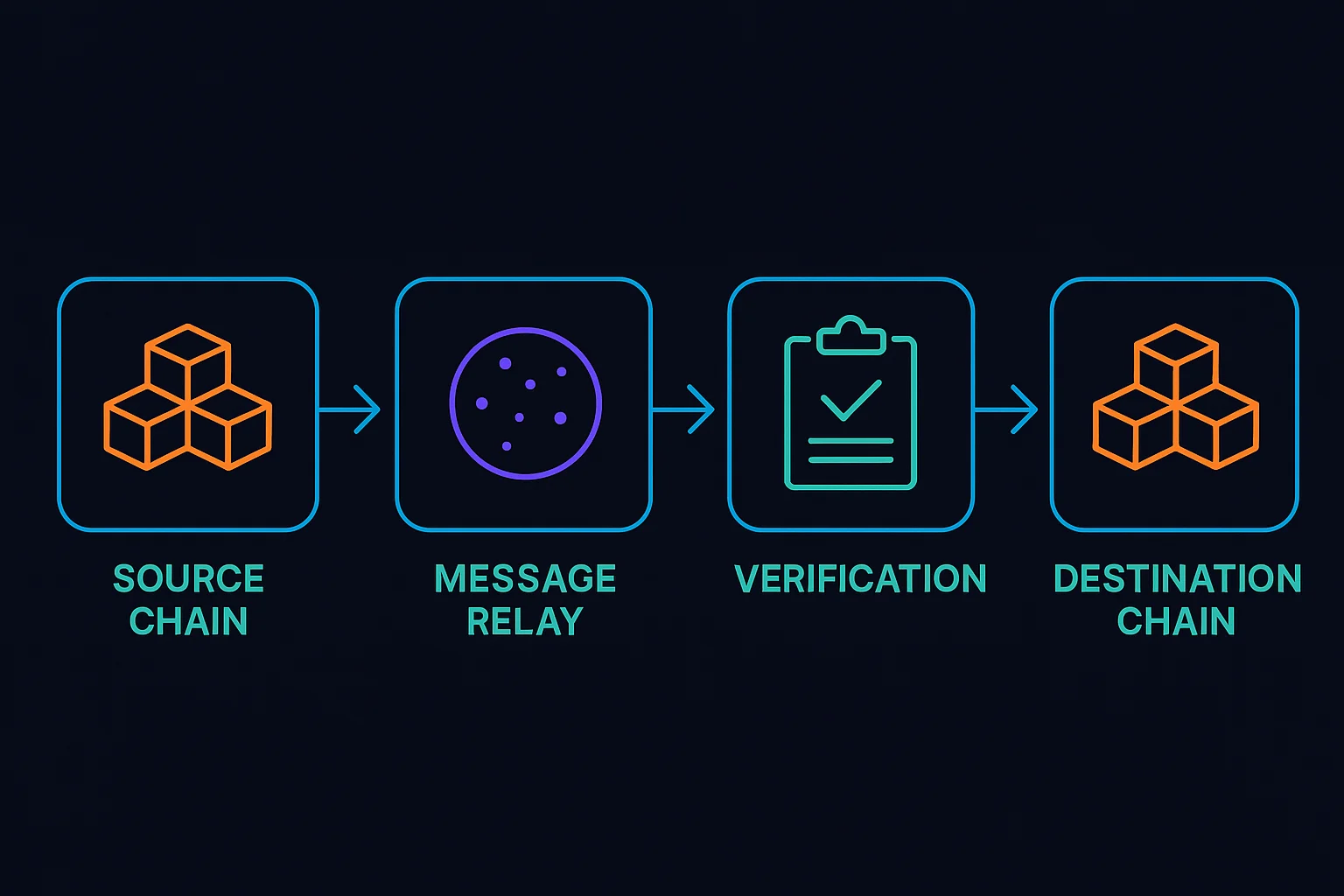
Cross-chain messaging flow showing source chain, message relay, verification, and destination chain execution

Real-World Examples

  • LayerZero enables omnichain applications through standardized messaging protocols
  • Axelar provides secure cross-chain communication with proof-of-stake validation
  • IBC (Inter-Blockchain Communication) connects Cosmos ecosystem chains natively

Why Beginners Should Care

Unified experiences enable applications that work seamlessly across multiple blockchains without users managing complex multi-chain interactions.

Expanded possibilities for developers to build applications that leverage the best features of different blockchain networks simultaneously.

Security dependencies on cross-chain infrastructure that could become single points of failure for multi-chain applications.

Related Terms: Interoperability, Cross-Chain Protocol, Omnichain, Message Relay

Back to Crypto Glossary

Similar Posts

  • Dynamic Gas Pricing

    Dynamic Gas Pricing: Adaptive Fee Markets Dynamic gas pricing automatically adjusts transaction fees based on network demand. It’s like surge pricing for blockchain transactions – pay more when everyone wants to transact. Dynamic gas pricing is a mechanism that automatically adjusts transaction fees based on current network congestion and demand. This creates more efficient fee…

  • Wallet Integration

    Wallet Integration: Seamless Application ConnectivityWallet integration enables applications to connect with cryptocurrency wallets for user authentication and transaction processing. It's like having a universal credit card reader that works with every type of payment card, making transactions smooth and effortless.Wallet integration refers to the technical implementation that allows decentralized applications to connect with various cryptocurrency…

  • Asset Locking

    Asset Locking: Securing Value Across ChainsAsset locking involves securing cryptocurrency on one blockchain to enable representation or usage on another network. It's like putting money in escrow while you get a receipt to spend elsewhere.Asset locking refers to securing cryptocurrency tokens in smart contracts or custody solutions to enable their representation or usage on different…

  • UTXO

    UTXO: Unspent Transaction OutputsUTXOs are like digital coins in your wallet that you haven't spent yet. Bitcoin tracks every unspent "coin" to prevent double-spending and maintain accurate balances.UTXO stands for Unspent Transaction Output – pieces of bitcoin that remain after a transaction and can be used as inputs for future transactions. Think of them as individual…

  • MetaMask

    MetaMask: Your Gateway to Web3 MetaMask is the browser extension wallet that connects you to the decentralized web. It’s like having a crypto wallet built into your browser that talks to every DeFi protocol. MetaMask is a browser extension and mobile wallet that enables interaction with Ethereum-based applications directly through web browsers. It manages private…

  • Recovery

    Recovery: Restoring Access to Crypto AssetsRecovery refers to methods for regaining access to cryptocurrency wallets and accounts when primary access methods are lost or compromised. It's like having spare keys for your digital vault.Recovery encompasses various mechanisms for restoring access to cryptocurrency wallets, accounts, or assets when primary authentication methods like passwords or devices are…