
Sharding

Sharding: Splitting Networks for Speed

Sharding divides blockchain networks into smaller pieces that process transactions in parallel. It’s like adding more checkout lanes at the grocery store – same capacity, faster service.

Sharding is a scaling technique that splits a blockchain network into smaller, parallel chains called shards that process transactions independently. Each shard handles a subset of all transactions, dramatically increasing total network throughput.

How Sharding Works

Parallel processing allows multiple shards to process different transactions simultaneously instead of every node processing every transaction sequentially.

State partitioning divides account balances and smart contract data across shards so that most transactions only need to touch one shard for validation.

Cross-shard communication handles transactions that involve accounts or contracts on different shards, requiring coordination between multiple shard chains.
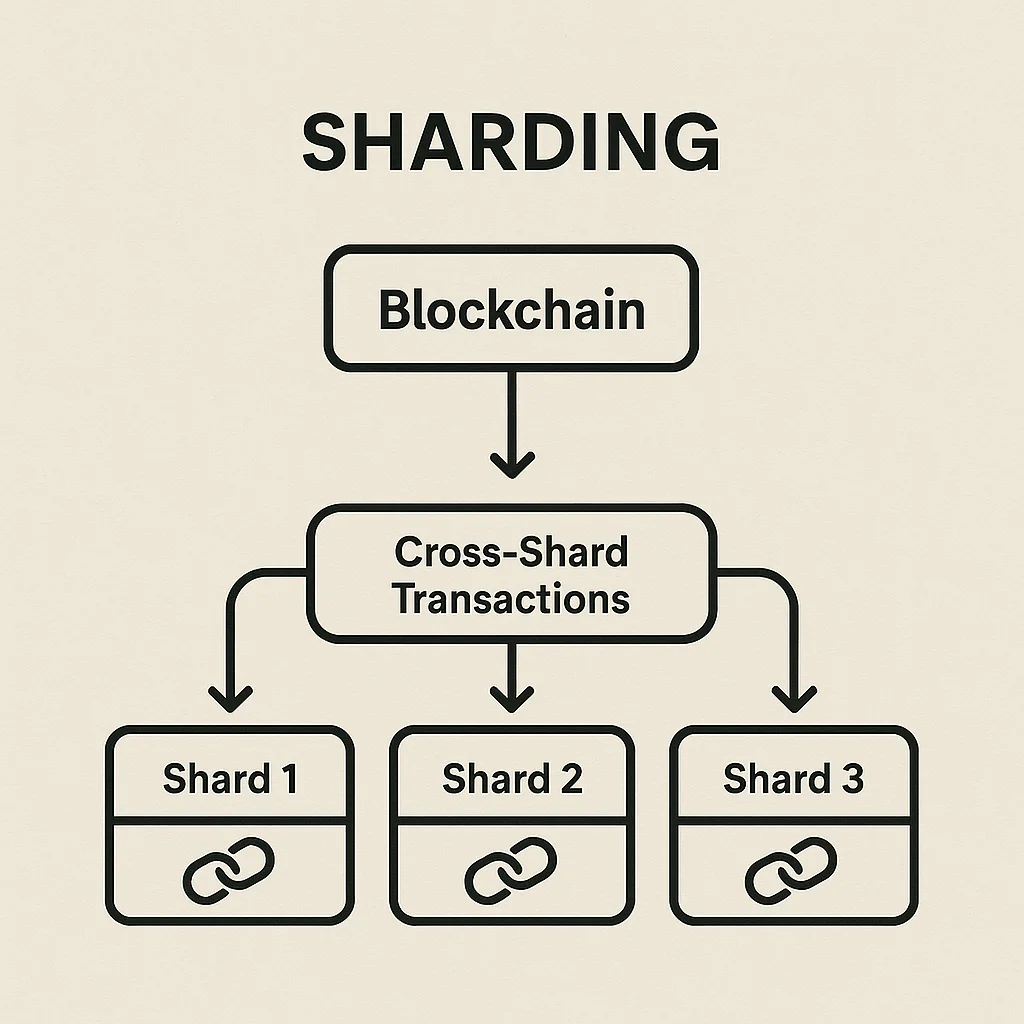
Diagram showing blockchain sharding with a main blockchain splitting into multiple parallel shards and cross-shard transaction bridges

Real-World Examples

  • Ethereum 2.0 plans 64 shard chains to increase transaction capacity dramatically
  • Zilliqa implemented sharding from launch, processing thousands of transactions per second
  • Near Protocol uses dynamic sharding that adjusts capacity based on network demand

Why Beginners Should Care

Scalability solutions like sharding aim to reduce transaction fees and confirmation times that currently limit blockchain adoption for everyday use.

Complexity increases with sharding as developers must consider cross-shard interactions and users might face different experiences depending on which shard their transactions use.

Security trade-offs exist since individual shards have less security than the full network, requiring careful design to prevent shard-specific attacks.

Related Terms: Layer 2, Scalability, Throughput, Cross-Chain

Back to Crypto Glossary

Similar Posts

  • Cryptographic Proof

    Cryptographic Proof: Mathematical VerificationCryptographic proof provides mathematical certainty about the validity of information without revealing sensitive details. It's like proving you know a secret without actually telling anyone what the secret is.Cryptographic proof refers to mathematical techniques that verify the authenticity, integrity, or validity of information using cryptographic methods. These proofs enable trust and verification without…

  • Token Sale

    Token Sale: Cryptocurrency Fundraising EventA token sale is an event where new cryptocurrency projects sell tokens to raise funds for development and operations. It's like a crowdfunding campaign but with digital tokens instead of traditional rewards.A token sale is a fundraising mechanism where cryptocurrency projects offer tokens to investors in exchange for capital to fund…

  • Public Ledger

    Public Ledger: Transparent Transaction Records Public ledgers record all transactions transparently where anyone can verify the complete history of asset movements. It’s like having a bank statement that everyone can read but no one can forge. A public ledger is a distributed database that records all transactions transparently, allowing anyone to verify and audit the…

  • Chain Abstraction

    Chain Abstraction: Invisible Multi-Chain Experience Chain abstraction hides blockchain complexity from users, making multi-chain interactions feel like using a single network. It’s like having universal currency that works everywhere without exchange rates. Chain abstraction creates user experiences where interactions with multiple blockchains happen seamlessly without users needing to understand or manage different networks, tokens, or…

  • Sandwich Attack

    Sandwich Attack: Extracting Value from Your Trades Sandwich attacks place trades before and after your transaction to manipulate prices and extract profit from your slippage. It’s like cutting in line twice – once in front of you and once behind you. A sandwich attack involves placing a buy order immediately before a victim’s trade and…

  • SegWit

    SegWit: Bitcoin's Transaction Efficiency UpgradeSegregated Witness (SegWit) is a Bitcoin protocol upgrade that increased transaction capacity by separating signature data from transaction data. It's like reorganizing luggage to fit more in the same space.SegWit (Segregated Witness) is a Bitcoin protocol upgrade that moves signature data outside the main transaction block, effectively increasing block capacity and…