
Soft Fork

Soft Fork: Backward-Compatible Upgrades

Soft forks tighten blockchain rules without breaking compatibility. They’re the diplomatic approach to network upgrades – everyone can still participate even if they don’t upgrade immediately.

A soft fork is a backward-compatible change to blockchain protocol rules that makes previously valid blocks invalid while keeping previously invalid blocks invalid. Old nodes can still participate in the network without upgrading, though they may not understand new features.

How Soft Forks Work

Rule tightening restricts what’s considered valid without changing fundamental protocol structure. New rules are more restrictive than old ones, so old nodes still accept blocks created under new rules.

Gradual activation often uses signaling mechanisms where miners or validators indicate readiness before rule changes take effect, ensuring smooth transitions.

Feature additions can happen through soft forks by repurposing unused data fields or creating new transaction types that old software treats as valid but doesn’t fully understand.
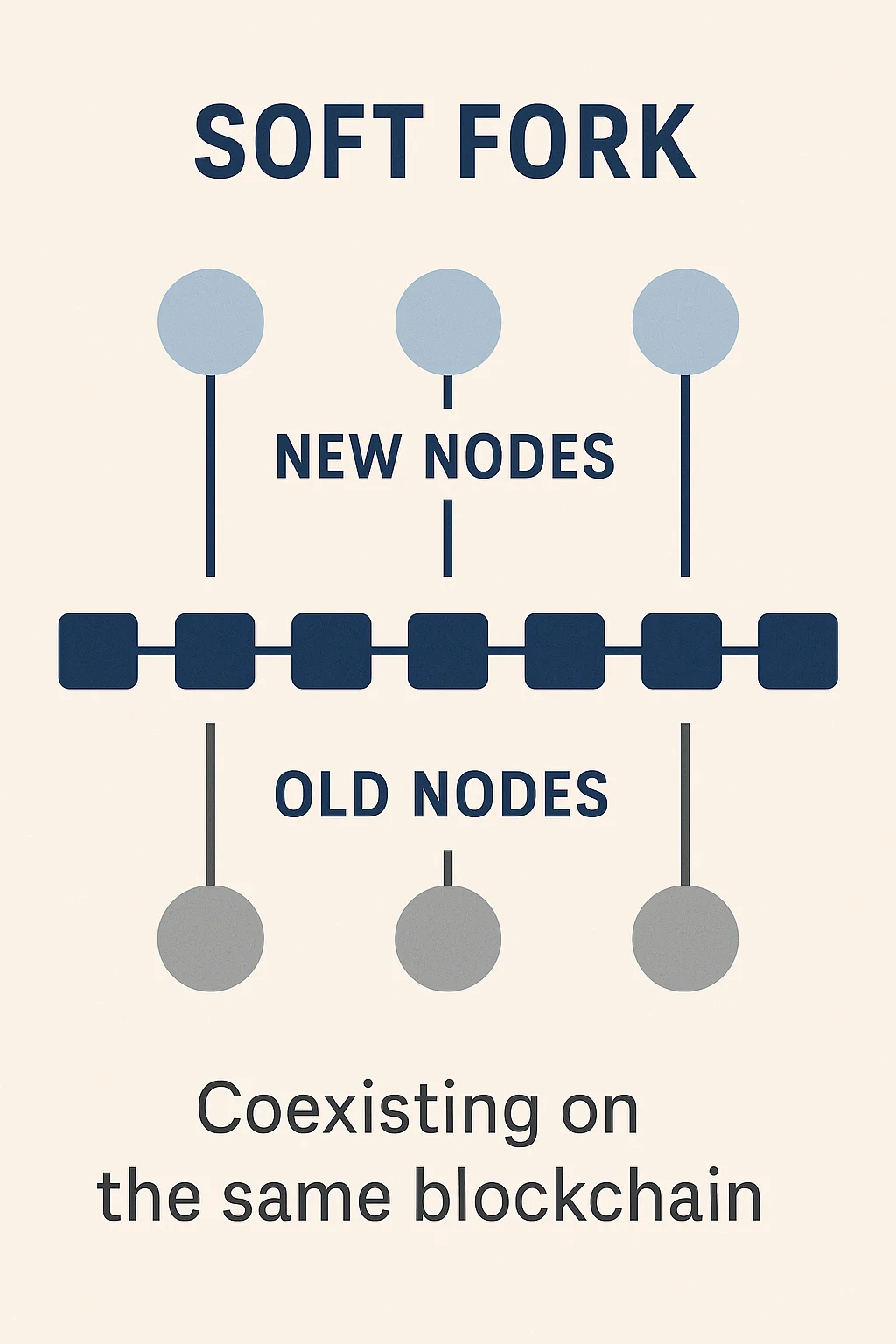
Infographic showing soft fork with old and new blockchain nodes coexisting and interpreting the same chain differently

Real-World Examples

  • SegWit activation on Bitcoin increased transaction capacity through soft fork
  • Taproot upgrade added privacy and smart contract features to Bitcoin
  • EIP-1559 changed Ethereum fee structure through soft fork mechanism

Why Beginners Should Care

Smoother upgrades make soft forks less disruptive than hard forks since the network doesn’t split and old software continues working.

Feature benefits may require wallet or software updates to access, even though the upgrade itself is backward-compatible.

Network security remains intact during soft forks since all nodes continue validating the same blockchain, unlike hard forks that can split hash power.

Related Terms: Hard Fork, SegWit, Network Upgrade, Protocol

Back to Crypto Glossary

Similar Posts

  • Liquidity Mining

    Liquidity Mining: Earning Rewards for Providing Liquidity Liquidity mining rewards users who provide capital to DeFi protocols with governance tokens. It’s like getting paid to be the house money at a casino. Liquidity mining is a DeFi incentive mechanism where protocols distribute governance tokens to users who provide liquidity to their platforms. Users earn both…

  • Stealth Address

    Stealth Address: Private Payment DestinationsStealth addresses create unique, one-time addresses for each transaction to enhance privacy by breaking the link between payments and recipient identities. They're like using a different PO box for every package delivery so no one can track all your mail to the same location.Stealth addresses are unique, one-time payment destinations generated…

  • Lightning Network

    Lightning Network: Bitcoin Payment ScalingLightning Network enables instant, low-cost Bitcoin payments through off-chain payment channels. It's like having express lanes on a highway that bypass traffic congestion while still connecting to the same destination.Lightning Network is a Layer 2 scaling solution that enables fast, cheap Bitcoin transactions through a network of payment channels that settle…

  • EigenLayer

    EigenLayer: Ethereum Restaking ProtocolEigenLayer enables Ethereum validators to restake their ETH to secure additional protocols and earn extra rewards. It's like using the same security deposit to protect multiple different services simultaneously.EigenLayer is a protocol that allows Ethereum validators to restake their staked ETH to provide security for additional protocols and services beyond Ethereum itself. This…

  • Liquidity Pool

    Liquidity Pool: The Fuel That Powers DEX Trading Liquidity pools are why decentralized exchanges work. They’re shared pots of tokens that enable trading without traditional buyers and sellers. A liquidity pool is a collection of tokens locked in a smart contract that provides liquidity for decentralized trading. Instead of matching buy and sell orders, traders…

  • Token Approval

    Token Approval: Granting Spending PermissionToken approval allows smart contracts to spend tokens on behalf of users through explicit permission mechanisms. It's like giving someone permission to use your credit card with specific spending limits.Token approval is a mechanism that grants smart contracts permission to transfer specific amounts of tokens from user wallets without requiring signatures…