
AML (Anti-Money Laundering)

AML (Anti-Money Laundering): Fighting Financial Crime

AML regulations force crypto businesses to monitor and report suspicious activities. It’s the government’s attempt to prevent crypto from becoming a money laundering paradise.

Anti-Money Laundering (AML) refers to laws, regulations, and procedures designed to prevent criminals from disguising illegally obtained funds as legitimate income. Crypto exchanges and businesses must implement AML compliance to operate legally.

How AML Works in Crypto

Transaction monitoring systems flag unusual patterns like rapid large deposits, immediate withdrawals, or transactions with known high-risk addresses.

Suspicious Activity Reports (SARs) must be filed with government agencies when exchanges detect potential money laundering. This creates permanent records tied to user identities.

Chain analysis tools track crypto movements across addresses, making it harder to obscure transaction histories compared to traditional cash-based money laundering.
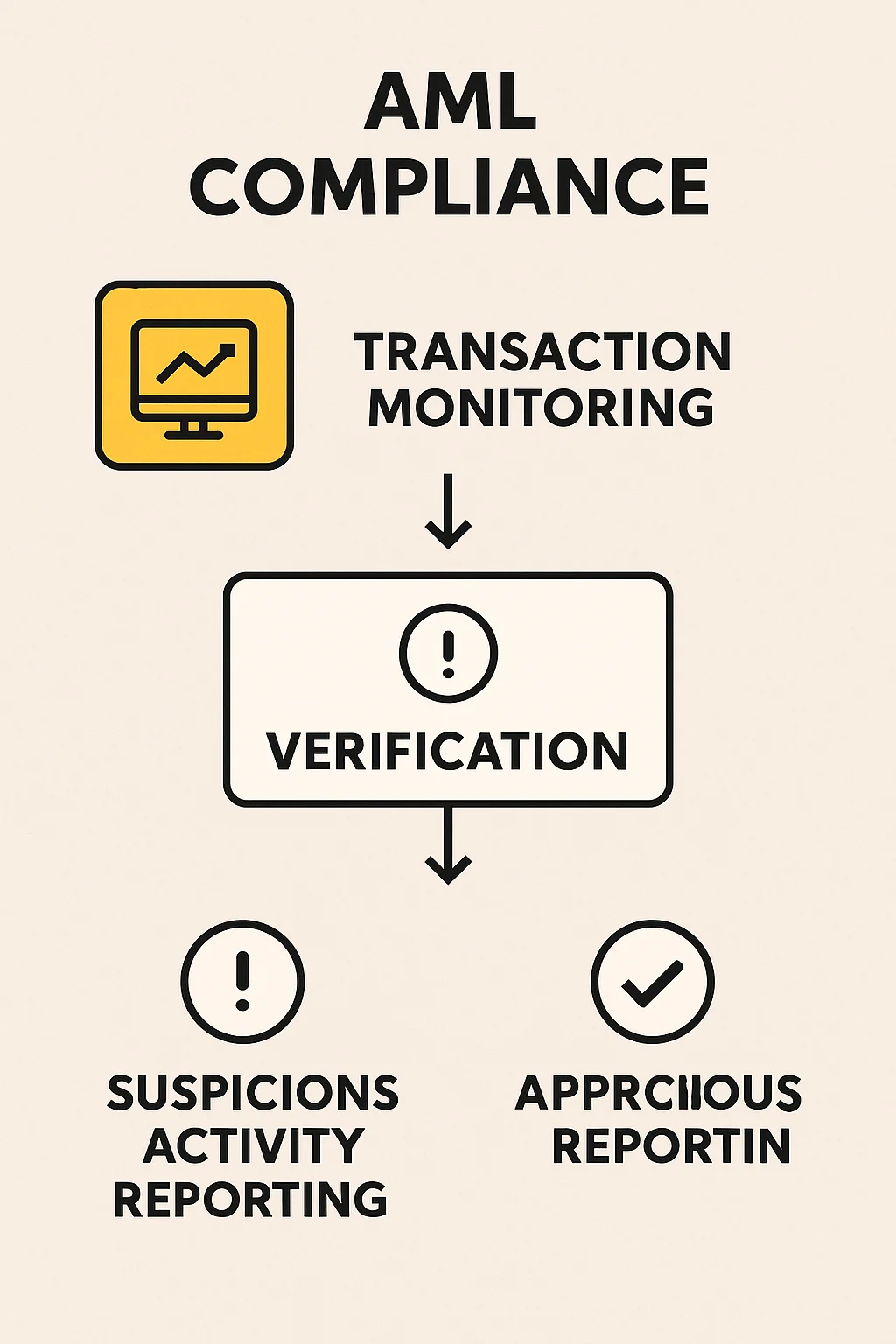
Flowchart showing AML compliance steps: transaction monitoring, risk verification, and suspicious activity reporting

Real-World Examples

  • Binance paid $4.3 billion in fines for AML violations and inadequate compliance
  • Tornado Cash sanctions highlighted tensions between privacy tools and AML enforcement
  • Exchange delistings of privacy coins like Monero due to AML compliance challenges

Why Beginners Should Care

AML compliance affects your crypto experience through identity verification requirements, transaction limits, and account monitoring that can trigger investigations.

Privacy expectations should be adjusted – regulated exchanges share transaction data with governments upon request. True privacy requires decentralized tools with their own risks.

Choose exchanges with strong compliance records like Kraken that balance regulatory requirements with user protection and transparent policies.

Related Terms: KYC, Exchange, Privacy Coin, Regulation

Back to Crypto Glossary

Similar Posts

  • Collateral

    Collateral: Security for Borrowed FundsCollateral is an asset pledged as security for a loan that can be seized if the borrower fails to repay. In crypto, it's typically cryptocurrency deposited to secure borrowing positions.Collateral refers to assets deposited as security for loans, with the understanding that lenders can seize these assets if borrowers default on…

  • Storage Rent

    Storage Rent: Pay-per-Use Blockchain StorageStorage rent is a proposed mechanism where users pay ongoing fees for maintaining data on blockchain networks. It's like paying monthly rent for keeping files in cloud storage instead of a one-time purchase.Storage rent refers to fee mechanisms that charge users for ongoing blockchain storage rather than allowing permanent storage after…

  • Synthetic Yield

    Synthetic Yield: Engineered Return Products Synthetic yield creates artificial return streams through derivatives and structured products rather than underlying asset productivity. It’s like manufacturing dividends through financial engineering. Synthetic yield refers to returns generated through derivative strategies, structured products, or financial engineering rather than from the underlying asset’s inherent productivity. These products create yield where…

  • Proof of Burn

    Proof of Burn: Destroying Value for Consensus Proof of Burn requires destroying cryptocurrency to participate in consensus or gain network benefits. It’s like burning money to prove you’re serious about network security. Proof of Burn is a consensus mechanism where participants destroy cryptocurrency by sending it to unrecoverable addresses to gain mining rights or network…

  • Transaction Fees

    Transaction Fees: Network Processing CostsTransaction fees are payments made to network validators for processing and confirming cryptocurrency transactions. They're like postage stamps that you need to attach to letters, except the cost varies depending on how quickly you want your mail delivered.Transaction fees refer to payments made to miners, validators, or network operators who process…

  • Gwei

    Gwei: Ethereum’s Gas Price Unit Gwei is the denomination used for Ethereum gas prices. Understanding gwei helps you avoid overpaying for transactions when the network gets congested. Gwei (gigawei) is a unit of Ethereum’s native currency equal to one billionth of an ETH (10^-9 ETH). It’s the standard unit for expressing gas prices, making it…