
Dynamic Gas Pricing

Dynamic Gas Pricing: Adaptive Fee Markets

Dynamic gas pricing automatically adjusts transaction fees based on network demand. It’s like surge pricing for blockchain transactions – pay more when everyone wants to transact.

Dynamic gas pricing is a mechanism that automatically adjusts transaction fees based on current network congestion and demand. This creates more efficient fee markets while maintaining network performance during high usage periods.

How Dynamic Gas Pricing Works

Demand monitoring tracks network usage and mempool congestion to determine appropriate fee levels that balance accessibility with spam prevention.

Automatic adjustment increases fees during high demand periods and decreases them when the network is less congested, creating responsive pricing.

User experience improvements through predictable fee estimation and reduced need for manual gas price optimization.
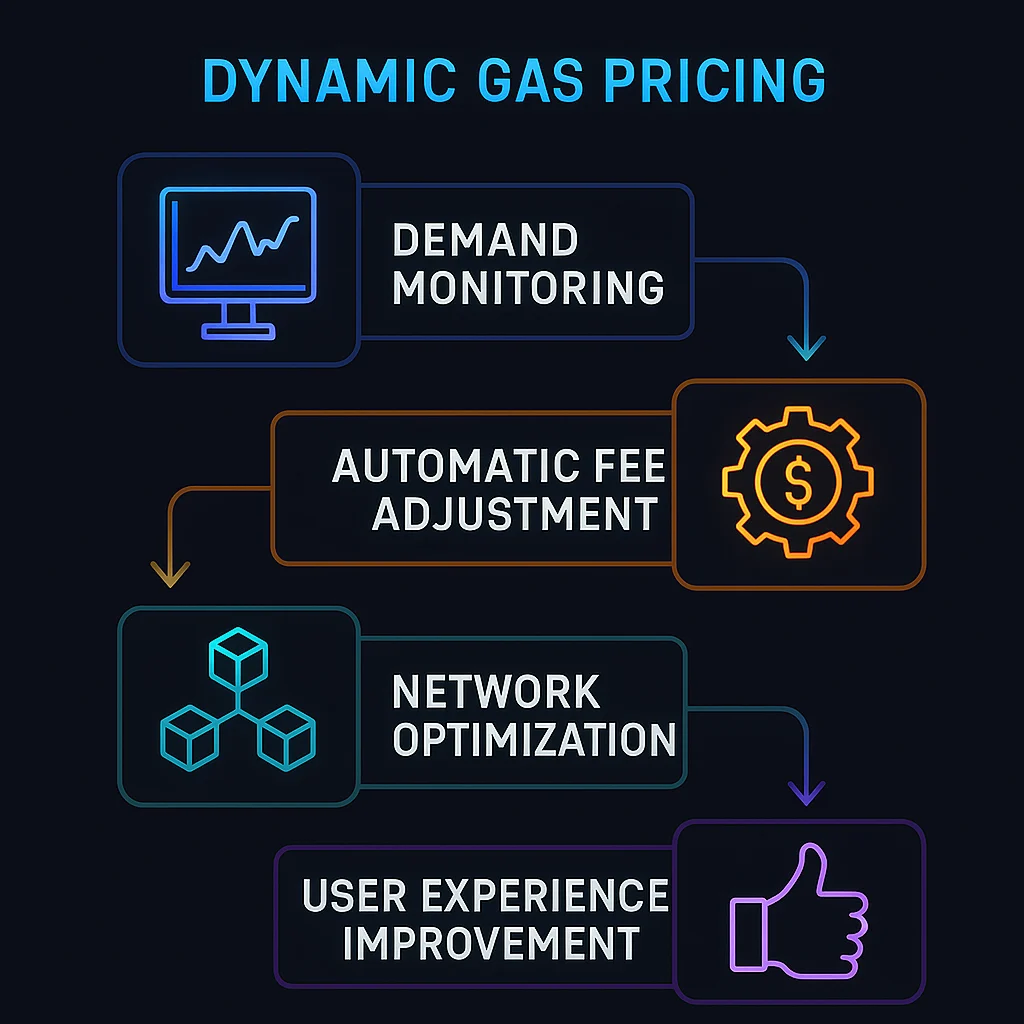
Dynamic gas pricing diagram showing demand monitoring, automatic fee adjustment, network optimization, and user experience improvement

Real-World Examples

  • EIP-1559 introduced dynamic base fees on Ethereum that burn with usage
  • Polygon uses dynamic fee adjustment to maintain consistent block times
  • Various Layer 2s implement dynamic pricing to optimize for their specific use cases

Why Beginners Should Care

Predictable costs as dynamic pricing provides better fee estimation and reduces the guesswork in transaction pricing.

Network efficiency through automatic congestion management that maintains performance without manual intervention.

Fair access as dynamic pricing prevents spam while ensuring legitimate users can always access the network by paying appropriate fees.

Related Terms: Gas Fees, EIP-1559, Network Congestion, Fee Market

Back to Crypto Glossary

Similar Posts

  • Private Key

    Private Key: Your Crypto’s Secret Password Your private key is the most important thing you’ll ever own in crypto. Lose it, and your money’s gone forever. No customer service number to call. A private key is a secret code that proves you own your cryptocurrency and allows you to spend it. It’s like the combination…

  • Capitulation

    Capitulation: Market Surrender and Mass SellingCapitulation occurs when investors give up hope and sell their holdings en masse, often marking market bottoms. It's like throwing in the towel when everything seems hopeless.Capitulation refers to the point where investors abandon hope and sell their cryptocurrency holdings in large volumes, typically occurring near market bottoms after prolonged…

  • Total Supply

    Total Supply: Maximum Token QuantityTotal supply refers to the maximum number of cryptocurrency tokens that will ever exist, including those not yet in circulation. It's like knowing how many copies of a collectible item will ever be made.Total supply encompasses all cryptocurrency tokens that exist or will ever be created, including circulating supply, locked tokens,…

  • Compliance

    Compliance: Following Regulatory RequirementsCompliance involves adhering to laws, regulations, and industry standards that govern cryptocurrency activities. It's like following traffic laws, but for digital money and blockchain businesses.Compliance refers to conforming with applicable laws, regulations, licensing requirements, and industry standards for cryptocurrency operations. This includes financial regulations, tax obligations, and consumer protection measures.How Crypto Compliance WorksRegulatory…

  • Digital Securities

    Digital Securities: Blockchain-Based Financial InstrumentsDigital securities are traditional financial instruments like stocks and bonds represented as tokens on blockchain networks. They're like digitizing paper stock certificates to work on the internet.Digital securities are blockchain-based tokens that represent ownership in traditional financial instruments such as stocks, bonds, or real estate, subject to securities regulations. These bridge conventional…

  • Security Token

    Security Token: Regulated Digital AssetsSecurity tokens are cryptocurrency tokens that represent ownership in real-world assets and are subject to securities regulations. They're like digital stock certificates that comply with financial laws.Security tokens are cryptocurrency tokens that represent ownership stakes in real-world assets and are subject to securities regulations and compliance requirements. These bridge traditional finance with…