
Exchange

Exchange: Where Crypto Gets Bought and Sold

Crypto exchanges are the on-ramps to digital money. But not all exchanges are created equal – some prioritize security, others prioritize profits.

A cryptocurrency exchange is a platform where you can buy, sell, and trade cryptocurrencies using traditional money or other digital assets. Think of it as a stock market for crypto, but operating 24/7 worldwide.

How Exchanges Work

Exchanges match buyers with sellers, taking a small fee from each transaction. They hold customer funds in hot wallets (connected to internet) for quick trading and cold storage for security.

Centralized exchanges like Coinbase control your funds and require identity verification. Decentralized exchanges let you trade directly from your wallet without giving up control.

Most beginners start with centralized exchanges because they’re user-friendly, but experienced users often graduate to DEXs for better privacy and control.
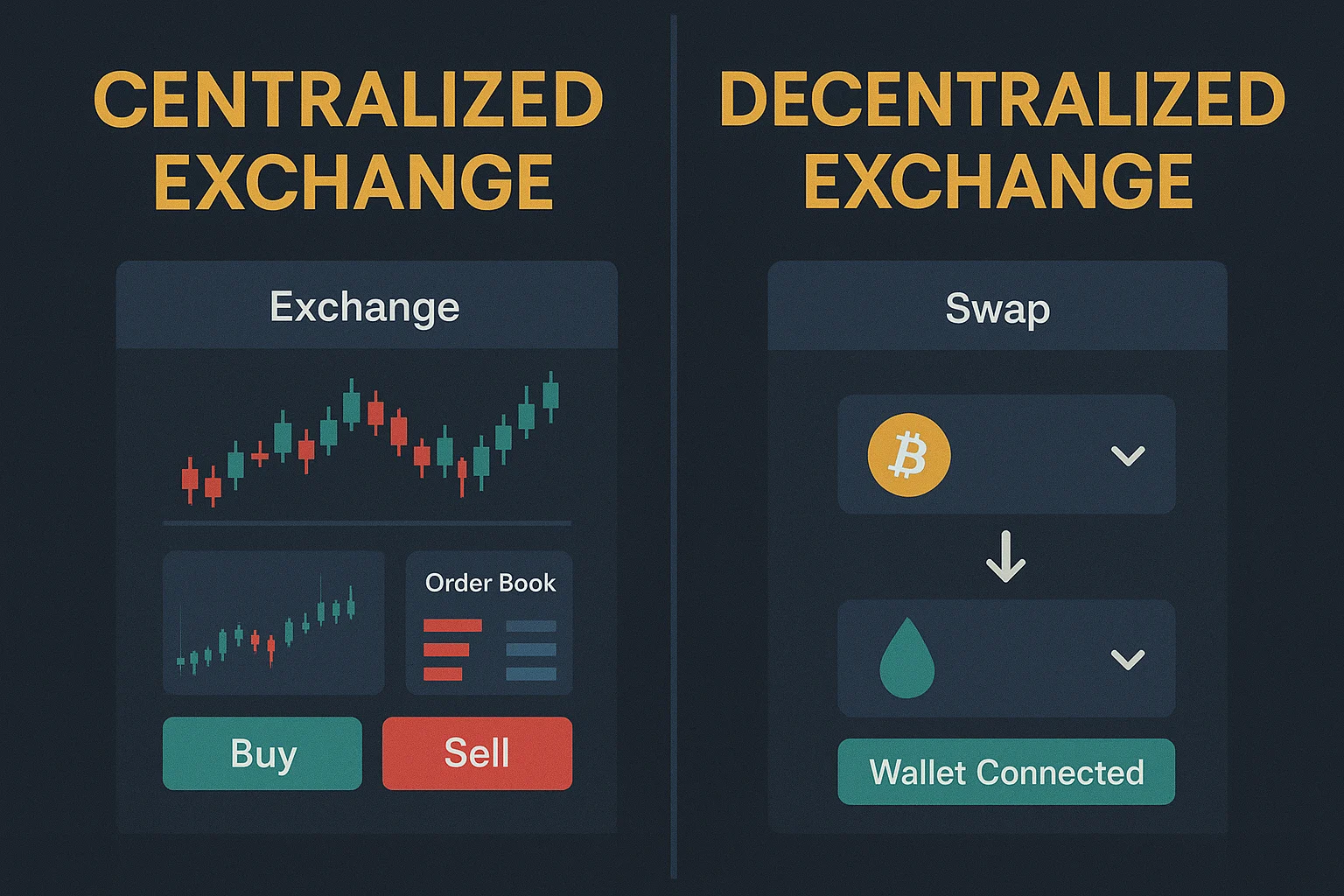
Side-by-side comparison of centralized exchange vs decentralized exchange interfaces

Real-World Examples

  • Kraken – Known for security and regulatory compliance
  • Binance – Largest exchange by trading volume
  • Uniswap – Popular decentralized exchange on Ethereum

Why Beginners Should Care

Your choice of exchange affects your security, fees, and available cryptocurrencies. Exchanges with strong regulatory compliance like Kraken offer better protection and insurance for your funds.

Remember: exchanges are for trading, not storing. Once you buy crypto, transfer it to your own wallet where you control the private keys.

Related Terms: DEX, Trading Pairs, KYC, Liquidity

Back to Crypto Glossary

Similar Posts

  • Transaction Cost

    Transaction Cost: The Price of Blockchain OperationsTransaction cost refers to the total expense of executing operations on blockchain networks, including fees, gas, and opportunity costs. It's the price you pay for using decentralized financial infrastructure.Transaction cost encompasses all expenses associated with executing blockchain operations, including network fees, gas costs, slippage, and time value. Understanding total transaction…

  • Token Approval

    Token Approval: Granting Spending PermissionToken approval allows smart contracts to spend tokens on behalf of users through explicit permission mechanisms. It's like giving someone permission to use your credit card with specific spending limits.Token approval is a mechanism that grants smart contracts permission to transfer specific amounts of tokens from user wallets without requiring signatures…

  • Sybil Attack

    Sybil Attack: Fake Identity Manipulation Sybil attacks involve creating multiple fake identities to gain disproportionate influence in networks that assume one person equals one vote. It’s like stuffing the ballot box with imaginary voters. A Sybil attack is when an individual or entity creates multiple fake identities to gain unfair influence over a network, voting…

  • Cross Chain Communication

    Cross Chain Communication: Blockchain Network MessagingCross-chain communication enables different blockchain networks to exchange information and coordinate actions. It's like having universal translators that help different blockchain languages understand each other.Cross-chain communication refers to protocols and technologies that enable different blockchain networks to exchange data, verify states, and coordinate actions across network boundaries. This enables interoperability and…

  • Circulating Supply

    Circulating Supply: Tokens Available for TradingCirculating supply represents the number of cryptocurrency tokens currently available for public trading and use. It's like counting how much money is actually in circulation versus locked away.Circulating supply refers to the number of cryptocurrency tokens that are publicly available and actively trading in the market. This excludes tokens that are…

  • Execution Layer

    Execution Layer: Transaction Processing EngineThe execution layer handles transaction processing and smart contract execution within blockchain architectures. It's like the engine that actually does the work in a modular blockchain system.The execution layer is responsible for processing transactions, executing smart contracts, and managing state changes within blockchain networks. In modular architectures, this layer can be optimized…