
Floor Price

Floor Price: The Cheapest Entry Point

Floor price is the lowest price you can buy into an NFT collection. It’s the most watched metric in NFT trading and often determines a project’s perceived value.

Floor price is the lowest listed price for any NFT in a collection on marketplaces. It represents the minimum cost to own any piece from that collection, regardless of traits or rarity.

How Floor Price Works

Market sentiment drives floor prices up and down. Positive news, celebrity endorsements, or utility announcements can spike floors. Negative events or broader market downturns crash them.

Supply and demand fundamentals apply. Collections with strong holder communities and low listing rates maintain higher floors than projects where everyone’s trying to sell.

Trait rarity creates price tiers above floor. While floor represents the cheapest NFTs, rare traits can sell for 10x-100x floor price.
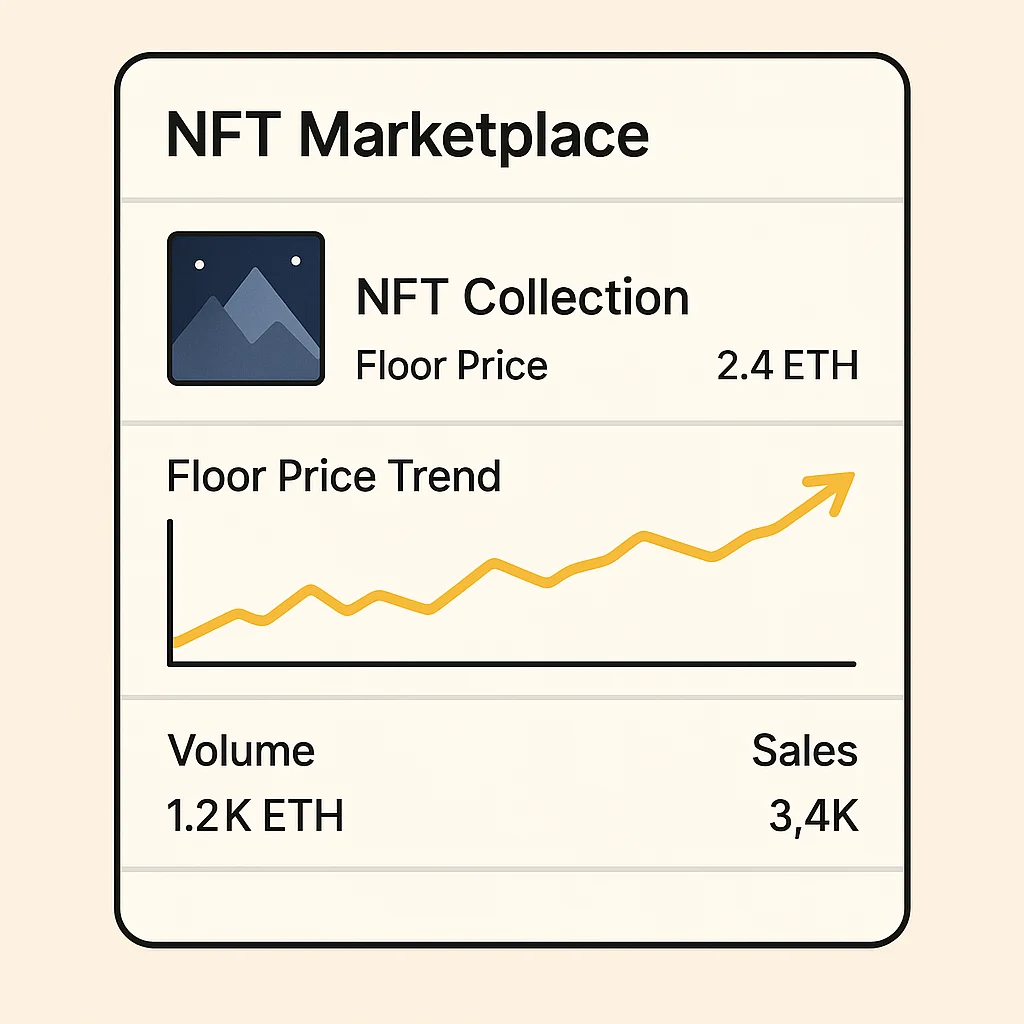
NFT marketplace interface showing collection name, current floor price, price trend chart, and volume and sales data

Real-World Examples

  • Bored Apes floor price peaked at 150+ ETH, now trades around 30-40 ETH
  • CryptoPunks maintain high floors due to historical significance and scarcity
  • Newer collections often see 90%+ floor price declines from mint price

Why Beginners Should Care

Floor price reflects market confidence in a project’s long-term value. Consistently declining floors usually signal community abandonment and project failure.

Don’t chase floors during rapid increases – you’re often buying near temporary peaks. Similarly, rapidly crashing floors rarely indicate good buying opportunities.

Focus on collections with strong communities, real utility, and active development rather than purely speculative floor price movements.

Related Terms: NFT, Marketplace, Rarity, Collection

Back to Crypto Glossary

Similar Posts

  • Over-Collateralization

    Over-Collateralization: Excess Security DepositsOver-collateralization requires borrowers to deposit assets worth more than their loan amount as security against default. It's like putting down a $15,000 deposit to borrow $10,000, ensuring the lender is protected even if asset values decline.Over-collateralization refers to requiring collateral deposits that exceed the value of loans or borrowed assets, providing additional…

  • Transaction Approval

    Transaction Approval: Authorizing Blockchain ActionsTransaction approval is the process of authorizing blockchain operations through wallet signatures or smart contract permissions. It's like signing checks, but with permanent consequences.Transaction approval involves granting permission for blockchain operations through cryptographic signatures, smart contract interactions, or delegation mechanisms. These approvals authorize spending, contract execution, or account access.How Transaction Approval WorksSignature…

  • Lightning Network

    Lightning Network: Bitcoin Payment ScalingLightning Network enables instant, low-cost Bitcoin payments through off-chain payment channels. It's like having express lanes on a highway that bypass traffic congestion while still connecting to the same destination.Lightning Network is a Layer 2 scaling solution that enables fast, cheap Bitcoin transactions through a network of payment channels that settle…

  • Satoshi

    Satoshi: Bitcoin's Smallest UnitA satoshi is the smallest unit of bitcoin, equal to 0.00000001 BTC. It's named after Bitcoin's pseudonymous creator and makes bitcoin divisible for everyday transactions.A satoshi (sat) is the smallest divisible unit of bitcoin, representing one hundred millionth of a bitcoin. This granular divisibility enables bitcoin to function as digital cash for transactions…

  • Public Key

    Public Key: Your Crypto Receiving Address Your public key is like your email address for crypto – you can share it freely without security concerns. A public key is cryptographically derived from your private key and generates your wallet addresses where others can send you cryptocurrency. It’s mathematically linked to your private key but reveals…

  • Supply

    Supply: Total Token Quantity AvailableSupply refers to the total amount of cryptocurrency tokens available, including those in circulation, locked up, or held by various parties. It's a fundamental economic factor affecting token value.Supply encompasses all cryptocurrency tokens that exist or will exist, including circulating supply available for trading and locked supply held by teams, investors,…