
DeFi Insurance

DeFi Insurance: Protecting Against Smart Contract Risk

DeFi insurance provides coverage against smart contract failures, hacks, and protocol exploits. It’s like buying fire insurance for your digital assets in experimental financial protocols.

DeFi insurance offers protection against losses from smart contract bugs, hacks, oracle failures, and other technical risks in decentralized finance protocols. Users pay premiums to receive coverage for specific risks and amounts.

How DeFi Insurance Works

Risk assessment by insurance protocols evaluates smart contract security, team reputation, and historical performance to price coverage appropriately.

Premium payments fund insurance pools that pay out claims when covered events occur, with pricing based on perceived risk levels.

Claim verification often involves community governance or expert assessment to determine whether losses qualify for insurance payouts.
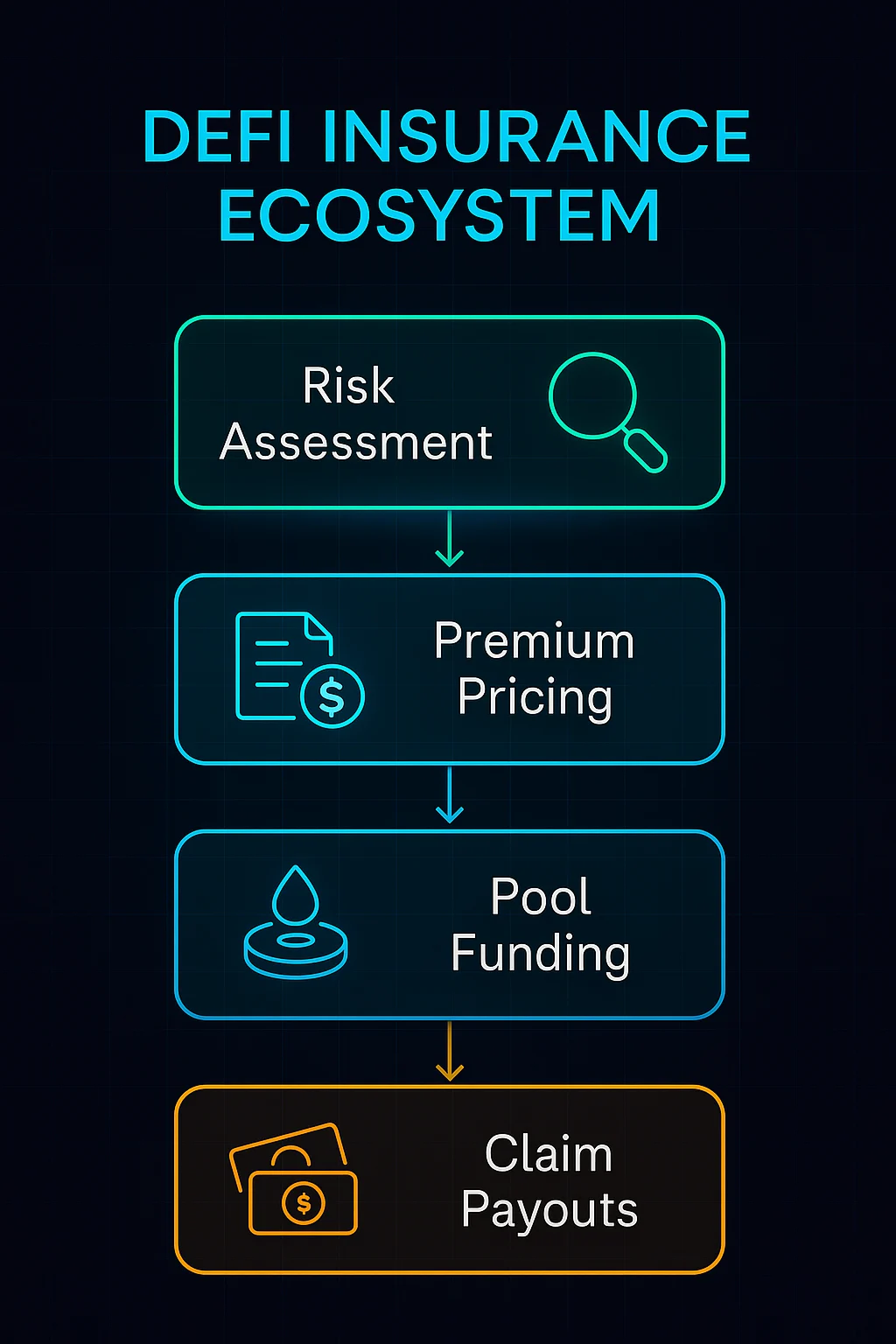
Infographic showing the DeFi insurance ecosystem: risk assessment, premium pricing, pool funding, and claim payouts

Real-World Examples

  • Nexus Mutual provides community-driven smart contract insurance coverage
  • Cover Protocol offers decentralized insurance markets for DeFi risks
  • Unslashed Finance creates insurance pools for various crypto risks

Why Beginners Should Care

Risk mitigation for experimental DeFi protocols that may have undiscovered vulnerabilities or face sophisticated attacks.

Cost considerations as insurance premiums can be expensive, sometimes offsetting potential yield gains from high-risk protocols.

Coverage limitations since insurance typically doesn’t cover market risks, impermanent loss, or user errors – only technical failures.

Related Terms: Smart Contract Risk, Protocol Security, Risk Management, Premium

Back to Crypto Glossary

Similar Posts

  • Play-to-Earn (P2E)

    Play-to-Earn (P2E): Gaming Meets Income Play-to-earn games let players earn cryptocurrency and NFTs through gameplay. It’s turned gaming from entertainment expense into potential income source for millions worldwide. Play-to-earn (P2E) is a gaming model where players earn cryptocurrency tokens, NFTs, or other digital assets with real-world value through gameplay activities. Players own in-game assets that…

  • Multi-Chain

    Multi-Chain: Using Multiple Blockchain Networks Multi-chain refers to applications, strategies, or ecosystems that operate across multiple different blockchain networks simultaneously. It’s like being multilingual in the blockchain world. Multi-chain describes systems that utilize multiple different blockchain networks rather than being limited to a single chain. This approach leverages the unique strengths of different blockchains while…

  • Price Stability

    Price Stability: Maintaining Consistent ValuePrice stability refers to maintaining consistent cryptocurrency values over time with minimal volatility. It enables practical use as medium of exchange and store of value.Price stability describes the characteristic of maintaining relatively constant value over time with limited price fluctuations. This stability is essential for practical cryptocurrency adoption in payments and savings.How…

  • Yield Stacking

    Yield Stacking: Combining Multiple Income StreamsYield stacking involves combining multiple yield-generating strategies to maximize returns on cryptocurrency investments. It's like having several part-time jobs that all pay into the same bank account.Yield stacking refers to the strategy of combining multiple yield-generating opportunities across different protocols, assets, and mechanisms to maximize overall returns. This approach leverages various…

  • Voting

    Voting: Decentralized Decision MakingVoting in cryptocurrency enables token holders to participate in governance decisions that shape project direction and protocol changes. It's like being a shareholder who can vote on company decisions, except the company is a decentralized protocol owned by its users.Voting refers to the democratic process where cryptocurrency token holders express preferences on…

  • Digital Currency

    Digital Currency: Electronic Money SystemsDigital currency refers to money that exists only in electronic form, including both centralized and decentralized varieties. It's like having money that lives entirely in computers and phones instead of physical bills and coins in your wallet.Digital currency encompasses all forms of money that exist exclusively in electronic format, including cryptocurrencies,…