
Liquidation Bot

Liquidation Bot: Automated Debt Collection

Liquidation bots monitor lending protocols for undercollateralized positions and automatically liquidate them for profit. They’re like repo men but for DeFi loans.

A liquidation bot is an automated program that monitors DeFi lending protocols for loans that fall below required collateral ratios and triggers liquidations to earn rewards. These bots help maintain protocol solvency while capturing liquidation bonuses.

How Liquidation Bots Work

Continuous monitoring tracks collateral ratios across lending platforms, identifying positions approaching liquidation thresholds as asset prices fluctuate.

Flash loan capital enables bots to liquidate large positions without holding significant capital upfront, borrowing funds for liquidation then repaying from proceeds.

Gas competition involves bots bidding higher gas prices to ensure their liquidation transactions get processed first when multiple bots target the same position.
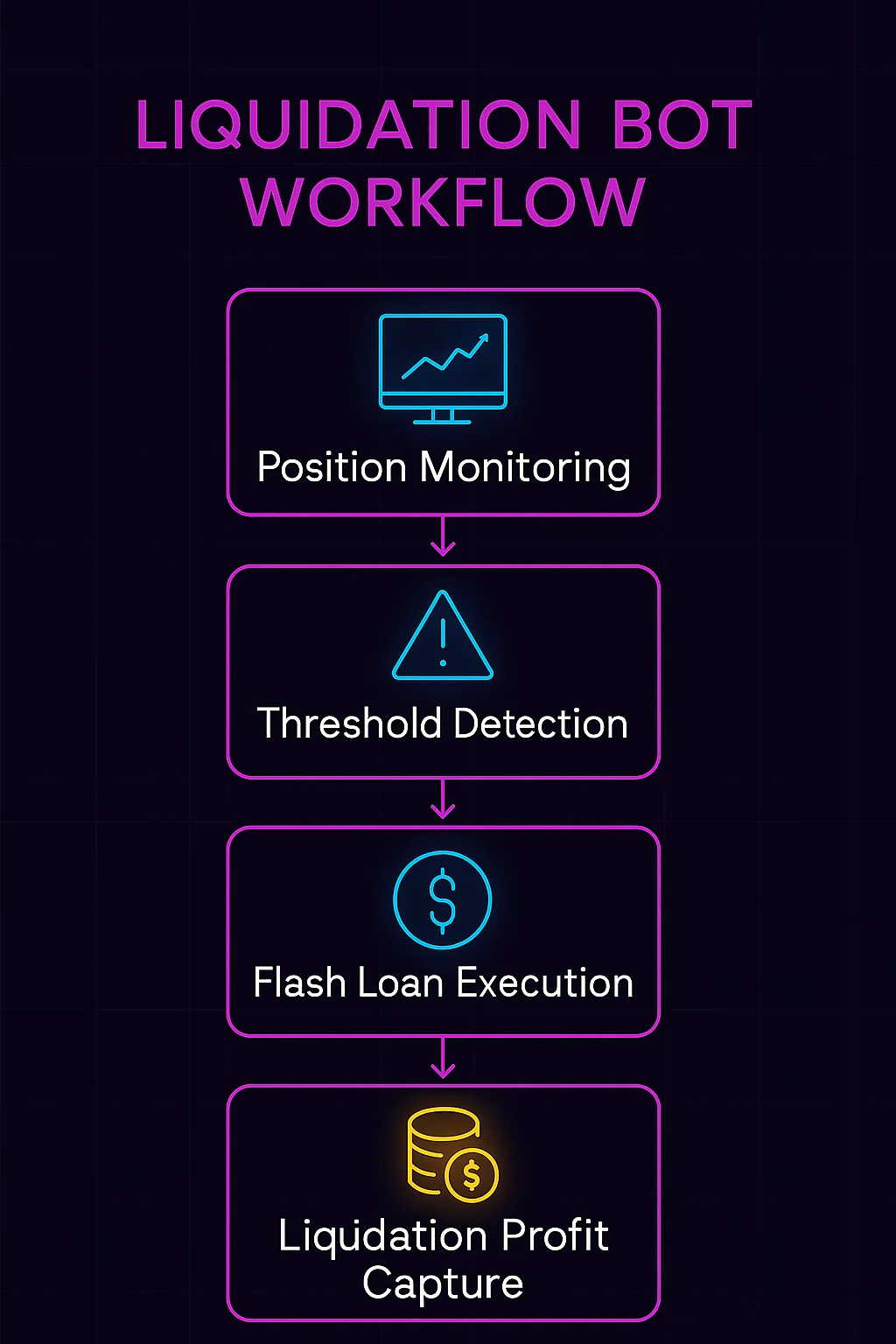
Infographic showing liquidation bot process: position monitoring, threshold detection, flash loan execution, and liquidation profit capture

Real-World Examples

  • Compound liquidations during market crashes can generate millions in bot profits as leveraged positions get liquidated en masse
  • Aave liquidation bonuses typically range from 5-15% of liquidated collateral value
  • MakerDAO liquidations use auction mechanisms that bots participate in to acquire discounted collateral

Why Beginners Should Care

Market efficiency from liquidation bots helps maintain lending protocol solvency by quickly removing bad debt before it becomes unrecoverable.

Borrower risks increase during volatile markets when liquidation bots aggressively target positions near liquidation thresholds.

Technical barriers make running competitive liquidation bots challenging for individuals due to infrastructure and capital requirements.

Related Terms: Liquidation, Flash Loan, Collateral Ratio, DeFi Lending

Back to Crypto Glossary

Similar Posts

  • Peg Mechanism

    Peg Mechanism: Maintaining Price StabilityPeg mechanisms are systems designed to maintain stable exchange rates between cryptocurrencies and reference assets like fiat currencies. They're like autopilot systems that keep stablecoins flying at steady altitudes.A peg mechanism is a system that maintains the exchange rate of one asset relative to another through automatic adjustments, reserves, or market…

  • Verification

    Verification: Confirming Accuracy and AuthenticityVerification is the process of confirming that information, transactions, or claims are accurate and authentic without requiring trust in the information source. It's like being able to personally test that a diamond is real using scientific instruments instead of just believing the jeweler's word.Verification refers to the mathematical and cryptographic processes…

  • Node

    Node: The Network’s Backbone Nodes are individual computers that maintain copies of the blockchain and enforce network rules. They’re the distributed infrastructure that makes cryptocurrency possible. A node is a computer that participates in a blockchain network by maintaining a copy of the distributed ledger and relaying transactions. Nodes validate transactions, store blockchain history, and…

  • Token Burn

    Token Burn: Destroying Supply for Value Token burns permanently remove cryptocurrency from circulation by sending it to addresses where it can never be recovered. It’s digital deflation in action. Token burn is the permanent removal of cryptocurrency tokens from circulation by sending them to an unusable address or smart contract that destroys them. This reduces…

  • Chain Reorg (Reorganization)

    Chain Reorg (Reorganization): Blockchain History Changes Chain reorgs occur when a blockchain adopts a different version of transaction history, potentially reversing confirmed transactions. It’s like time travel, but messier and more expensive. A chain reorganization (reorg) happens when a blockchain network adopts an alternative chain of blocks as the canonical history, potentially reversing previously confirmed…

  • Gas Token

    Gas Token: Optimizing Transaction Costs Gas tokens store cheap gas for later use when network fees are high. It’s like buying gasoline when prices are low and using it when prices spike. A gas token is a cryptocurrency designed to optimize transaction costs by storing cheap gas during low-demand periods for use when fees are…