
Liquidity Sniping

Liquidity Sniping: Front-Running New Pools

Liquidity sniping involves immediately buying tokens when new liquidity pools are created, often using bots to front-run regular users. It’s like cutting in line at the grand opening sale.

Liquidity sniping is the practice of using automated systems to immediately purchase tokens as soon as new liquidity pools go live, taking advantage of low initial prices before regular users can react. This often involves MEV extraction and front-running techniques.

How Liquidity Sniping Works

Pool monitoring tracks new token launches and liquidity additions across decentralized exchanges to identify sniping opportunities.

Automated execution uses bots with high gas prices to ensure transactions get included immediately when new pools become active.

Price arbitrage captures value from initial price inefficiencies before markets reach equilibrium through normal trading activity.
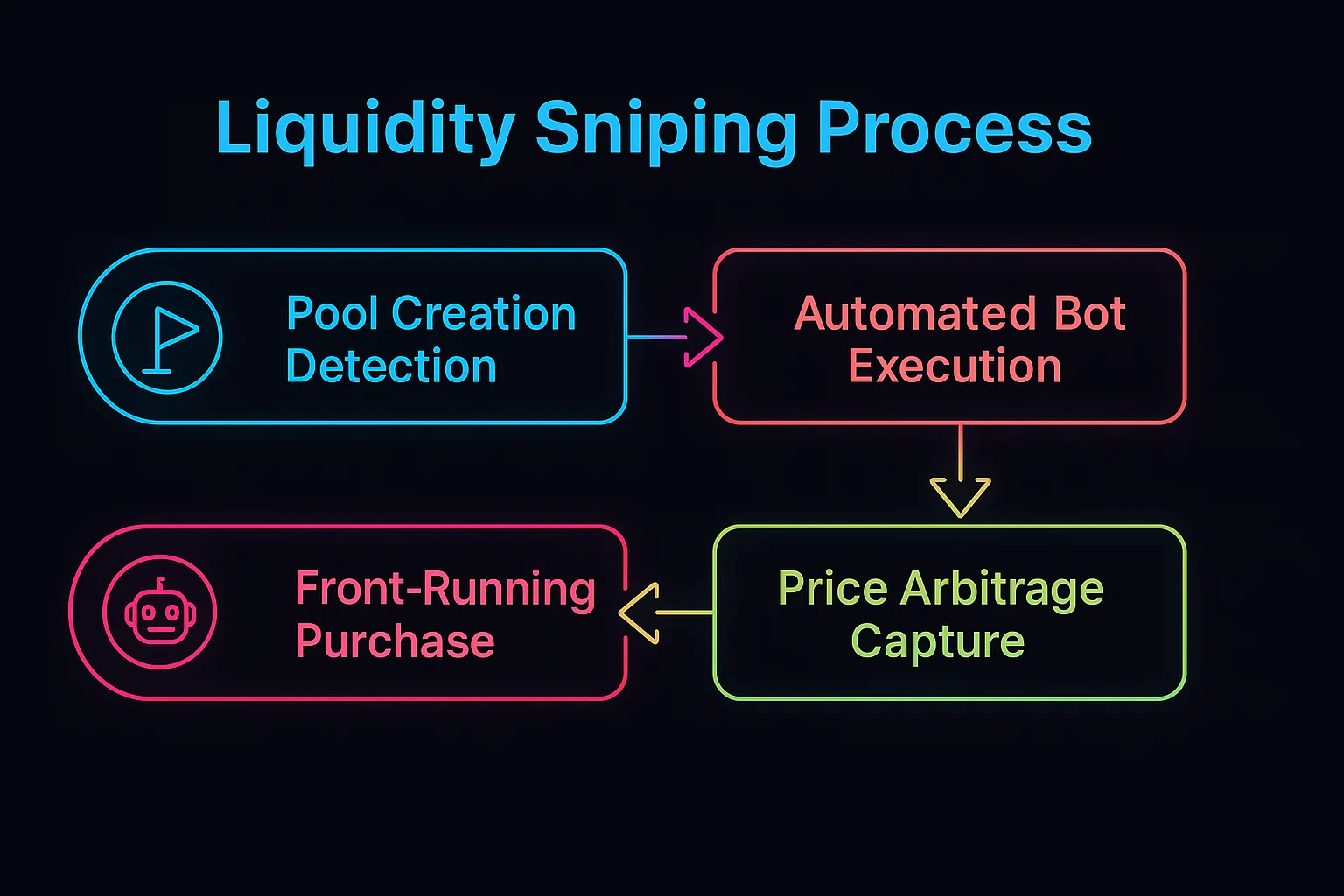
Liquidity sniping flow showing pool creation detection, automated bot execution, front-running purchase, and price arbitrage capture

Real-World Examples

  • New token launches on Uniswap frequently face sniping bots that buy tokens within the same block
  • Sandwich attacks during pool creation that manipulate prices for sniping profits
  • MEV bot networks specialized in detecting and exploiting new liquidity opportunities

Why Beginners Should Care

Unfair advantages for sophisticated actors with automated systems over retail users trying to participate in new token launches.

Price impact from sniping can dramatically affect initial token prices and distribution fairness for legitimate users.

Protection strategies include using private mempools, delayed launches, or anti-MEV mechanisms to reduce sniping effectiveness.

Related Terms: MEV, Front-Running, Liquidity Pool, Bot Trading

Back to Crypto Glossary

Similar Posts

  • NFT Gaming

    NFT Gaming: Blockchain-Based Digital GamingNFT gaming integrates non-fungible tokens into video games to enable true ownership of in-game assets. It's like owning actual collectible cards that you can trade with anyone, use in multiple games, and keep forever regardless of what happens to the original game.NFT gaming refers to video games that utilize non-fungible tokens…

  • Market Manipulation

    Market Manipulation: Artificial Price ControlMarket manipulation involves artificially influencing cryptocurrency prices through coordinated trading, false information, or abusive practices. It's financial fraud adapted for the digital age.Market manipulation refers to illegal or unethical activities designed to artificially inflate or deflate cryptocurrency prices for personal gain. These activities harm other investors and distort natural price discovery mechanisms.How…

  • Yield Optimization

    Yield Optimization: Maximizing Investment ReturnsYield optimization involves strategically managing cryptocurrency investments to maximize returns through automated rebalancing and strategy switching. It's like having a financial advisor that works 24/7 to find the best returns.Yield optimization refers to automated strategies and protocols that maximize returns on cryptocurrency investments by continuously monitoring and switching between different yield-generating…

  • Yield Engineering

    Yield Engineering: Manufacturing ReturnsYield engineering creates artificial income streams through complex financial strategies and derivative products. It's like building a return-generating machine from financial spare parts.Yield engineering refers to creating yield opportunities through structured products, derivatives, and complex strategies rather than from underlying asset productivity. These engineered returns often involve multiple moving parts and sophisticated risk…

  • Security Token

    Security Token: Regulated Digital AssetsSecurity tokens are cryptocurrency tokens that represent ownership in real-world assets and are subject to securities regulations. They're like digital stock certificates that comply with financial laws.Security tokens are cryptocurrency tokens that represent ownership stakes in real-world assets and are subject to securities regulations and compliance requirements. These bridge traditional finance with…

  • Scalability

    Scalability: Handling Growing Network DemandScalability refers to a blockchain network's ability to handle increasing transaction volumes without degrading performance or significantly increasing costs. It's like building highways that don't get congested as more cars use them.Scalability describes how well blockchain networks can accommodate growing user bases and transaction volumes while maintaining reasonable fees and confirmation…