
On-Chain Gaming

On-Chain Gaming: Fully Decentralized Games

On-chain gaming runs game logic entirely on blockchain networks rather than traditional servers. It’s like having board games where the rules are enforced by mathematics instead of human referees.

On-chain gaming executes all game logic, state management, and interactions through smart contracts on blockchain networks. Unlike traditional games with centralized servers, on-chain games operate through decentralized infrastructure that players cannot manipulate.

How On-Chain Gaming Works

Smart contract logic handles all game rules, player actions, and state transitions through deterministic code that executes identically for all players.

Transparent mechanics make all game rules publicly visible and verifiable, preventing hidden advantages or manipulation by game operators.

Composable assets enable game items and characters to be used across different games and applications that support the same standards.
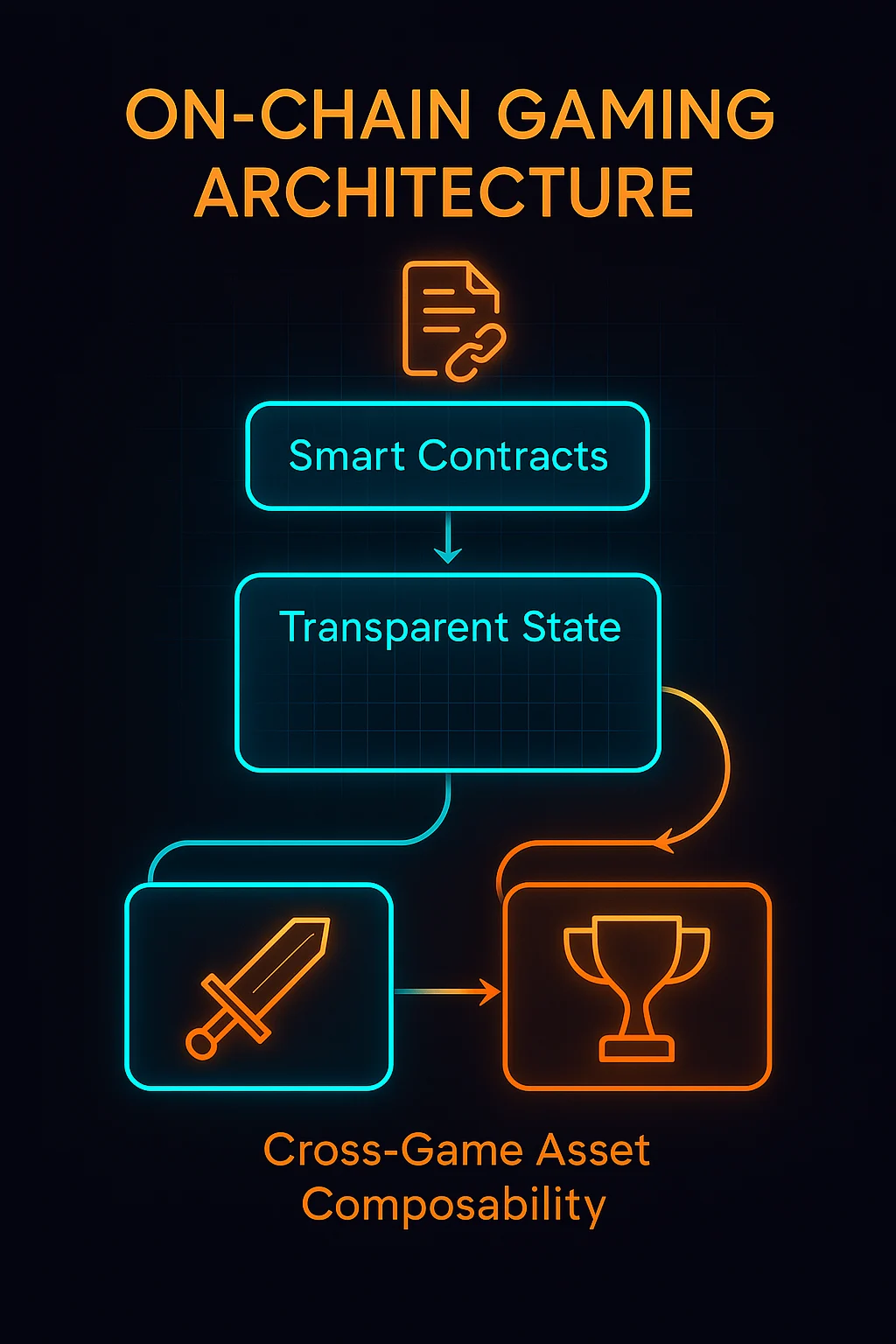
Illustration of on-chain gaming architecture, featuring smart contracts, transparent state management, and asset composability across multiple games.

Real-World Examples

  • Chess on-chain with provably fair random events and permanent game records
  • Strategy games where all moves and outcomes are cryptographically verifiable
  • Trading card games with truly scarce digital cards that work across multiple game implementations

Why Beginners Should Care

Provably fair gameplay eliminates concerns about rigged random number generation or hidden advantages for certain players.

Asset portability allows taking game items between different implementations and derivative games built by various developers.

Permanent records of achievements and gameplay history that persist even if original game developers stop supporting their games.

Related Terms: Smart Contract, Autonomous World, NFT Gaming, Verifiable Randomness

Back to Crypto Glossary

Similar Posts

  • Layer Separation

    Layer Separation: Modular Blockchain ArchitectureLayer separation divides blockchain functionality into distinct layers that can be optimized independently. It's like having specialized departments in a company that each focus on what they do best.Layer separation refers to blockchain architectures that divide functionality into distinct layers such as consensus, execution, and data availability, enabling independent optimization and…

  • Gas Fees

    Gas Fees: The Cost of Using Ethereum Gas fees are the tolls you pay to use Ethereum. Sometimes they’re pennies, sometimes they’re hundreds of dollars. Welcome to decentralized computing. Gas fees are transaction costs paid to miners or validators for processing transactions on blockchain networks. Think of gas as the fuel needed to power your…

  • Wallet Recovery

    Wallet Recovery: Restoring Access to Lost FundsWallet recovery enables regaining access to cryptocurrency holdings when primary access methods fail. It's like having backup keys to your digital safe when you lose the originals.Wallet recovery encompasses methods for restoring access to cryptocurrency wallets when devices are lost, passwords forgotten, or primary authentication fails. Proper recovery planning prevents…

  • Network Upgrade

    Network Upgrade: Blockchain System ImprovementsNetwork upgrades implement improvements, fixes, or new features to blockchain protocols through coordinated changes across all network participants. It's like upgrading an entire city's infrastructure where everyone needs to follow the new traffic rules at the same time.Network upgrade refers to coordinated changes to blockchain protocol rules that enhance functionality, security,…

  • EIP-1559

    EIP-1559: Ethereum's Fee ReformEIP-1559 reformed Ethereum's fee structure by introducing base fees that get burned and optional tips for miners. It's like switching from auction-based pricing to more predictable fee markets.EIP-1559 (Ethereum Improvement Proposal 1559) changed how Ethereum calculates and processes transaction fees by introducing a base fee that gets burned and making fee estimation…

  • Leverage

    Leverage: Borrowing Money to Amplify TradesLeverage lets you control larger positions than your actual capital by borrowing funds from exchanges or platforms. It's like using a lever to lift heavy objects – small movements create big effects.Leverage in cryptocurrency trading allows borrowing funds to increase position sizes beyond available capital, amplifying both potential profits and…