
SocialFi

SocialFi: Social Media Meets Financial Incentives

SocialFi combines social networking with decentralized finance, rewarding users for creating content and engaging with communities. It’s like getting paid to post, but with actual economic models behind it.

SocialFi refers to social finance applications that integrate social media features with DeFi economics, enabling users to monetize social interactions through token rewards, NFT creation, and community governance. Users earn from content creation, curation, and social engagement.

How SocialFi Works

Token incentives reward users for creating valuable content, engaging with others’ posts, and building community participation through measurable contributions.
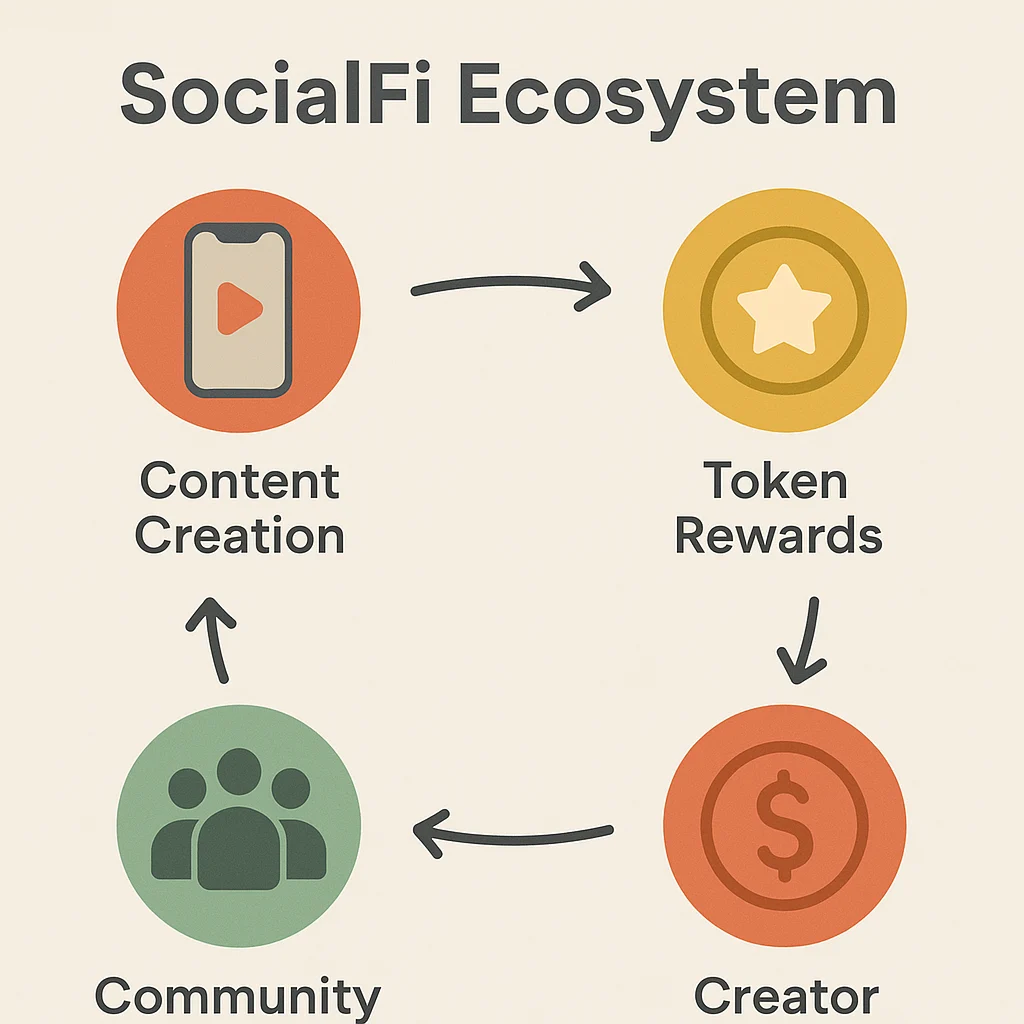
Infographic showing the SocialFi ecosystem with stages: content creation, token rewards, community governance, and creator monetization

Governance participation gives community members voting power over platform rules, feature development, and treasury allocation based on their contributions.

[IMAGE: SocialFi ecosystem showing content creation → token rewards → community governance → creator monetization]

Real-World Examples

  • Friend.tech enables trading shares of social media influencers with price discovery based on popularity
  • Lens Protocol provides decentralized social networking with composable profiles and monetization
  • BitClout (now DeSo) created social tokens tied to individual creators’ influence

Why Beginners Should Care

Direct monetization opportunities for content creators without relying on advertising revenue or platform algorithm changes that affect reach.

Ownership benefits as users control their social graphs, content, and earnings rather than being subject to centralized platform policies.

Speculation risks when social tokens become investment vehicles rather than utility tokens, creating unsustainable economic models.

Related Terms: Social Token, Community Governance, Token Incentives

Back to Crypto Glossary

Similar Posts

  • Protocol

    Protocol: Blockchain Network RulesA protocol is the set of rules and standards that govern how a blockchain network operates. It's like the constitution of a country that defines how the government works, what's allowed, and how decisions are made.A protocol refers to the comprehensive set of rules, standards, and procedures that define how a blockchain…

  • Token Approval

    Token Approval: Granting Spending PermissionToken approval allows smart contracts to spend tokens on behalf of users through explicit permission mechanisms. It's like giving someone permission to use your credit card with specific spending limits.Token approval is a mechanism that grants smart contracts permission to transfer specific amounts of tokens from user wallets without requiring signatures…

  • Transaction Analysis

    Transaction Analysis: Blockchain Data InvestigationTransaction analysis involves examining blockchain data to understand patterns, track funds, and investigate suspicious activities. It's like being a detective who follows money trails in the digital world.Transaction analysis refers to the systematic examination of blockchain transaction data to identify patterns, trace fund flows, and investigate potential illegal or suspicious activities. This…

  • Supply

    Supply: Total Token Quantity AvailableSupply refers to the total amount of cryptocurrency tokens available, including those in circulation, locked up, or held by various parties. It's a fundamental economic factor affecting token value.Supply encompasses all cryptocurrency tokens that exist or will exist, including circulating supply available for trading and locked supply held by teams, investors,…

  • Minting

    Minting: Creating New Tokens or NFTs Minting is the moment digital assets come into existence. Whether it’s new cryptocurrency tokens or unique NFTs, minting transforms code into valuable digital property. Minting is the process of creating new tokens or NFTs by executing a smart contract function that adds them to a blockchain. It’s like printing…

  • Impermanent Loss

    Impermanent Loss: The Hidden Cost of Liquidity Providing Impermanent loss is the sneaky tax on liquidity providers. Your tokens can lose value even when the pool is profitable. It’s math, not magic – but it feels like getting robbed. Impermanent loss occurs when the price ratio of tokens in a liquidity pool changes compared to…