
Synthetic Yield

Synthetic Yield: Engineered Return Products

Synthetic yield creates artificial return streams through derivatives and structured products rather than underlying asset productivity. It’s like manufacturing dividends through financial engineering.

Synthetic yield refers to returns generated through derivative strategies, structured products, or financial engineering rather than from the underlying asset’s inherent productivity. These products create yield where none naturally exists.

How Synthetic Yield Works

Derivative construction uses options, futures, or swaps to create income streams from assets that don’t naturally produce yield.

Structured products combine multiple financial instruments to engineer specific risk-return profiles that meet investor yield requirements.

Risk transformation converts one type of exposure into yield-generating positions through sophisticated trading strategies and financial instruments.
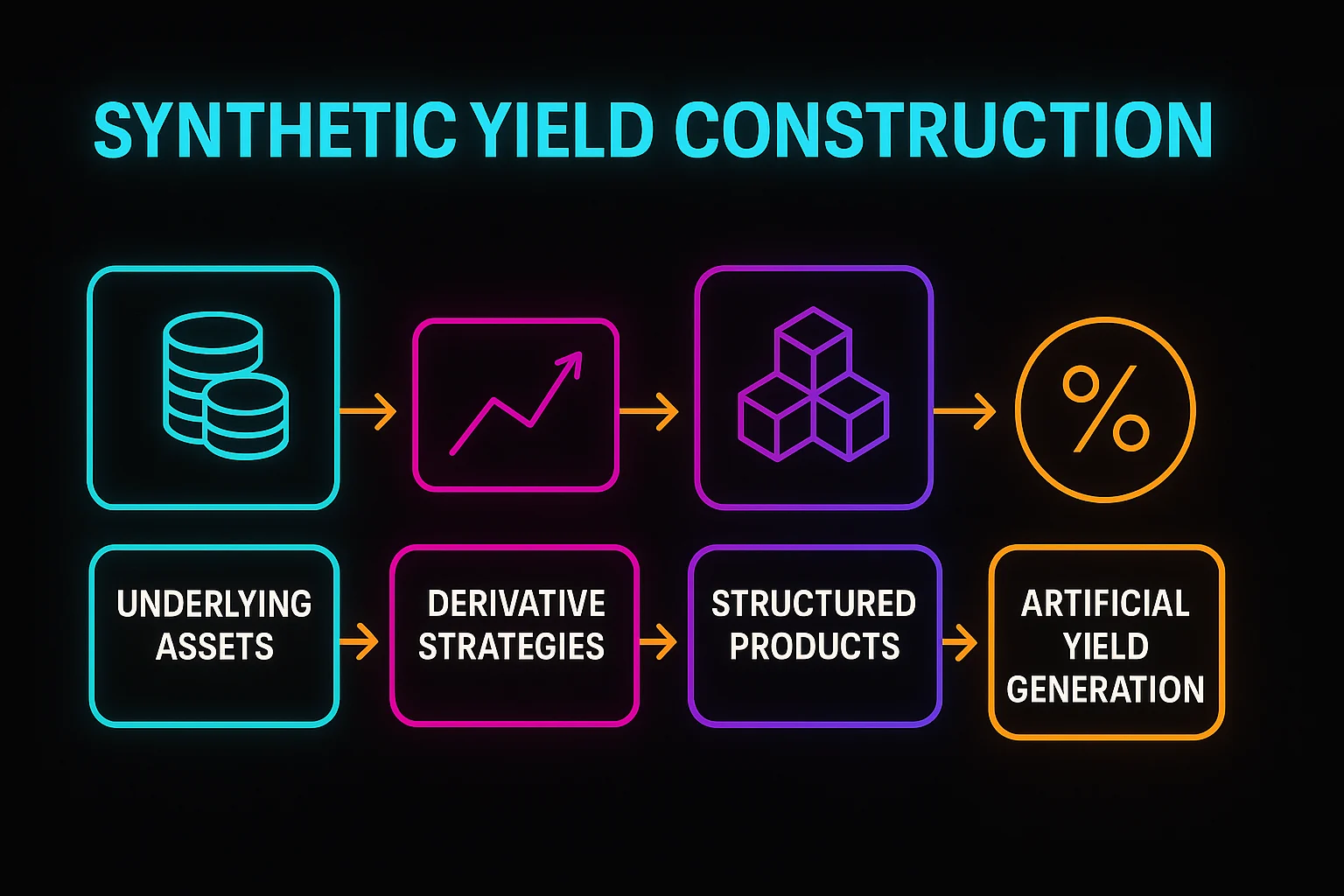
Synthetic yield construction flow showing underlying assets, derivative strategies, structured products, and artificial yield generation

Real-World Examples

  • Covered call strategies on Bitcoin that generate yield by selling call options
  • Structured products that provide yield on non-productive assets like gold or commodities
  • Yield tokens that split assets into principal and yield components for separate trading

Why Beginners Should Care

Yield availability on assets that don’t naturally produce returns, expanding income opportunities beyond traditional yield-bearing investments.

Complexity risks as synthetic products often involve multiple moving parts that can behave unexpectedly during market stress.

Understanding requirements for evaluating the true risks and potential returns of engineered yield products versus natural yield sources.

Related Terms: Derivatives, Structured Products, Yield Engineering

Back to Crypto Glossary

Similar Posts

  • Single-Sided Staking

    Single-Sided Staking: Simplified Yield Farming Single-sided staking lets you earn yield on individual tokens without providing liquidity pairs or facing impermanent loss. It’s like earning interest on a savings account without loan risk. Single-sided staking allows users to stake individual tokens to earn rewards without needing to provide paired assets or manage liquidity pool positions….

  • Token Launch

    Token Launch: Cryptocurrency Project DebutA token launch is the initial release of a new cryptocurrency token to the public market. It's like a product launch where a company introduces a new product, but for digital currencies instead of physical goods.Token launch refers to the process of introducing a new cryptocurrency token to the market, including…

  • Storage Rent

    Storage Rent: Pay-per-Use Blockchain StorageStorage rent is a proposed mechanism where users pay ongoing fees for maintaining data on blockchain networks. It's like paying monthly rent for keeping files in cloud storage instead of a one-time purchase.Storage rent refers to fee mechanisms that charge users for ongoing blockchain storage rather than allowing permanent storage after…

  • Token Approval

    Token Approval: Granting Spending PermissionToken approval allows smart contracts to spend tokens on behalf of users through explicit permission mechanisms. It's like giving someone permission to use your credit card with specific spending limits.Token approval is a mechanism that grants smart contracts permission to transfer specific amounts of tokens from user wallets without requiring signatures…

  • DEX Aggregator

    DEX Aggregator: Optimal Trading Route FinderDEX aggregators find the best prices across multiple decentralized exchanges for cryptocurrency trades. They're like price comparison websites that automatically execute trades at the best available rates.A DEX aggregator is a service that compares prices and liquidity across multiple decentralized exchanges to find optimal trading routes for cryptocurrency swaps. These platforms…

  • Real Yield

    Real Yield: Sustainable Return GenerationReal yield refers to returns generated from actual economic activity and revenue rather than token emissions or inflationary rewards. It's like earning interest from a bank's profitable lending operations instead of them just printing more money to pay you.Real yield describes investment returns generated from genuine economic activity, protocol revenue, or…