
Validator Jailing

Validator Jailing: Temporary Network Punishment

Validator jailing temporarily removes misbehaving validators from consensus participation while allowing them to return after penalties. It’s like being sent to the penalty box in hockey.

Validator jailing is a punishment mechanism that temporarily excludes validators from consensus participation and rewards due to violations like extended downtime or rule infractions. Jailed validators can typically return after meeting specific conditions.

How Validator Jailing Works

Automated enforcement detects violations like missing too many blocks, extended offline periods, or consensus rule violations that trigger jailing procedures.

Temporary exclusion removes jailed validators from the active set, preventing them from earning rewards or participating in consensus until released.

Release conditions may require waiting periods, paying penalties, or demonstrating corrected behavior before validators can rejoin the active set.
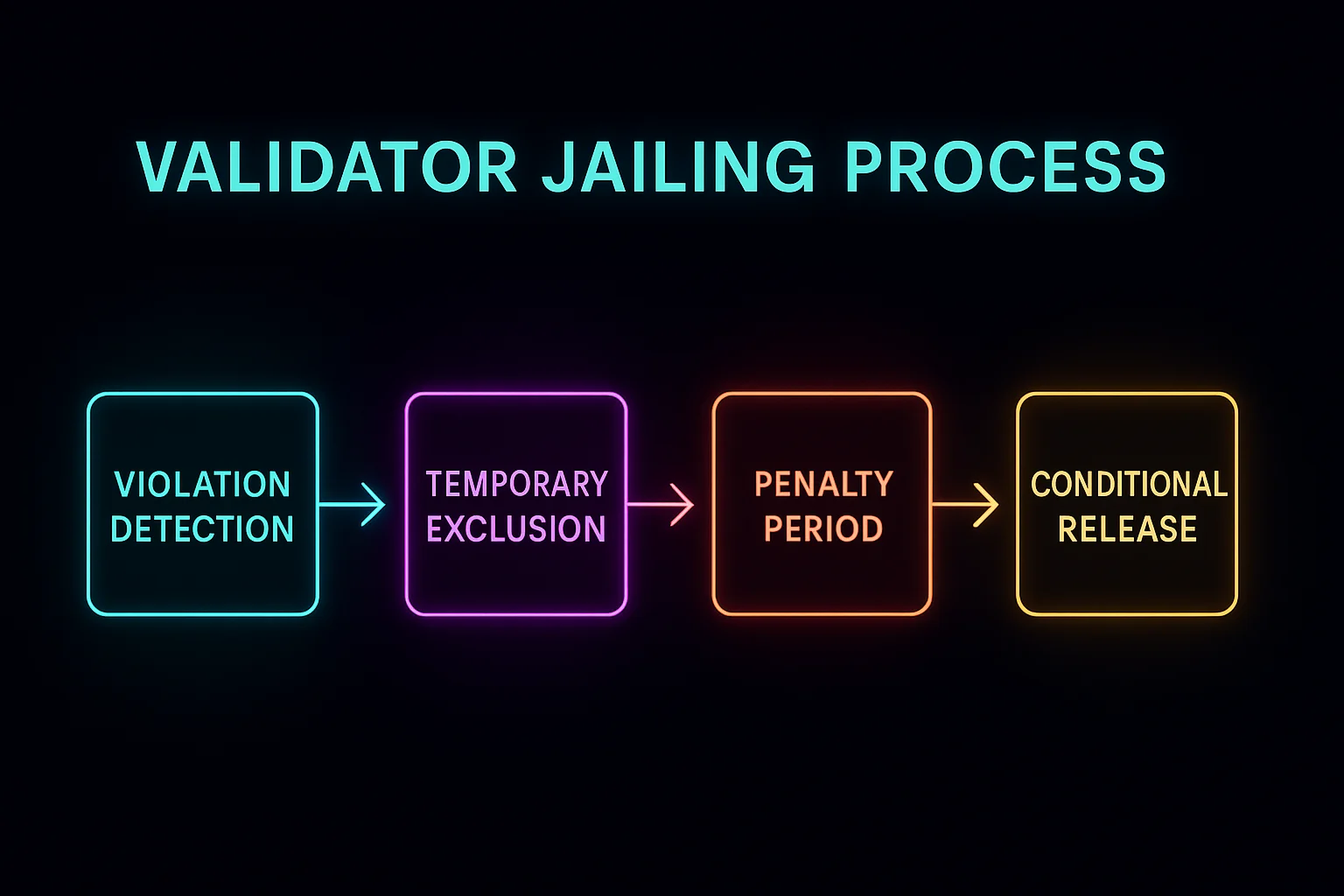
Validator jailing process showing violation detection, temporary exclusion, penalty period, and conditional release

Real-World Examples

  • Cosmos networks jail validators for missing blocks or double-signing, requiring unjailing transactions
  • Solana has similar mechanisms for removing poor-performing validators temporarily
  • Various PoS chains implement jailing to maintain network quality without permanent validator removal

Why Beginners Should Care

Network health maintenance through jailing mechanisms that remove problematic validators while allowing redemption opportunities.

Delegation risks as stakers may lose rewards when their chosen validators get jailed for poor performance or violations.

Validator selection considerations include uptime history and operational competence to avoid delegation to frequently jailed validators.

Related Terms: Validator, Slashing, Proof of Stake, Network Governance

Back to Crypto Glossary

Similar Posts

  • Execution Layer

    Execution Layer: Transaction Processing EngineThe execution layer handles transaction processing and smart contract execution within blockchain architectures. It's like the engine that actually does the work in a modular blockchain system.The execution layer is responsible for processing transactions, executing smart contracts, and managing state changes within blockchain networks. In modular architectures, this layer can be optimized…

  • Asset Locking

    Asset Locking: Securing Value Across ChainsAsset locking involves securing cryptocurrency on one blockchain to enable representation or usage on another network. It's like putting money in escrow while you get a receipt to spend elsewhere.Asset locking refers to securing cryptocurrency tokens in smart contracts or custody solutions to enable their representation or usage on different…

  • Transaction Verification

    Transaction Verification: Confirming Payment ValidityTransaction verification is the process of confirming that cryptocurrency transactions are valid before adding them to the blockchain. It's like having bank tellers check that signatures match and accounts have sufficient funds before processing checks.Transaction verification refers to the systematic process where network participants validate cryptocurrency transactions by checking digital signatures,…

  • Order Flow

    Order Flow: Transaction Request RoutingOrder flow refers to the stream of buy and sell orders flowing through trading systems and how they're routed to different execution venues. It's like watching the flow of cars through different highway lanes to see which routes get the best traffic conditions.Order flow encompasses the path that trading orders take…

  • Spam

    Spam: Unwanted Blockchain TransactionsSpam in cryptocurrency refers to unwanted or low-value transactions that clog networks and waste resources. It's like junk mail but for blockchain networks.Spam consists of unwanted transactions, messages, or data that consume network resources without providing legitimate value. These activities can degrade network performance and increase costs for legitimate users.How Crypto Spam WorksNetwork…

  • Team Incentives

    Team Incentives: Aligning Development with SuccessTeam incentives structure compensation and motivation for cryptocurrency project developers and founders. They align team interests with long-term project success rather than short-term gains.Team incentives refer to compensation structures that motivate project teams to work toward long-term success rather than quick profits. These typically include token allocations with vesting schedules and…