
Modular Execution Layer

Modular Execution Layer: Specialized Transaction Processing

Modular execution layers handle transaction processing separately from consensus and data availability. It’s like having specialized assembly lines instead of one worker doing everything.

A modular execution layer is a specialized blockchain component that focuses solely on processing transactions and executing smart contracts while relying on other layers for consensus and data availability. This separation enables optimization for specific execution requirements.

How Modular Execution Works

Execution specialization optimizes specifically for transaction processing speed, smart contract efficiency, or particular application requirements.

Layer separation enables using different consensus mechanisms, data availability solutions, or settlement layers while maintaining execution compatibility.

Scalability improvements through parallel execution environments that can process more transactions than monolithic blockchain architectures.
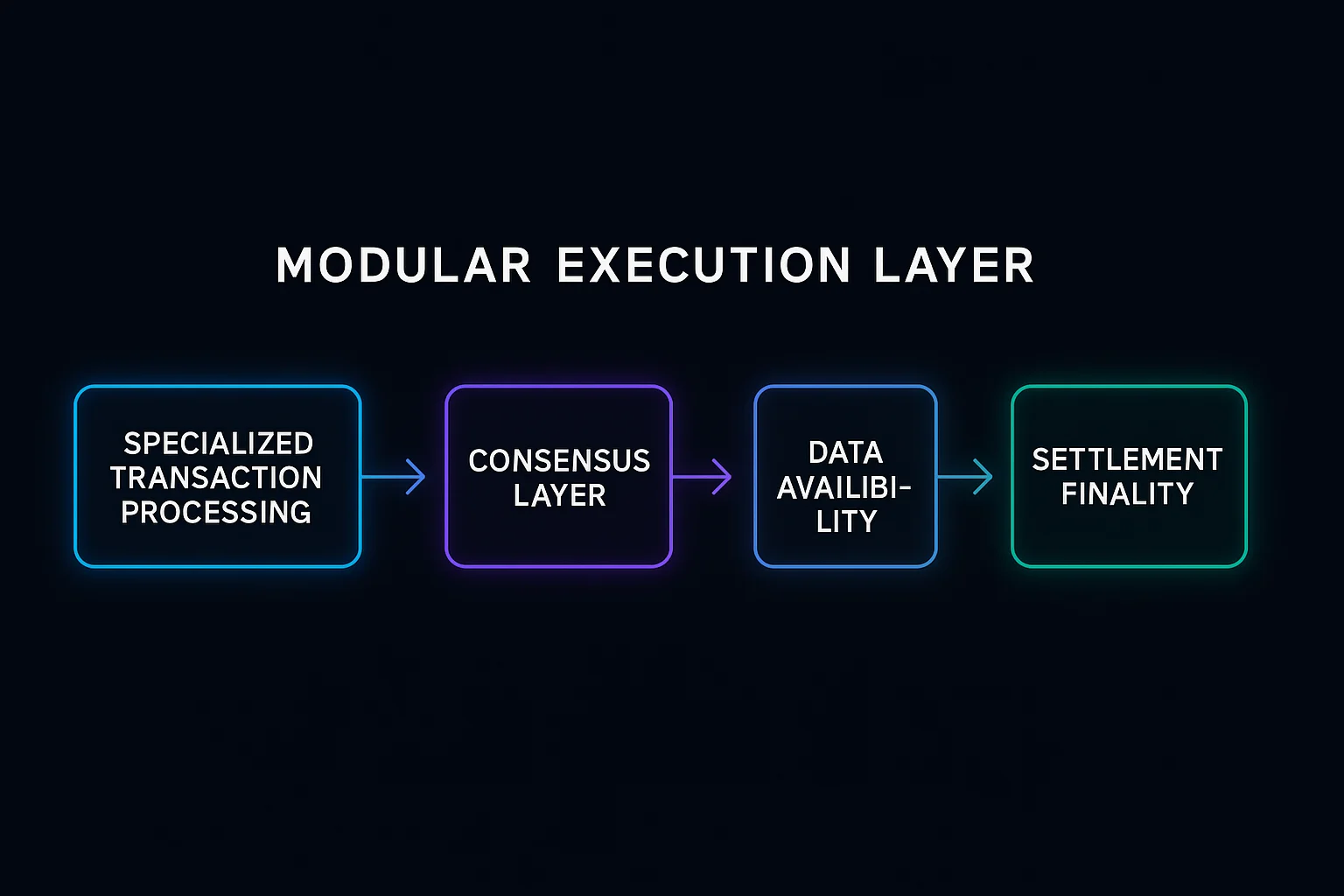
Modular execution layer showing specialized transaction processing, consensus, data availability, and settlement finality

Real-World Examples

  • Fuel Network provides optimized execution for high-throughput applications
  • Eclipse offers Solana execution with Ethereum settlement and Celestia data availability
  • Movement Labs builds Move-based execution layers for various blockchain stacks

Why Beginners Should Care

Performance optimization through specialization can dramatically improve transaction speed and reduce costs compared to general-purpose chains.

Flexibility benefits as execution layers can be swapped or upgraded without changing other parts of the blockchain stack.

Complexity trade-offs as modular architectures require understanding interactions between multiple specialized components.

Related Terms: Modular Blockchain, Execution Environment, Layer Separation

Back to Crypto Glossary

Similar Posts

  • Token Supply

    Token Supply: Digital Asset QuantityToken supply refers to the total number of cryptocurrency tokens that exist, will exist, or are available for trading. It's a fundamental factor in determining token economics and value.Token supply encompasses the total quantity of cryptocurrency tokens in existence, including circulating supply available for trading and total supply that will ever…

  • Gas Fees

    Gas Fees: The Cost of Using Ethereum Gas fees are the tolls you pay to use Ethereum. Sometimes they’re pennies, sometimes they’re hundreds of dollars. Welcome to decentralized computing. Gas fees are transaction costs paid to miners or validators for processing transactions on blockchain networks. Think of gas as the fuel needed to power your…

  • Gas Limit

    Gas Limit: Setting Your Transaction Budget Gas limit is the maximum amount of gas you’re willing to spend on a transaction. Set it too low and your transaction fails. Set it too high and you overpay for simple operations. Gas limit is the maximum amount of computational work (measured in gas units) that a user…

  • Ethereum Compatibility

    Ethereum Compatibility: Supporting Ethereum StandardsEthereum compatibility enables blockchain networks to run Ethereum applications and support Ethereum-based tools without modification. It's like having different computers that can all run the same software programs.Ethereum compatibility refers to blockchain networks' ability to support Ethereum virtual machine code, development tools, and application standards without requiring modifications. This enables easy migration…

  • Gasless Transactions

    Gasless Transactions: Fee-Free User Experience Gasless transactions eliminate the need for users to hold native tokens for transaction fees by having third parties sponsor the gas costs. It’s like having someone else pay for your Uber rides. Gasless transactions enable users to interact with blockchain applications without holding native tokens for gas fees. Third parties,…

  • Due Diligence

    Due Diligence: Research Before InvestmentDue diligence involves thoroughly researching and evaluating cryptocurrency projects before investing. It's like test driving a car and checking its history before buying.Due diligence refers to the comprehensive investigation and analysis of cryptocurrency projects, including technology, team, tokenomics, and market factors before making investment decisions. Proper due diligence helps identify opportunities and…