
Permit (EIP-2612)

Permit (EIP-2612): Gasless Approvals

Permit functionality allows token approvals through signatures instead of transactions, enabling gasless user experiences for DeFi interactions. It’s like signing a check instead of going to the bank.

Permit (EIP-2612) is a token standard that enables gasless approvals through cryptographic signatures rather than on-chain transactions. Users can authorize token spending without paying gas fees, with the actual approval happening when tokens are used.

How Permit Works

Signature-based approvals use cryptographic signatures to authorize token spending without requiring an on-chain transaction for the approval itself.

Deadline enforcement includes expiration times in permit signatures to prevent old authorizations from being used maliciously after extended periods.

Nonce tracking prevents signature replay attacks by ensuring each permit signature can only be used once per wallet.
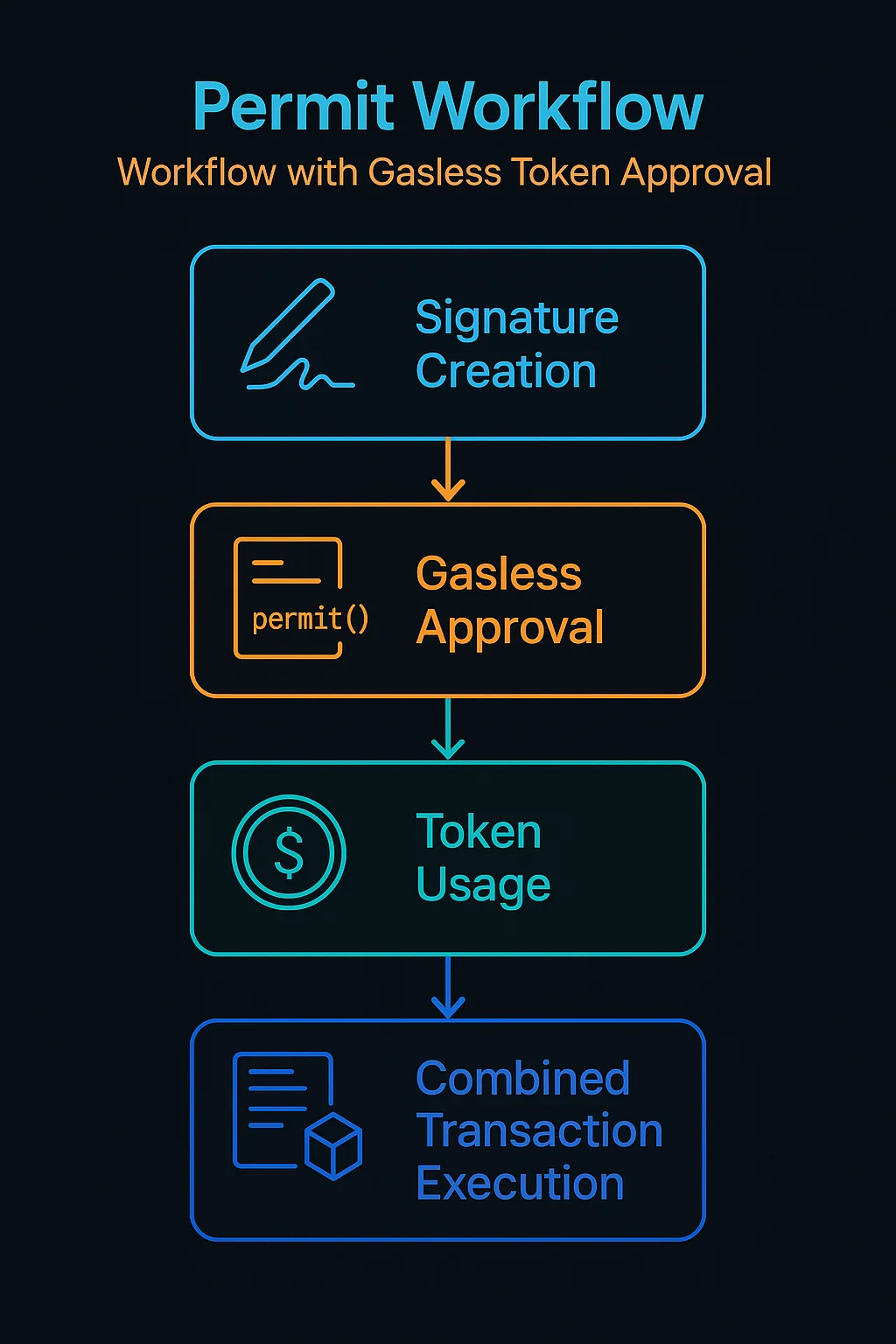
Permit workflow showing signature creation, gasless approval, token usage, and combined transaction execution

Real-World Examples

  • Uniswap V3 uses permits for gasless approval experiences in token swapping
  • 1inch implements permit functionality to reduce transaction steps and costs
  • Various DeFi protocols integrate permit to improve user onboarding and experience

Why Beginners Should Care

Better UX eliminates the two-step process of approve-then-spend that traditionally requires two separate transactions and gas payments.

Reduced costs by combining approval and usage into single transactions, cutting gas fees in half for many DeFi operations.

Security considerations require understanding permit signatures and ensuring you trust applications before signing token authorizations.

Related Terms: Token Approval, Gasless Transactions, EIP-2612

Similar Posts

  • Monetary Policy

    Monetary Policy: Controlling Money SupplyMonetary policy refers to how money supply, interest rates, and economic incentives are managed within a currency system. In crypto, it's usually controlled by code instead of central banks.Monetary policy encompasses the rules and mechanisms that control cryptocurrency supply, inflation rates, and economic incentives within blockchain networks. Unlike traditional currencies, crypto monetary…

  • Liquidity Lock

    Liquidity Lock: Securing Trading LiquidityLiquidity lock prevents withdrawal of trading liquidity for specified time periods to ensure market stability and prevent rug pulls. It's like putting trading funds in a time-locked safe that can't be opened early.Liquidity lock refers to mechanisms that prevent withdrawal of liquidity provider tokens or trading pair liquidity for predetermined time…

  • Session Keys

    Session Keys: Temporary Wallet Permissions Session keys provide temporary, limited permissions for applications to perform specific actions without exposing main wallet private keys. It’s like giving valet keys instead of your full car keys. Session keys are temporary cryptographic keys that grant limited permissions to applications for specific time periods or transaction types. They enable…

  • Dynamic NFTs (dNFTs)

    Dynamic NFTs (dNFTs): Evolving Digital Assets Dynamic NFTs can change their metadata, appearance, or properties based on external data or on-chain events. They’re like digital collectibles that grow and evolve over time. Dynamic NFTs (dNFTs) are non-fungible tokens that can modify their metadata, attributes, or visual appearance in response to external data feeds, user actions,…

  • zk-Rollup

    zk-Rollup: Zero-Knowledge Scaling Solutionzk-Rollups are Layer 2 scaling solutions that bundle hundreds of transactions into single proofs, dramatically reducing costs while maintaining security. They're like packing many letters into one envelope instead of sending each letter separately, but with mathematical proof that all letters are authentic.zk-Rollup refers to a Layer 2 scaling technology that processes…

  • Wrapped Token

    Wrapped Token: Bringing Assets Cross-Chain Wrapped tokens let you use Bitcoin on Ethereum, Ethereum on Solana, and any asset on any blockchain. They’re the universal adapters of crypto. A wrapped token is a cryptocurrency that represents another asset on a different blockchain, maintaining a 1:1 peg through collateralization. The original asset gets locked in a…