
Phishing Attack

Phishing Attack: How Scammers Steal Your Crypto

Phishing attacks are the #1 way people lose crypto. Scammers create fake websites that look identical to real ones, then steal your login credentials and private keys.

A phishing attack is a fraudulent attempt to obtain sensitive information by impersonating a trustworthy entity through fake websites, emails, or messages. In crypto, this usually means fake exchange login pages or wallet connection prompts that steal your credentials.

How Phishing Attacks Work

Fake websites that look identical to popular exchanges or DeFi platforms trick users into entering their passwords or connecting their wallets. The scammer captures this information and drains accounts immediately.

Social engineering often precedes the technical attack. Scammers send urgent emails about “account verification” or “security breaches” to create panic and rush victims into clicking malicious links.

Browser extensions and mobile apps can also be phishing tools, designed to capture wallet interactions and steal private keys when users think they’re using legitimate software.
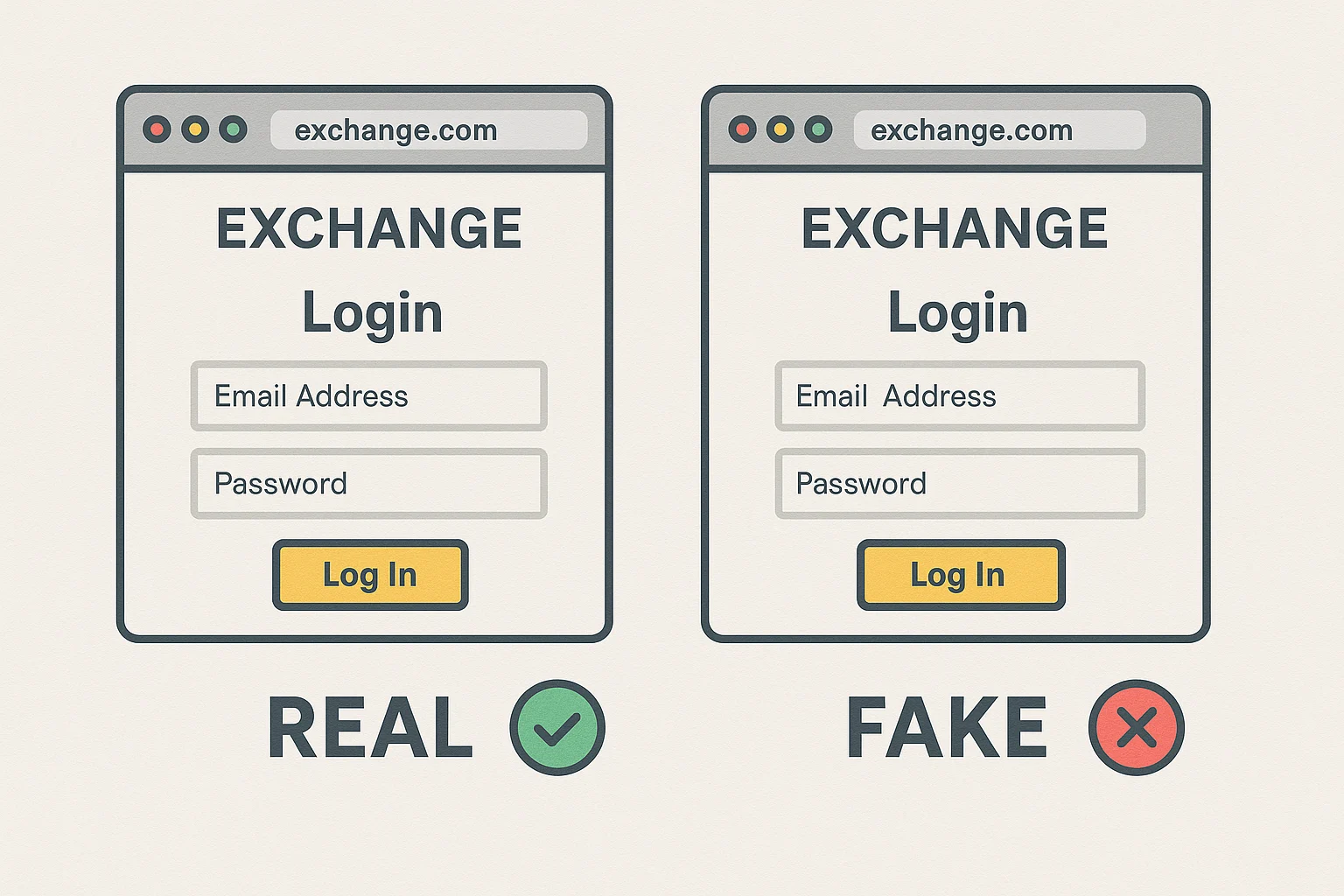
Side-by-side comparison of real and fake cryptocurrency exchange login pages, highlighting subtle URL differences

Real-World Examples

  • Fake MetaMask extensions in browser stores that steal wallet seeds
  • Impersonator emails claiming to be from Coinbase requiring “immediate action”
  • Fake DeFi platforms offering impossible yields to lure in victims

Why Beginners Should Care

Crypto transactions are irreversible. Once scammers have your private keys or drain your accounts, there’s no customer service to call, no bank to reverse charges.

Always verify URLs carefully – scammers use similar domains like “craken.com” instead of “kraken.com”. Bookmark legitimate sites and use those bookmarks instead of clicking email links.

Enable two-factor authentication and use hardware wallets to add extra security layers that make phishing attacks much harder to execute successfully.

Related Terms: Two-Factor Authentication, Hardware Wallet, Private Key, Rug Pull

Back to Crypto Glossary

Similar Posts

  • Native Interop

    Native Interop: Built-in Cross-Chain CommunicationNative interoperability refers to blockchain networks designed from the ground up to communicate with other chains without requiring external bridges or intermediaries. It's like speaking multiple languages fluently.Native interoperability describes blockchain architectures that include cross-chain communication capabilities as core features rather than external additions. These systems can interact with other networks through…

  • Quadratic Funding

    Quadratic Funding: Democratic Resource AllocationQuadratic funding uses mathematical formulas to allocate resources based on community preferences while preventing wealthy individuals from dominating funding decisions. It's democracy with math.Quadratic funding is a mechanism for allocating resources that gives more weight to the number of contributors than the amount contributed, using quadratic formulas to prevent wealthy individuals…

  • Verifiable Randomness

    Verifiable Randomness: Provably Fair Random NumbersVerifiable randomness provides cryptographically secure random numbers that can be independently verified for fairness. It's like having dice that everyone can mathematically confirm are not loaded.Verifiable randomness refers to random number generation systems that produce unpredictable outputs while providing cryptographic proofs that the randomness is fair and unbiased. This enables trustless…

  • Team Incentives

    Team Incentives: Aligning Development with SuccessTeam incentives structure compensation and motivation for cryptocurrency project developers and founders. They align team interests with long-term project success rather than short-term gains.Team incentives refer to compensation structures that motivate project teams to work toward long-term success rather than quick profits. These typically include token allocations with vesting schedules and…

  • NFT Gaming

    NFT Gaming: Blockchain-Based Digital GamingNFT gaming integrates non-fungible tokens into video games to enable true ownership of in-game assets. It's like owning actual collectible cards that you can trade with anyone, use in multiple games, and keep forever regardless of what happens to the original game.NFT gaming refers to video games that utilize non-fungible tokens…

  • Storage Rent

    Storage Rent: Pay-per-Use Blockchain StorageStorage rent is a proposed mechanism where users pay ongoing fees for maintaining data on blockchain networks. It's like paying monthly rent for keeping files in cloud storage instead of a one-time purchase.Storage rent refers to fee mechanisms that charge users for ongoing blockchain storage rather than allowing permanent storage after…