
Sidechain

Sidechain: Independent Chains with Main Chain Connections

Sidechains operate independently while maintaining bridges to main blockchains. They’re like having a separate express lane that connects back to the main highway when needed.

A sidechain is an independent blockchain that runs parallel to a main blockchain and is connected through a two-way bridge allowing asset transfers. Sidechains can have different consensus mechanisms, block times, and features while maintaining interoperability with the parent chain.

How Sidechains Work

Two-way pegs lock assets on the main chain and mint equivalent tokens on the sidechain, enabling transfers between chains. When moving back, sidechain tokens are burned and main chain assets are unlocked.

Independent consensus allows sidechains to optimize for specific use cases like faster transactions, lower fees, or specialized smart contract features without affecting the main chain.

Bridge security varies from centralized custodians to complex multi-signature schemes to fully decentralized smart contract systems, each with different trust assumptions.
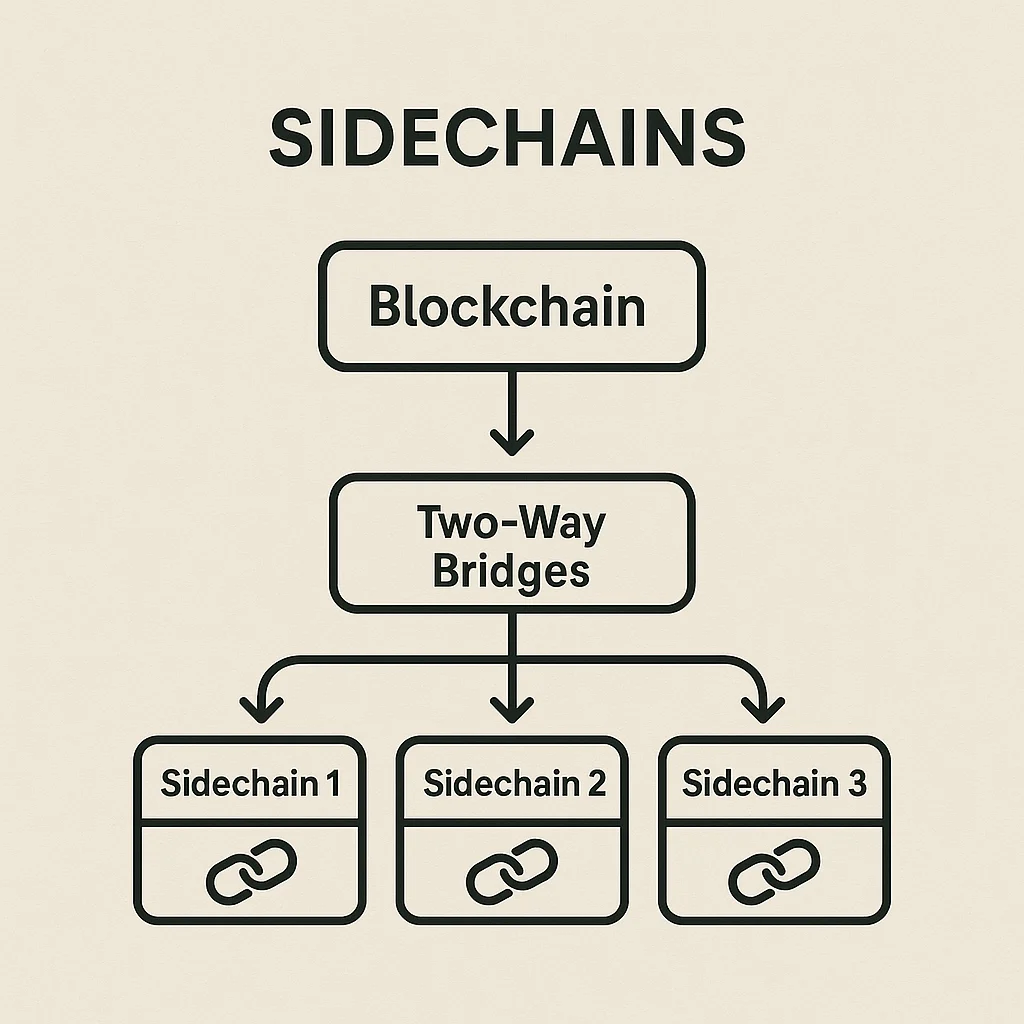
Infographic showing sidechain architecture with a main blockchain connected to multiple sidechains via two-way bridges

Real-World Examples

  • Polygon – Popular Ethereum sidechain offering faster, cheaper transactions
  • xDai Chain – Stablecoin-based sidechain for everyday payments
  • Liquid Network – Bitcoin sidechain for faster settlement between exchanges

Why Beginners Should Care

Lower costs on sidechains make them attractive for testing DeFi protocols or making frequent transactions without expensive main chain fees.

Bridge risks include smart contract vulnerabilities, centralized custody risks, and potential loss of funds if bridge mechanisms fail or get hacked.

Ecosystem fragmentation can occur when liquidity and users move to sidechains, potentially weakening the main chain’s network effects.

Related Terms: Bridge, Layer 2, Two-Way Peg, Interoperability

Back to Crypto Glossary

Similar Posts

  • Consensus Participation

    Consensus Participation: Supporting Network SecurityConsensus participation involves actively contributing to blockchain network security and decision-making through validation, voting, or other consensus mechanisms. It's like being a jury member for digital transactions.Consensus participation refers to active involvement in blockchain network consensus processes through validation, staking, mining, or other mechanisms that help secure networks and process transactions. Participants…

  • Metadata

    Metadata: Data About DataMetadata provides information about other data, such as describing what an NFT represents, when it was created, or what properties it has. It's like the label on a file folder that tells you what's inside.Metadata refers to descriptive information about digital assets, transactions, or other data that provides context, properties, and characteristics…

  • Cryptography

    Cryptography: Mathematical Security FoundationCryptography is the mathematical science of securing information through encryption, digital signatures, and other techniques. It's the foundation that makes cryptocurrencies and blockchain technology secure and trustworthy.Cryptography refers to mathematical techniques for securing information, enabling authentication, and protecting data confidentiality through algorithms and protocols. Modern cryptocurrency systems depend entirely on cryptographic security for…

  • Order Book

    Order Book: Market Trading QueueAn order book displays all buy and sell orders for a trading pair, showing market depth and price discovery. It's like a transparent auction house where everyone can see all bids and offers.An order book is a real-time list of buy and sell orders for a specific trading pair, organized by…

  • Verification

    Verification: Confirming Accuracy and AuthenticityVerification is the process of confirming that information, transactions, or claims are accurate and authentic without requiring trust in the information source. It's like being able to personally test that a diamond is real using scientific instruments instead of just believing the jeweler's word.Verification refers to the mathematical and cryptographic processes…

  • Native Interop

    Native Interop: Built-in Cross-Chain CommunicationNative interoperability refers to blockchain networks designed from the ground up to communicate with other chains without requiring external bridges or intermediaries. It's like speaking multiple languages fluently.Native interoperability describes blockchain architectures that include cross-chain communication capabilities as core features rather than external additions. These systems can interact with other networks through…