
SocialFi

SocialFi: Social Media Meets Financial Incentives

SocialFi combines social networking with decentralized finance, rewarding users for creating content and engaging with communities. It’s like getting paid to post, but with actual economic models behind it.

SocialFi refers to social finance applications that integrate social media features with DeFi economics, enabling users to monetize social interactions through token rewards, NFT creation, and community governance. Users earn from content creation, curation, and social engagement.

How SocialFi Works

Token incentives reward users for creating valuable content, engaging with others’ posts, and building community participation through measurable contributions.
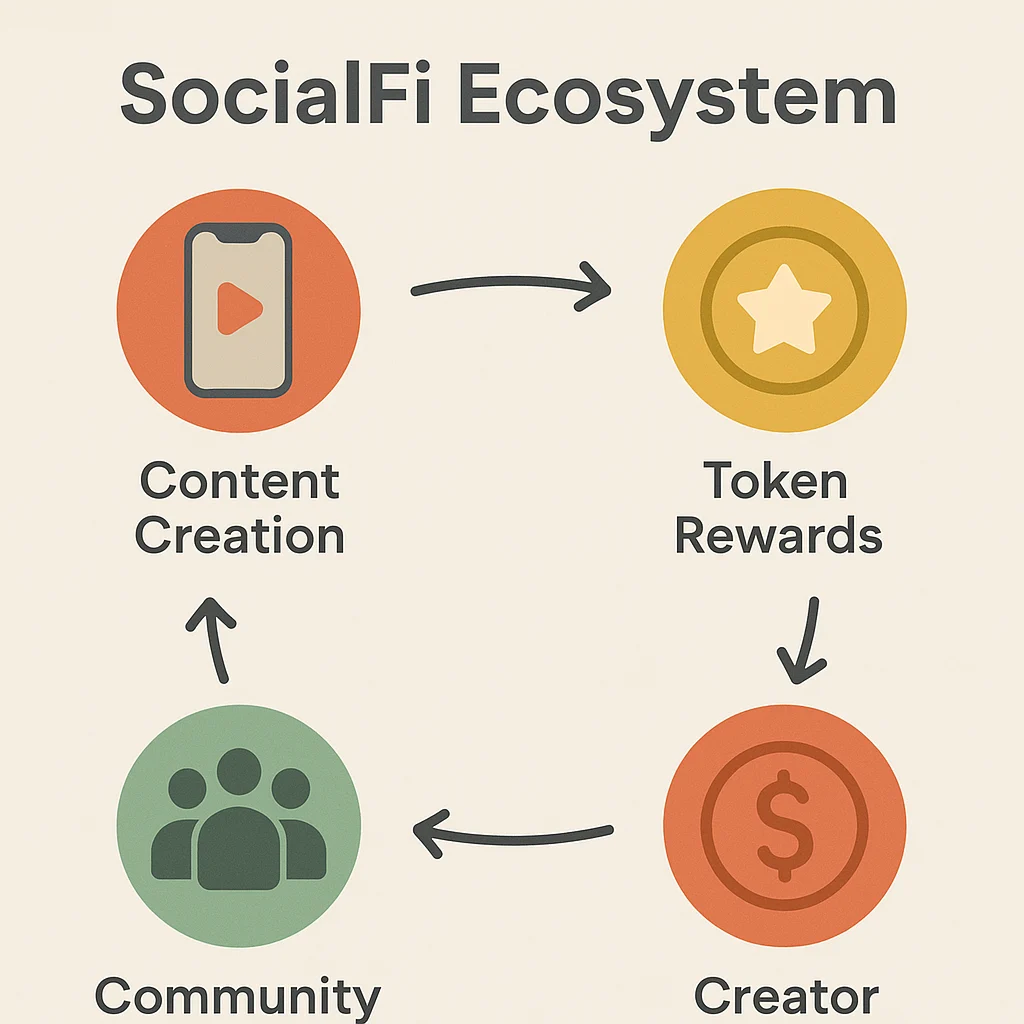
Infographic showing the SocialFi ecosystem with stages: content creation, token rewards, community governance, and creator monetization

Governance participation gives community members voting power over platform rules, feature development, and treasury allocation based on their contributions.

[IMAGE: SocialFi ecosystem showing content creation → token rewards → community governance → creator monetization]

Real-World Examples

  • Friend.tech enables trading shares of social media influencers with price discovery based on popularity
  • Lens Protocol provides decentralized social networking with composable profiles and monetization
  • BitClout (now DeSo) created social tokens tied to individual creators’ influence

Why Beginners Should Care

Direct monetization opportunities for content creators without relying on advertising revenue or platform algorithm changes that affect reach.

Ownership benefits as users control their social graphs, content, and earnings rather than being subject to centralized platform policies.

Speculation risks when social tokens become investment vehicles rather than utility tokens, creating unsustainable economic models.

Related Terms: Social Token, Community Governance, Token Incentives

Back to Crypto Glossary

Similar Posts

  • Scaling

    Scaling: Handling More TransactionsScaling refers to increasing a blockchain network's capacity to handle more transactions per second without sacrificing security or decentralization. It's the holy grail of blockchain development.Scaling in blockchain technology involves improving transaction throughput, reducing costs, and maintaining performance as networks grow in size and usage. This typically requires technical solutions that balance speed,…

  • Proof of Work (PoW)

    Proof of Work (PoW): Bitcoin’s Security Model Proof of Work is how Bitcoin solves the double-spending problem without trusted authorities. It’s energy-intensive by design – that’s a feature, not a bug. Proof of Work is a consensus mechanism where miners compete to solve computationally difficult puzzles to validate transactions and create new blocks. The winning…

  • NFT Lending

    NFT Lending: Borrowing Against Digital Art NFT lending allows using non-fungible tokens as collateral for cryptocurrency loans. It’s like pawning your rare baseball cards, except the cards live in digital wallets. NFT lending enables borrowers to use their non-fungible tokens as collateral to obtain cryptocurrency loans while retaining the potential upside of their digital assets….

  • Price Feed

    Price Feed: Real-Time Market DataPrice feeds provide real-time cryptocurrency market data to applications and smart contracts that need current asset values. They're like financial news tickers that continuously update with the latest stock prices, but for digital assets and automated systems.Price feed refers to continuous streams of current market prices and trading data that supply…

  • Custom Blockchain

    Custom Blockchain: Purpose-Built NetworksA custom blockchain is a network designed for specific use cases rather than general-purpose applications. It's like building a specialized tool for a particular job instead of using a multi-purpose tool.A custom blockchain is a purpose-built blockchain network designed to meet specific requirements for particular applications or use cases. These networks optimize for…

  • Lockup Period

    Lockup Period: Temporary Access RestrictionsLockup periods prevent token holders from selling or transferring their holdings for specified time frames. It's like having a certificate of deposit that you can't cash out early.A lockup period is a predetermined time frame during which cryptocurrency holders cannot sell, transfer, or access their tokens. These restrictions are typically enforced through…