
Synthetic Asset

Synthetic Asset: Creating Anything on Blockchain

Synthetic assets are blockchain tokens that track the value of real-world assets like stocks, commodities, or currencies. They’re like financial derivatives but programmable and globally accessible.

A synthetic asset is a tokenized derivative that tracks the price of an underlying asset without requiring direct ownership of that asset. Smart contracts use price feeds to maintain the synthetic’s value relative to its underlying reference.

How Synthetic Assets Work

Price oracles provide real-time data about underlying assets, enabling smart contracts to maintain accurate pegs between synthetics and their targets.

Collateralization backs synthetic assets with cryptocurrency deposits, often over-collateralized to account for price volatility and ensure redemption capability.

Liquidation mechanisms protect the system when collateral values fall too low, automatically selling collateral to maintain backing ratios.
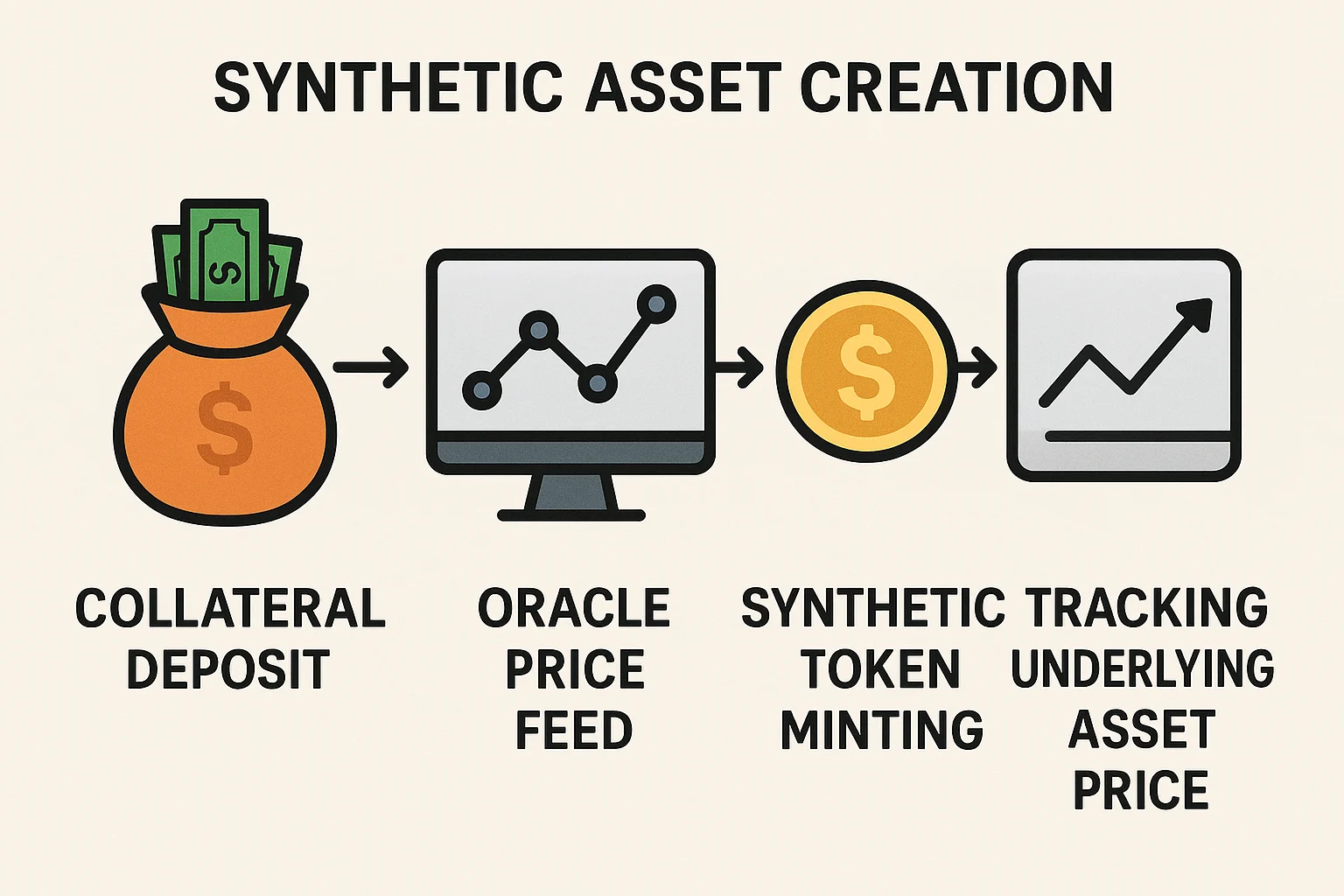
"Diagram showing the synthetic asset creation process: collateral deposit, oracle price feed, synthetic token minting, and asset price tracking."

Real-World Examples

  • Synthetix creates synthetic stocks, commodities, and currencies backed by SNX token collateral
  • Mirror Protocol offers synthetic U.S. stocks accessible globally without traditional brokerage accounts
  • UMA enables creation of custom synthetic assets for any trackable data feed

Why Beginners Should Care

Global access to traditional assets through synthetics bypasses geographic restrictions and traditional financial gatekeepers that limit investment options.

24/7 trading of synthetic stocks and commodities provides constant market access unlike traditional markets with limited hours and holidays.

Regulatory uncertainty surrounds synthetic assets as they may be classified as securities in some jurisdictions, affecting their availability and legal status.

Related Terms: Oracle, Collateral, Price Feed, Derivatives

Back to Crypto Glossary

Similar Posts

  • Order Matching

    Order Matching: Connecting Buyers and SellersOrder matching is the process of pairing buy and sell orders to execute trades on exchanges. It's like a digital matchmaker that finds the perfect trading partners for each transaction.Order matching refers to the algorithmic process that pairs compatible buy and sell orders to execute trades at agreed prices on…

  • Governance Participation

    Governance Participation: Active Protocol InvolvementGovernance participation involves actively engaging in decision-making processes for cryptocurrency projects and protocols. It's like being an active citizen who votes and participates in community decisions.Governance participation refers to active involvement in protocol decision-making through voting, proposal creation, delegation, and other governance mechanisms. This enables community members to influence project direction and…

  • Transaction Privacy

    Transaction Privacy: Protecting Financial InformationTransaction privacy involves keeping cryptocurrency transaction details confidential while maintaining network security and functionality. It's like having a private bank account in a transparent financial system.Transaction privacy refers to techniques and technologies that protect the confidentiality of cryptocurrency transaction details including amounts, participants, and transaction history. This enables financial privacy while maintaining…

  • Transaction Signing

    Transaction Signing: Authorizing Blockchain OperationsTransaction signing uses private keys to create cryptographic signatures that authorize blockchain transactions. It's like signing a check with an unforgeable signature that proves you approved the payment.Transaction signing is the process of creating cryptographic signatures using private keys to authorize and authenticate blockchain transactions. This process proves ownership and prevents unauthorized…

  • Whale

    Whale: The Big Players Who Move Markets In crypto, whales are individuals or entities holding massive amounts of cryptocurrency. When whales move, markets tremble. A whale is someone who holds enough cryptocurrency to significantly influence market prices through their trading decisions. For Bitcoin, this typically means holding 1,000+ BTC (worth $30+ million at current prices)….

  • Smart Contract Analysis

    Smart Contract Analysis: Code Security EvaluationSmart contract analysis involves examining blockchain code for vulnerabilities, bugs, and security issues before deployment. It's like having a building inspector check the foundation before construction begins.Smart contract analysis refers to the systematic examination of smart contract code to identify security vulnerabilities, logic errors, and potential attack vectors. This process helps…