
WAGMI (We’re All Gonna Make It)

WAGMI: Crypto’s Battle Cry

WAGMI (We’re All Gonna Make It) is crypto’s rallying cry during tough times. It represents community solidarity and shared optimism about long-term success.

WAGMI stands for “We’re All Gonna Make It” – a popular crypto community phrase expressing collective optimism about future success despite current market conditions. It originated from bodybuilding culture but was adopted by crypto communities during bear markets.

How WAGMI Culture Works

Community bonding happens through shared struggles and mutual encouragement during market downturns. WAGMI posts provide emotional support when portfolios are bleeding.

Long-term perspective encourages focusing on fundamental development and adoption rather than short-term price movements that can be demoralizing.

Inclusive messaging suggests that retail investors can succeed alongside institutional players if they stick together and make smart long-term decisions.
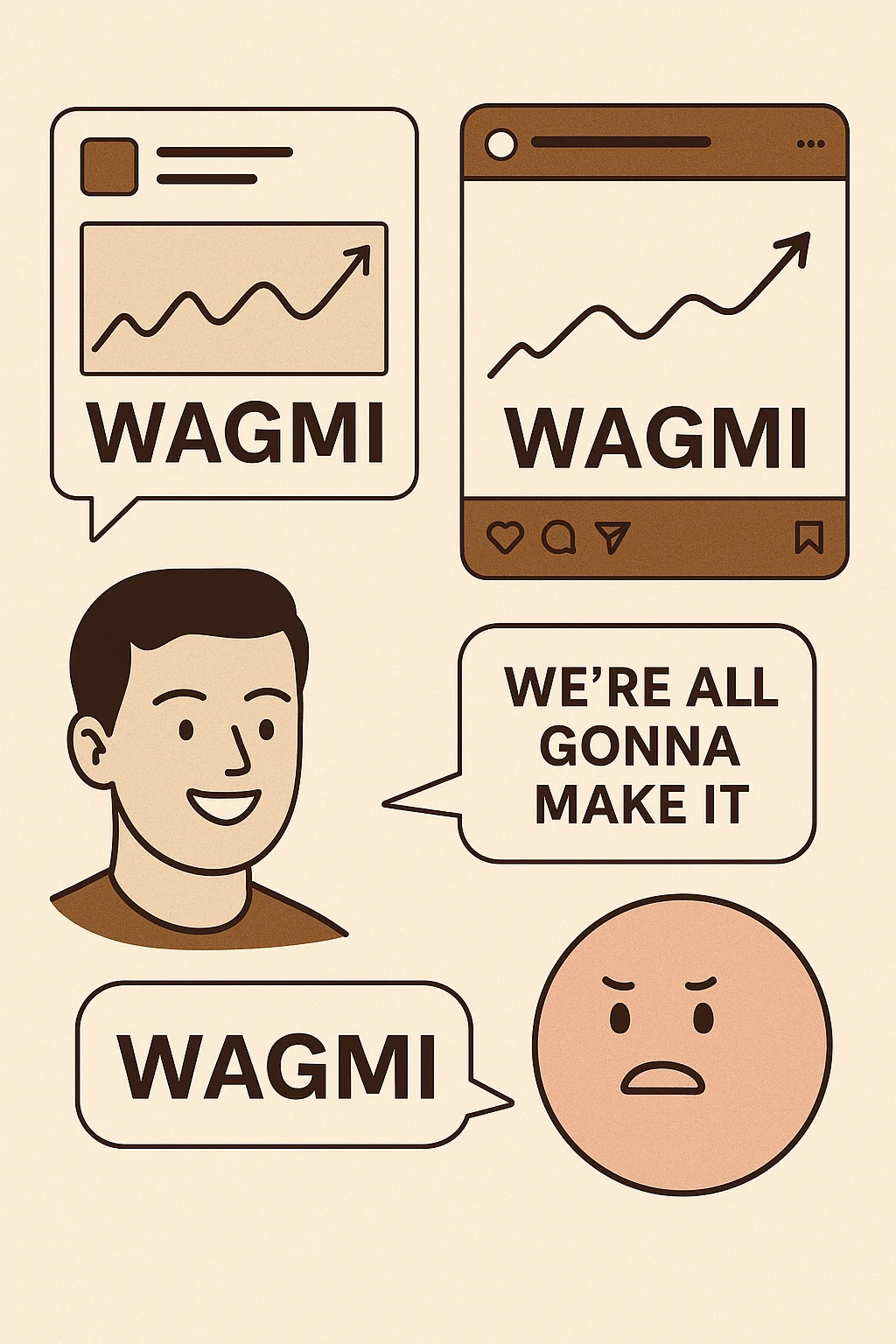
Illustration of social media posts and memes using the term WAGMI with rising charts, speech bubbles, and character expressions during market ups and downs

Real-World Examples

  • Twitter crypto communities use #WAGMI hashtags during bear markets and major crashes
  • Discord servers and Telegram groups rally members with WAGMI messages during FUD
  • NFT projects often adopt WAGMI messaging to build holder community and reduce selling pressure

Why Beginners Should Care

WAGMI mentality can provide psychological support during inevitable crypto volatility, but shouldn’t replace proper risk management and realistic expectations.

Community support helps new investors learn from experienced traders and avoid common mistakes through shared knowledge and encouragement.

Blind optimism risks exist when WAGMI becomes detached from fundamental analysis and realistic assessment of investment risks.

Related Terms: HODL, Diamond Hands, Community, Bull Market

Back to Crypto Glossary

Similar Posts

  • Validator

    Validator: Proof-of-Stake Network Guardians Validators are the security backbone of proof-of-stake networks. They propose blocks, verify transactions, and earn rewards for honest behavior. A validator is a network participant in proof-of-stake blockchains who validates transactions, proposes new blocks, and maintains network consensus in exchange for staking rewards. Validators replace miners in PoS systems. How Validators…

  • Execution Environment

    Execution Environment: Runtime for Smart ContractsAn execution environment provides the runtime infrastructure where smart contracts and decentralized applications operate. It's like the operating system that runs your computer programs.An execution environment is the runtime infrastructure that executes smart contracts and processes transactions on blockchain networks. This environment defines how code runs, what resources are available, and…

  • Peg Mechanism

    Peg Mechanism: Maintaining Price StabilityPeg mechanisms are systems designed to maintain stable exchange rates between cryptocurrencies and reference assets like fiat currencies. They're like autopilot systems that keep stablecoins flying at steady altitudes.A peg mechanism is a system that maintains the exchange rate of one asset relative to another through automatic adjustments, reserves, or market…

  • Total Value Locked (TVL)

    Total Value Locked (TVL): DeFi’s Scorecard TVL measures how much money is deposited in DeFi protocols. It’s like measuring the size of a bank by its total deposits – bigger usually means more trust and activity. Total Value Locked (TVL) is the aggregate value of all assets deposited in a DeFi protocol or across the…

  • Voting

    Voting: Decentralized Decision MakingVoting in cryptocurrency enables token holders to participate in governance decisions that shape project direction and protocol changes. It's like being a shareholder who can vote on company decisions, except the company is a decentralized protocol owned by its users.Voting refers to the democratic process where cryptocurrency token holders express preferences on…

  • Batch Verification

    Batch Verification: Efficient Bulk ProcessingBatch verification processes multiple transactions or proofs together to improve efficiency and reduce computational costs. It's like grading a stack of tests all at once instead of one by one.Batch verification refers to techniques that verify multiple cryptographic proofs, transactions, or operations simultaneously rather than processing each individually. This approach significantly improves…