
Whitelisting

Whitelisting: VIP Access to Token Sales

Whitelisting gives select addresses permission to participate in exclusive token sales or access restricted features. It’s crypto’s version of the velvet rope at exclusive clubs.

Whitelisting is the process of pre-approving wallet addresses for participation in token sales, exclusive features, or special privileges within crypto projects. Only whitelisted addresses can participate in restricted activities or access limited opportunities.

How Whitelisting Works

Application processes often require social media engagement, community participation, or completing specific tasks to demonstrate genuine interest rather than pure speculation.

KYC verification may be required for regulatory compliance, especially for larger token sales that need to verify investor accreditation or geographic eligibility.

Limited slots create scarcity and FOMO as projects often have more interested participants than available whitelist positions.
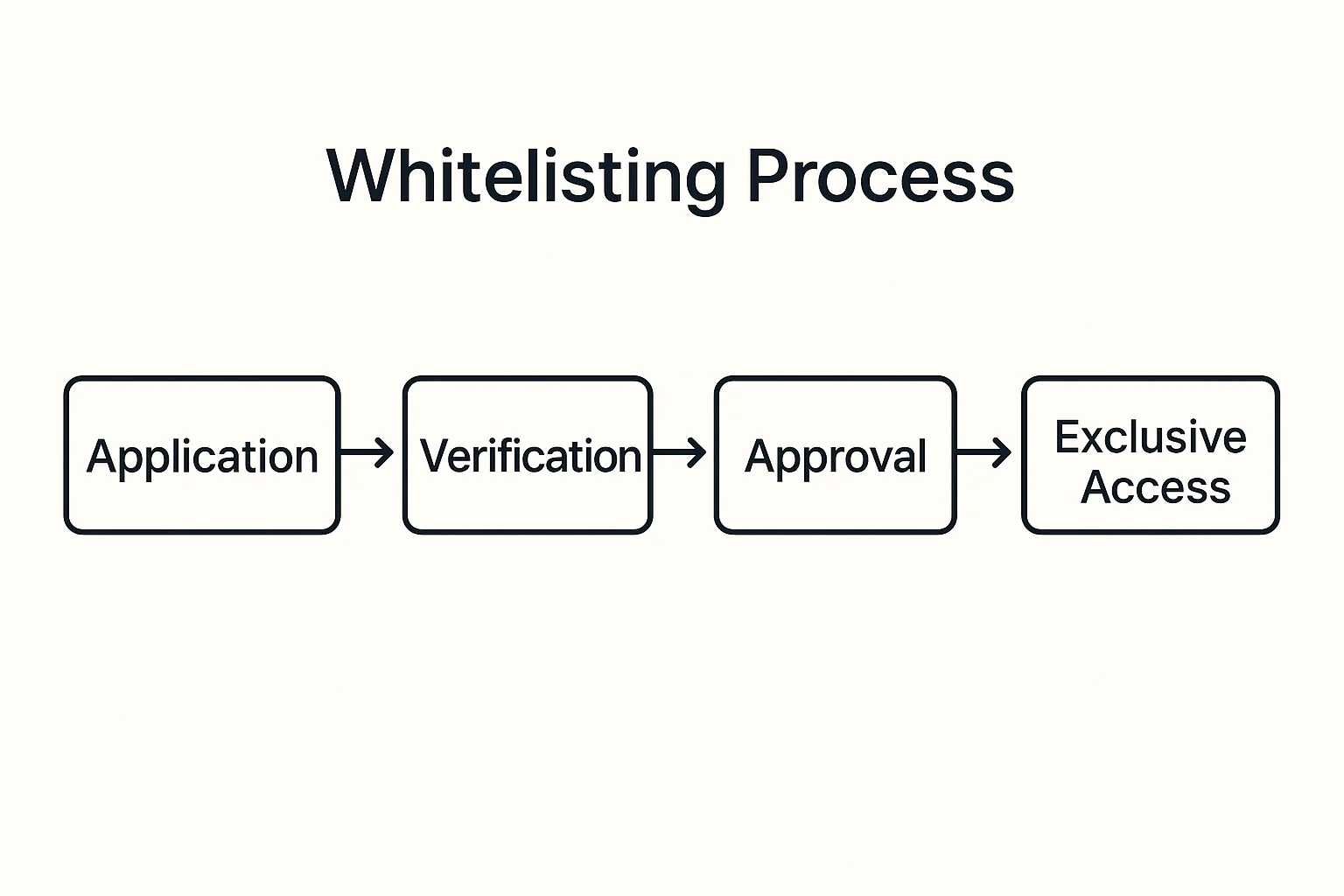
Whitelisting process flowchart showing application, verification, approval, and exclusive access stages.

Real-World Examples

  • NFT project whitelists give early supporters guaranteed minting opportunities before public sales
  • DeFi protocol launches often whitelist early community members for governance token distributions
  • Gaming token sales use whitelists to ensure dedicated players get priority access over speculators

Why Beginners Should Care

Exclusive opportunities through whitelisting can provide access to better prices or guaranteed allocations in popular token sales that quickly sell out.

Time investment required for whitelisting often involves significant community engagement without guaranteed acceptance or profitable outcomes.

Scam potential exists as fake projects use whitelist processes to collect personal information or wallet addresses for phishing attacks.

Related Terms: Token Sale, KYC, Launchpad, Community

Back to Crypto Glossary

Similar Posts

  • LayerZero

    LayerZero: Omnichain Interoperability Protocol LayerZero is an interoperability protocol that enables applications to send messages and transfer assets across different blockchains. It’s like having a universal translator for blockchain networks. LayerZero is a cross-chain communication protocol that enables decentralized applications to operate across multiple blockchains seamlessly. It provides infrastructure for omnichain applications that can access…

  • Flash Mint

    Flash Mint: Temporary Token Creation Flash mints create tokens temporarily within single transactions that must be returned or burned before the transaction completes. It’s like borrowing inventory that must be returned instantly. Flash minting allows creating large amounts of tokens temporarily within a single transaction, provided they are burned or properly backed before the transaction…

  • Execution Layer

    Execution Layer: Transaction Processing EngineThe execution layer handles transaction processing and smart contract execution within blockchain architectures. It's like the engine that actually does the work in a modular blockchain system.The execution layer is responsible for processing transactions, executing smart contracts, and managing state changes within blockchain networks. In modular architectures, this layer can be optimized…

  • Sybil Attack

    Sybil Attack: Fake Identity Manipulation Sybil attacks involve creating multiple fake identities to gain disproportionate influence in networks that assume one person equals one vote. It’s like stuffing the ballot box with imaginary voters. A Sybil attack is when an individual or entity creates multiple fake identities to gain unfair influence over a network, voting…

  • Monetary Policy

    Monetary Policy: Controlling Money SupplyMonetary policy refers to how money supply, interest rates, and economic incentives are managed within a currency system. In crypto, it's usually controlled by code instead of central banks.Monetary policy encompasses the rules and mechanisms that control cryptocurrency supply, inflation rates, and economic incentives within blockchain networks. Unlike traditional currencies, crypto monetary…

  • Systemic Risk

    Systemic Risk: Widespread System FailureSystemic risk refers to the potential for localized failures to cascade throughout the entire cryptocurrency ecosystem. It's like how one falling domino can knock down all the others in a chain reaction.Systemic risk describes the possibility that failure in one part of the cryptocurrency ecosystem could trigger widespread failures across multiple…