
Sniper Bot

Sniper Bot: Automated MEV Extraction

Sniper bots automatically execute trades ahead of other users to capture arbitrage opportunities and extract MEV. They’re the high-frequency traders of DeFi, but without regulatory oversight.

A sniper bot is an automated program that monitors blockchain mempools for profitable trading opportunities and executes transactions faster than human traders. These bots specialize in front-running, arbitrage, and MEV extraction across DeFi protocols.

How Sniper Bots Work

Mempool monitoring tracks pending transactions before they’re included in blocks, identifying profitable opportunities like large trades that will move prices.

Gas price optimization ensures bot transactions get prioritized by miners through higher fees, often paying 10-100x normal gas prices for speed advantages.

Atomic execution combines multiple trades into single transactions that either complete entirely or fail completely, eliminating partial execution risks.
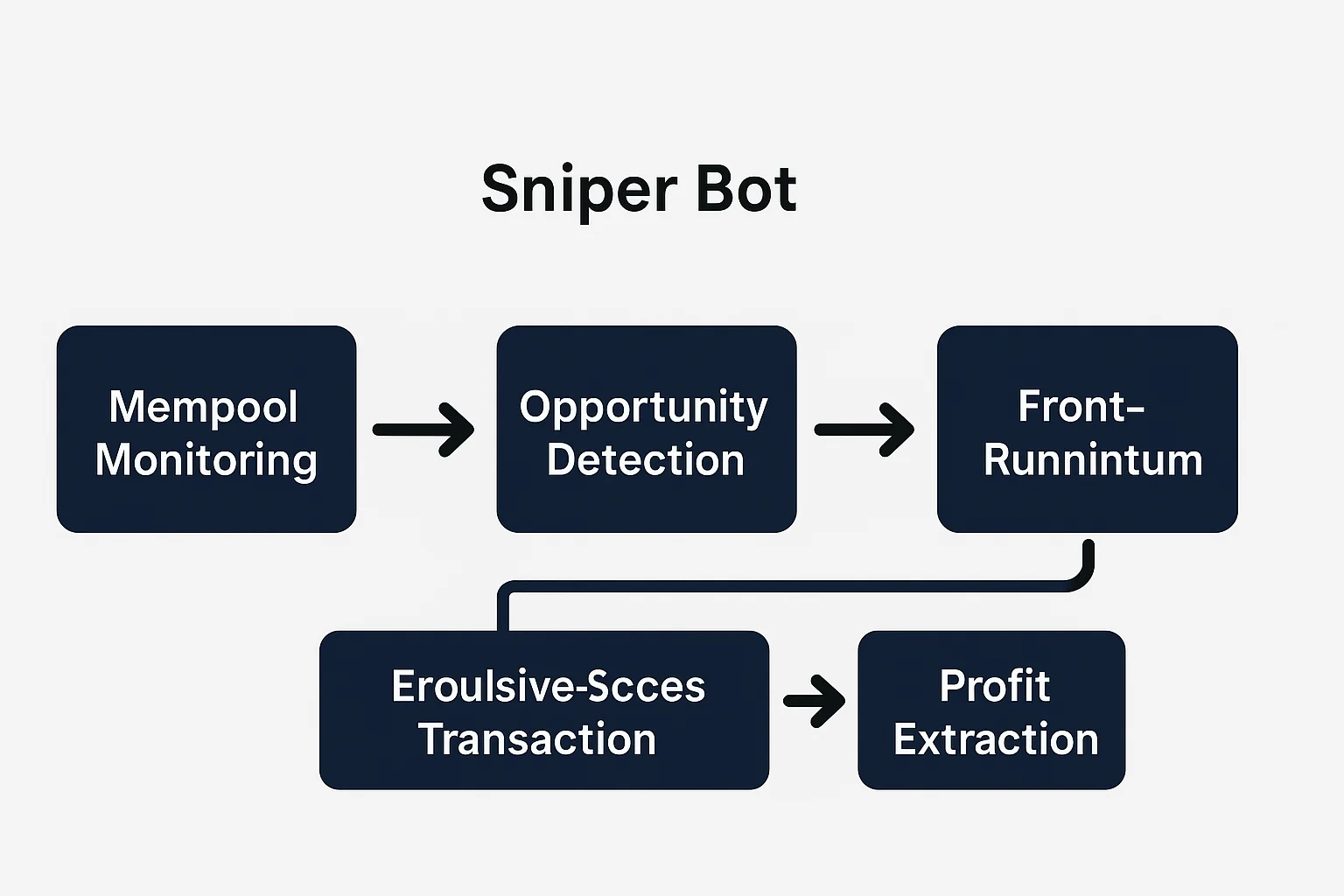
Sniper bot operation flowchart showing mempool monitoring, opportunity detection, front-running, and profit extraction steps.

Real-World Examples

  • DEX arbitrage bots exploit price differences between Uniswap, SushiSwap, and other exchanges
  • Liquidation bots compete to liquidate undercollateralized positions for profit
  • NFT sniping involves bots purchasing underpriced NFTs milliseconds after listing

Why Beginners Should Care

Hidden tax on regular users as sniper bots extract value from almost every large DeFi transaction through increased slippage and worse execution prices.

Technical arms race makes it nearly impossible for manual traders to compete with sophisticated bots that can execute trades in milliseconds.

Protocol responses include MEV-protected RPCs, private mempools, and fair sequencing services that aim to reduce bot advantages.

Related Terms: MEV, Front-Running, Arbitrage, Gas Price

Back to Crypto Glossary

Similar Posts

  • Cross-Chain Bridge

    Cross-Chain Bridge: Connecting Blockchain Islands Cross-chain bridges move assets between different blockchains, connecting isolated cryptocurrency ecosystems. They’re the highways between blockchain cities, but sometimes the bridges collapse. A cross-chain bridge is a protocol that enables the transfer of tokens, data, or smart contract calls between different blockchain networks. Bridges solve blockchain interoperability by creating connections…

  • Price Manipulation

    Price Manipulation: Artificial Market DistortionPrice manipulation involves artificially influencing asset prices through coordinated trading, false information, or market abuse. It's financial fraud adapted for the crypto age.Price manipulation refers to illegal or unethical activities designed to artificially inflate or deflate cryptocurrency prices for profit. These activities exploit market inefficiencies and harm other investors through deceptive practices.How…

  • Market Stability

    Market Stability: Reducing Price VolatilityMarket stability refers to conditions where asset prices experience relatively small fluctuations over time. It's like having calm seas instead of stormy waters for your investments.Market stability describes market conditions characterized by relatively low volatility, predictable price movements, and reduced extreme fluctuations. Stable markets enable better planning and reduce risks for participants.How…

  • Chain Reorg (Reorganization)

    Chain Reorg (Reorganization): Blockchain History Changes Chain reorgs occur when a blockchain adopts a different version of transaction history, potentially reversing confirmed transactions. It’s like time travel, but messier and more expensive. A chain reorganization (reorg) happens when a blockchain network adopts an alternative chain of blocks as the canonical history, potentially reversing previously confirmed…

  • Asset Rehypothecation

    Asset Rehypothecation: Reusing Collateral for Multiple PurposesAsset rehypothecation involves using the same collateral for multiple financial purposes simultaneously. It's like using your house as collateral for multiple loans at the same time.Asset rehypothecation refers to the practice of using deposited or pledged assets as collateral for additional financial activities beyond their original purpose. This can multiply…

  • Smart Contract Compatibility

    Smart Contract Compatibility: Cross-Platform Code ExecutionSmart contract compatibility enables applications to run across different blockchain networks without modification. It's like writing software that works on both Windows and Mac without changes.Smart contract compatibility refers to the ability of smart contract code to execute on multiple blockchain platforms without requiring rewrites or significant modifications. This enables broader…