
Encrypted Mempool

Encrypted Mempool: Private Transaction Pools

Encrypted mempools hide transaction details until inclusion in blocks, preventing front-running and MEV extraction. It’s like sending sealed bids instead of announcing your strategy publicly.

An encrypted mempool contains pending transactions that are cryptographically hidden from public view until block inclusion. This prevents sophisticated actors from front-running or extracting MEV from regular users’ transactions.

How Encrypted Mempools Work

Cryptographic hiding conceals transaction details like amounts, tokens, and intended actions until validators include them in blocks.

Commit-reveal schemes require users to first commit to encrypted transactions, then reveal details after inclusion to prevent front-running.

Threshold decryption may require multiple parties to collaborate in revealing transaction details, preventing single-party censorship.
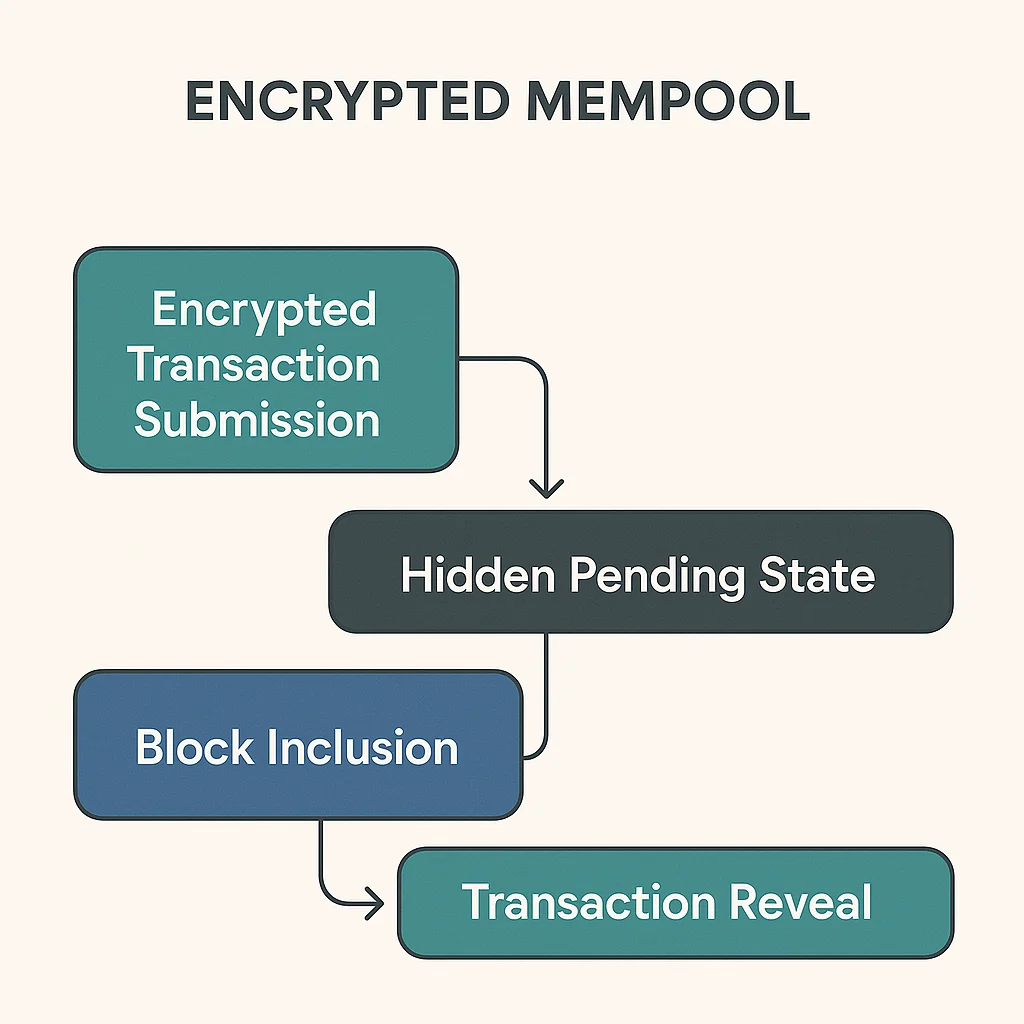
Encrypted mempool flow showing steps from encrypted transaction submission through hidden pending state to block inclusion and final transaction reveal.

Real-World Examples

  • Flashbots Protect provides MEV protection through private transaction pools
  • Shutter Network develops threshold encryption for Ethereum transactions
  • Aztec Network uses encrypted state for privacy-preserving smart contracts

Why Beginners Should Care

MEV protection significantly reduces the hidden tax on DeFi transactions that bots extract through front-running and sandwich attacks.

Fairer markets emerge when sophisticated actors can’t see pending transactions and position themselves advantageously.

Privacy enhancement protects trading strategies and financial information from public blockchain surveillance.

Related Terms: MEV, Front-Running, Private Mempool, Threshold Encryption

Back to Crypto Glossary

Similar Posts

  • Token Emissions

    Token Emissions: New Cryptocurrency CreationToken emissions refer to the creation and distribution of new cryptocurrency tokens over time according to predetermined schedules. It's like a factory that produces new money at controlled rates rather than printing it all at once.Token emissions describe the systematic creation and release of new cryptocurrency tokens into circulation according to…

  • Sidechain

    Sidechain: Independent Chains with Main Chain Connections Sidechains operate independently while maintaining bridges to main blockchains. They’re like having a separate express lane that connects back to the main highway when needed. A sidechain is an independent blockchain that runs parallel to a main blockchain and is connected through a two-way bridge allowing asset transfers….

  • Airdrop

    Airdrop: Free Tokens From the Sky Airdrops distribute free tokens to wallet addresses, usually to reward early users or generate buzz for new projects. Some are worth pennies, others change lives. An airdrop is the distribution of free cryptocurrency tokens to wallet addresses, typically as a marketing strategy, reward for early adoption, or method of…

  • Delegated Proof of Stake (DPoS)

    Delegated Proof of Stake (DPoS): Democratic Validation DPoS lets token holders vote for validators who secure the network on their behalf. It’s like electing representatives to Congress, but for blockchain consensus. Delegated Proof of Stake (DPoS) is a consensus mechanism where token holders vote for a limited number of delegates who validate transactions and secure…

  • Bagholder

    Bagholder: Stuck with Worthless Tokens A bagholder is someone stuck holding cryptocurrency that has lost most of its value with little hope of recovery. It’s crypto’s version of being left holding the bag. A bagholder is an investor who continues holding a cryptocurrency that has significantly decreased in value, often because they’re unable or unwilling…

  • Restaking Slashing

    Restaking Slashing: Enhanced Penalty Risks Restaking slashing involves penalties from multiple protocols simultaneously, amplifying potential losses for validators who secure additional networks. It’s like being liable for multiple insurance policies with a single accident. Restaking slashing refers to the enhanced penalty mechanisms that apply when validators use restaked assets to secure multiple protocols, potentially facing…