
Liquid Restaking

Liquid Restaking: Flexible High-Yield Staking

Liquid restaking combines the capital efficiency of liquid staking with additional yield from securing multiple networks. It’s like having your cake and eating it too, but with slashing risks.

Liquid restaking allows staked assets to secure additional protocols while remaining liquid through tokenized representations. Users can earn enhanced yields from multiple sources while maintaining the ability to trade or use their staked positions.

How Liquid Restaking Works

Multiple validation enables staked assets to simultaneously secure the base layer and additional protocols or middleware services.

Liquid tokens represent restaked positions, allowing users to trade or use their staked assets in DeFi while earning enhanced rewards.

Operator delegation lets users choose professional operators to handle the technical complexity of running multiple validation services.
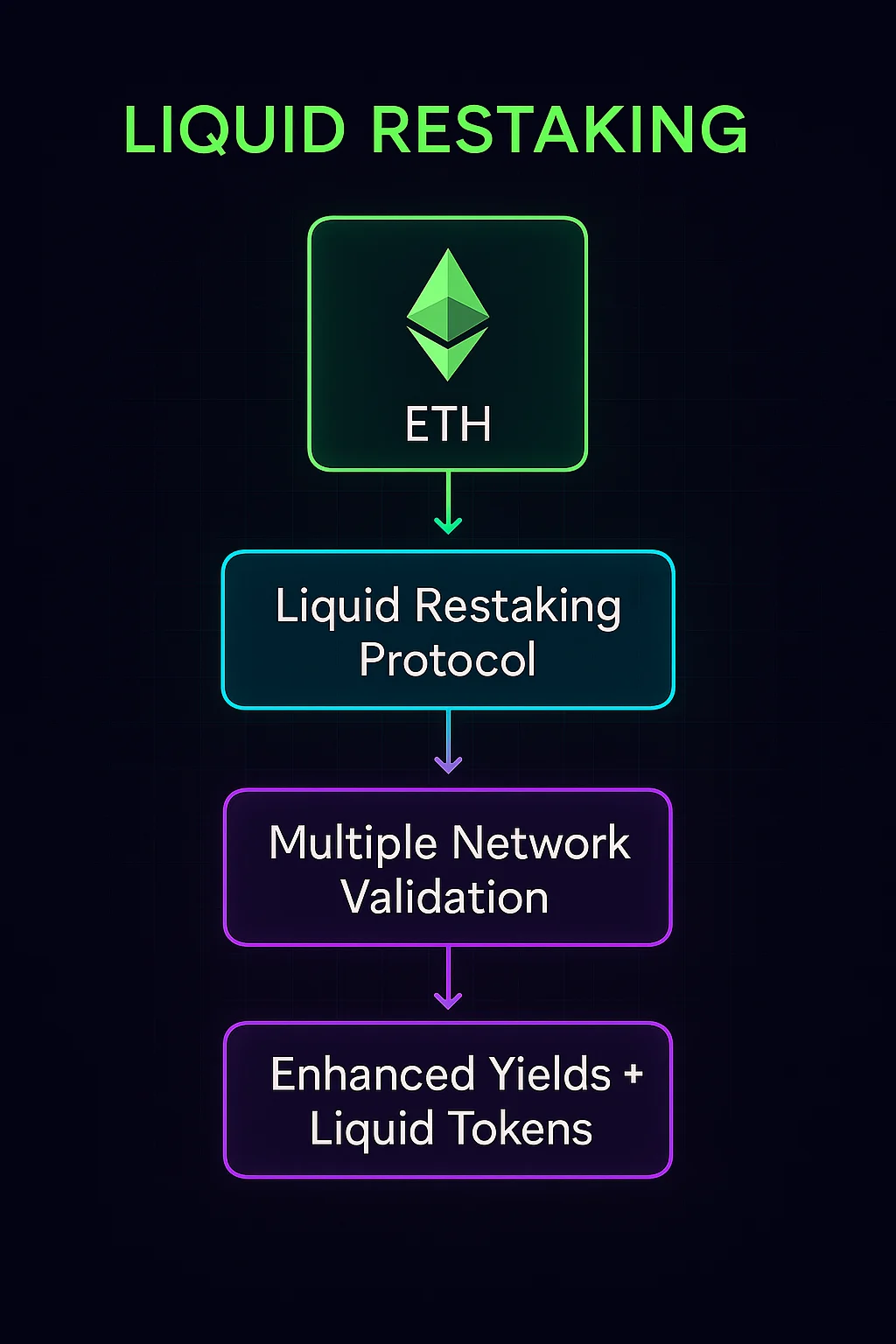
Infographic showing liquid restaking flow: ETH staking into a protocol, multi-network validation, and yield with liquid token issuance

Real-World Examples

  • EigenLayer enables ETH restaking for additional protocol security and yields
  • Liquid restaking protocols build on EigenLayer to provide tokenized restaking positions
  • Professional operators manage restaking infrastructure for delegated stake

Why Beginners Should Care

Enhanced yields from multiple revenue sources can significantly outperform traditional single-protocol staking returns.

Increased complexity and slashing risks from multiple protocols make liquid restaking suitable for more sophisticated users willing to accept additional risks.

Capital efficiency maximizes the productive use of staked assets rather than having them earn only base layer rewards.

Related Terms: Restaking, Liquid Staking, EigenLayer, Slashing

Back to Crypto Glossary

Similar Posts

  • Transaction Ordering

    Transaction Ordering: Sequence Control SystemsTransaction ordering determines the sequence in which transactions get processed within blockchain blocks. It's like controlling the line at a busy restaurant.Transaction ordering refers to the process by which blockchain networks determine the sequence of transactions within blocks. This ordering can significantly affect transaction outcomes, especially in DeFi applications sensitive to price…

  • Treasury

    Treasury: Protocol Fund ManagementA treasury is a fund controlled by cryptocurrency projects or DAOs for development, operations, and community initiatives. It's like a company's bank account that's managed by community voting instead of executives.A treasury refers to cryptocurrency funds held and managed by protocols, DAOs, or projects for operational expenses, development funding, and community initiatives. These…

  • Gas Optimization

    Gas Optimization: Reducing Transaction CostsGas optimization involves techniques to minimize the computational cost of blockchain transactions and smart contracts. It's like finding the most fuel-efficient route for your digital transactions.Gas optimization refers to practices and techniques used to reduce the gas consumption of blockchain transactions and smart contract operations. This minimizes transaction costs and improves application…

  • Block Building

    Block Building: Transaction Assembly ProcessBlock building is the process of selecting and organizing transactions into blocks that will be added to the blockchain. It's like a chef choosing ingredients and assembling them into a complete meal that satisfies both taste and nutritional requirements.Block building refers to the process where miners or validators select, order, and…

  • Phishing Attack

    Phishing Attack: How Scammers Steal Your Crypto Phishing attacks are the #1 way people lose crypto. Scammers create fake websites that look identical to real ones, then steal your login credentials and private keys. A phishing attack is a fraudulent attempt to obtain sensitive information by impersonating a trustworthy entity through fake websites, emails, or…

  • Sandwich Attack

    Sandwich Attack: Extracting Value from Your Trades Sandwich attacks place trades before and after your transaction to manipulate prices and extract profit from your slippage. It’s like cutting in line twice – once in front of you and once behind you. A sandwich attack involves placing a buy order immediately before a victim’s trade and…