
Gas Refund Token

Gas Refund Token: Optimizing Transaction Costs

Gas refund tokens exploit Ethereum’s gas refund mechanism to reduce transaction costs by clearing unused storage. They’re like getting paid to clean up the blockchain.

A gas refund token uses Ethereum’s gas refund mechanism to partially offset transaction costs by clearing unused contract storage during token transfers. The protocol design creates gas rebates that reduce the effective cost of transactions.

How Gas Refund Tokens Work

Storage clearing operations receive gas refunds when smart contracts delete unused storage slots, providing rebates to transaction senders.

Token economics are designed so that normal token operations trigger storage clearing that generates gas refunds for users.

Rebate distribution typically happens automatically during token transfers or through separate claim mechanisms that distribute saved gas costs.
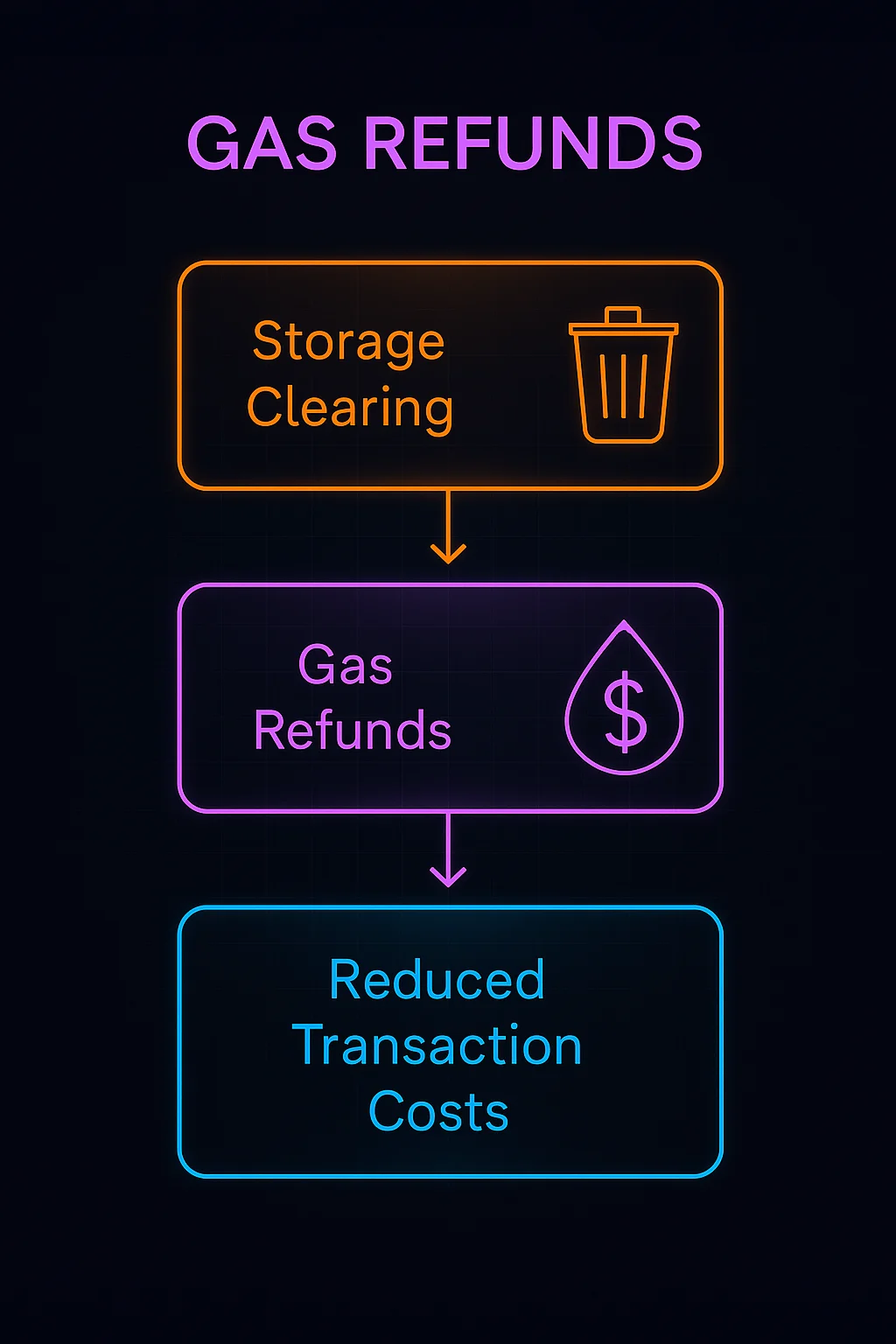
Infographic showing gas refund process: clearing storage data, triggering refunds, and lowering user transaction costs

Real-World Examples

  • Chi Gastoken was designed specifically to optimize gas costs through storage manipulation
  • GST2 tokens provided gas savings during periods of high network congestion
  • Various DeFi protocols have integrated gas optimization mechanisms into their token designs

Why Beginners Should Care

Cost savings can be significant during periods of high gas prices, making transactions more affordable for regular users.

Complexity trade-offs as gas refund tokens often have unusual mechanics that require understanding of Ethereum’s gas refund system.

Network effects mean gas refund benefits depend on widespread adoption and optimal usage patterns to generate meaningful savings.

Related Terms: Gas Fees, Gas Optimization, Storage Rent, Transaction Cost

Back to Crypto Glossary

Similar Posts

  • Node Operator

    Node Operator: Network Infrastructure Providers Node operators run the computers that power blockchain networks. They’re the internet service providers of crypto – invisible but essential infrastructure. A node operator is an individual or organization that runs blockchain network infrastructure by maintaining nodes that validate transactions, store data, and relay information. They provide the computational backbone…

  • DeFi Composability

    DeFi Composability: Building Block Finance DeFi composability allows protocols to integrate seamlessly, creating complex financial products by combining simpler components. It’s like financial Lego blocks that snap together perfectly. DeFi composability refers to the ability of decentralized finance protocols to interact and build upon each other, creating more complex financial products through modular integration. This…

  • Private Key

    Private Key: Your Crypto’s Secret Password Your private key is the most important thing you’ll ever own in crypto. Lose it, and your money’s gone forever. No customer service number to call. A private key is a secret code that proves you own your cryptocurrency and allows you to spend it. It’s like the combination…

  • SocialFi

    SocialFi: Social Media Meets Financial Incentives SocialFi combines social networking with decentralized finance, rewarding users for creating content and engaging with communities. It’s like getting paid to post, but with actual economic models behind it. SocialFi refers to social finance applications that integrate social media features with DeFi economics, enabling users to monetize social interactions…

  • Wallet Signature Spoofing

    Wallet Signature Spoofing: Fake Authorization Attacks Wallet signature spoofing tricks users into signing malicious transactions that appear legitimate but actually authorize harmful actions. It’s like signing a contract where the fine print changes after you sign. Wallet signature spoofing involves presenting misleading information about transaction contents to trick users into signing authorizations for unintended actions….

  • AML (Anti-Money Laundering)

    AML (Anti-Money Laundering): Fighting Financial Crime AML regulations force crypto businesses to monitor and report suspicious activities. It’s the government’s attempt to prevent crypto from becoming a money laundering paradise. Anti-Money Laundering (AML) refers to laws, regulations, and procedures designed to prevent criminals from disguising illegally obtained funds as legitimate income. Crypto exchanges and businesses…