
Crypto Vesting Schedule

Crypto Vesting Schedule: Gradual Token Release

Vesting schedules control when team members, investors, or community members can access their allocated tokens. It’s like having a time-locked savings account that prevents dumping.

A crypto vesting schedule defines when and how allocated tokens become available for use, typically spreading releases over months or years to prevent market dumping. Different stakeholders usually have different vesting terms based on their role and contribution timing.

How Vesting Schedules Work

Time-based releases unlock predetermined percentages of tokens at regular intervals, such as monthly or quarterly distributions over 2-4 years.

Cliff periods require waiting a minimum time before any tokens become available, ensuring initial commitment before any rewards are accessible.

Performance milestones may trigger additional unlocks based on project achievements, user adoption, or revenue targets rather than pure time passage.
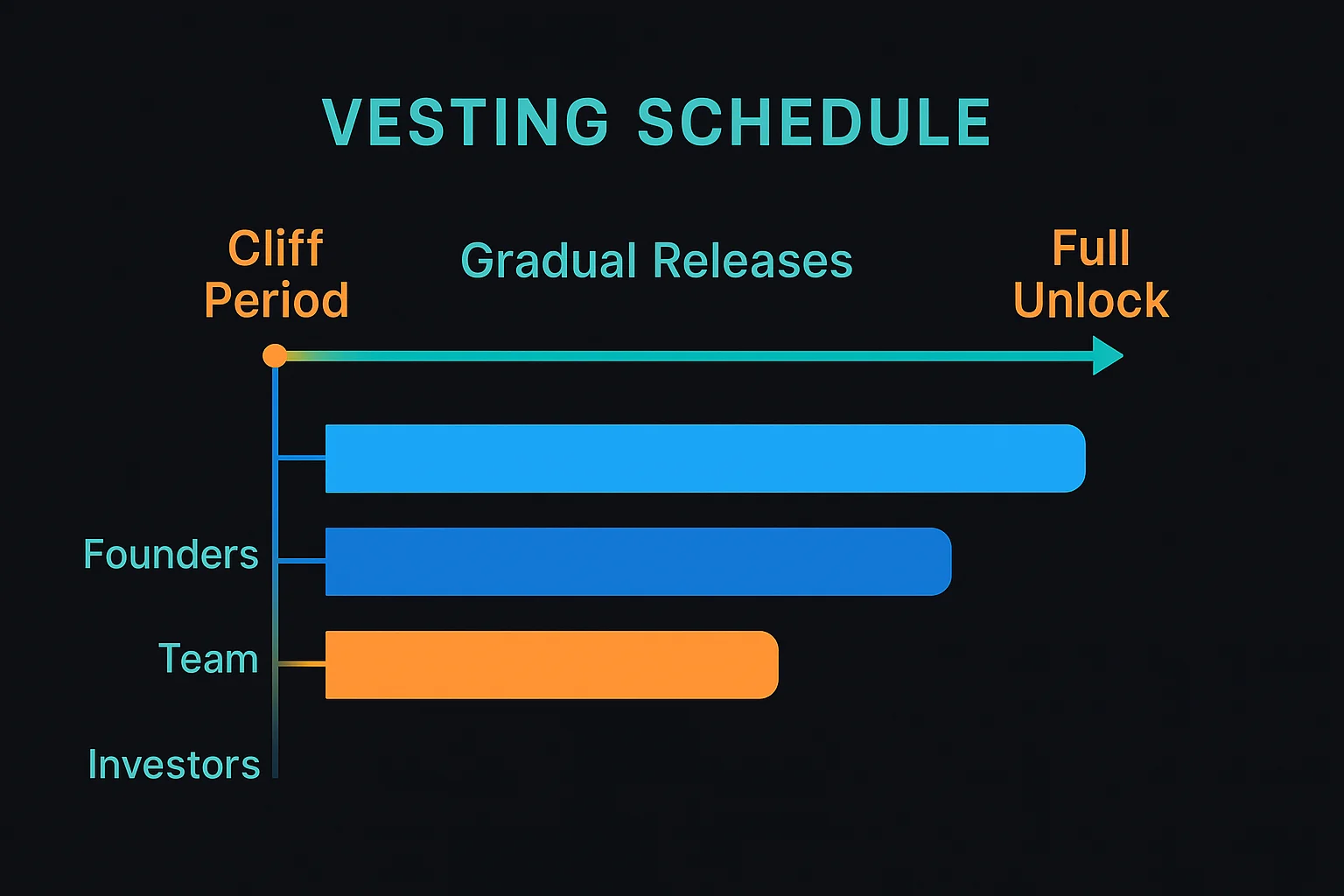
Vesting schedule timeline showing cliff period, gradual token releases, and full unlock across founders, team, and investors

Real-World Examples

  • Team allocations often have 1-year cliffs with 4-year total vesting to ensure long-term commitment
  • Investor tokens may have shorter 6-month cliffs with 2-year vesting periods
  • Community rewards sometimes have no cliffs but longer overall vesting to encourage participation

Why Beginners Should Care

Market pressure understanding helps predict potential selling pressure as large token allocations become available for trading.

Team incentives alignment through long vesting periods suggests teams are committed to long-term project success rather than quick exits.

Investment timing considerations around major vesting events that could significantly impact token prices through increased supply.

Related Terms: Token Allocation, Lock-up Period, Team Incentives, Supply Schedule

Back to Crypto Glossary

Similar Posts

  • Shared Security

    Shared Security: Collective Network ProtectionShared security allows multiple blockchain applications or chains to benefit from common security infrastructure rather than maintaining separate validator sets. It's like having a shared security service for multiple buildings.Shared security refers to security models where multiple blockchain networks or applications are protected by a common set of validators or consensus…

  • Delegated Proof of Stake (DPoS)

    Delegated Proof of Stake (DPoS): Democratic Validation DPoS lets token holders vote for validators who secure the network on their behalf. It’s like electing representatives to Congress, but for blockchain consensus. Delegated Proof of Stake (DPoS) is a consensus mechanism where token holders vote for a limited number of delegates who validate transactions and secure…

  • Paper Hands

    Paper Hands: Quick to Sell, Quick to Regret Paper hands describes investors who sell at the first sign of trouble or take profits too early. It’s crypto’s version of weak stomach syndrome. Paper hands refers to investors who sell their cryptocurrency holdings quickly due to fear, panic, or impatience rather than holding through volatility. The…

  • AI Coins

    AI Coins: Cryptocurrency Meets Artificial Intelligence AI coins are cryptocurrencies focused on artificial intelligence applications, data marketplaces, or computational resources for machine learning. They’re betting that AI and crypto will merge into something bigger than both. AI coins are cryptocurrencies that facilitate artificial intelligence development, deployment, or monetization through decentralized networks. These tokens enable AI…

  • Meta Transactions

    Meta Transactions: Gasless User InteractionsMeta transactions enable users to interact with blockchain applications without paying gas fees directly. It's like having someone else pay your transaction fees while you control the actual operations.Meta transactions are blockchain transactions where the gas fees are paid by a third party (relayer) while the user maintains control over the…

  • Mobile Wallet

    Mobile Wallet: Cryptocurrency on Your PhoneMobile wallets are smartphone applications that store, send, and receive cryptocurrency. They're like having a digital bank in your pocket with global reach.A mobile wallet is a smartphone application that enables users to store, manage, and transact with cryptocurrencies directly from their mobile devices. These wallets prioritize convenience and accessibility for…