
Permit (EIP-2612)

Permit (EIP-2612): Gasless Approvals

Permit functionality allows token approvals through signatures instead of transactions, enabling gasless user experiences for DeFi interactions. It’s like signing a check instead of going to the bank.

Permit (EIP-2612) is a token standard that enables gasless approvals through cryptographic signatures rather than on-chain transactions. Users can authorize token spending without paying gas fees, with the actual approval happening when tokens are used.

How Permit Works

Signature-based approvals use cryptographic signatures to authorize token spending without requiring an on-chain transaction for the approval itself.

Deadline enforcement includes expiration times in permit signatures to prevent old authorizations from being used maliciously after extended periods.

Nonce tracking prevents signature replay attacks by ensuring each permit signature can only be used once per wallet.
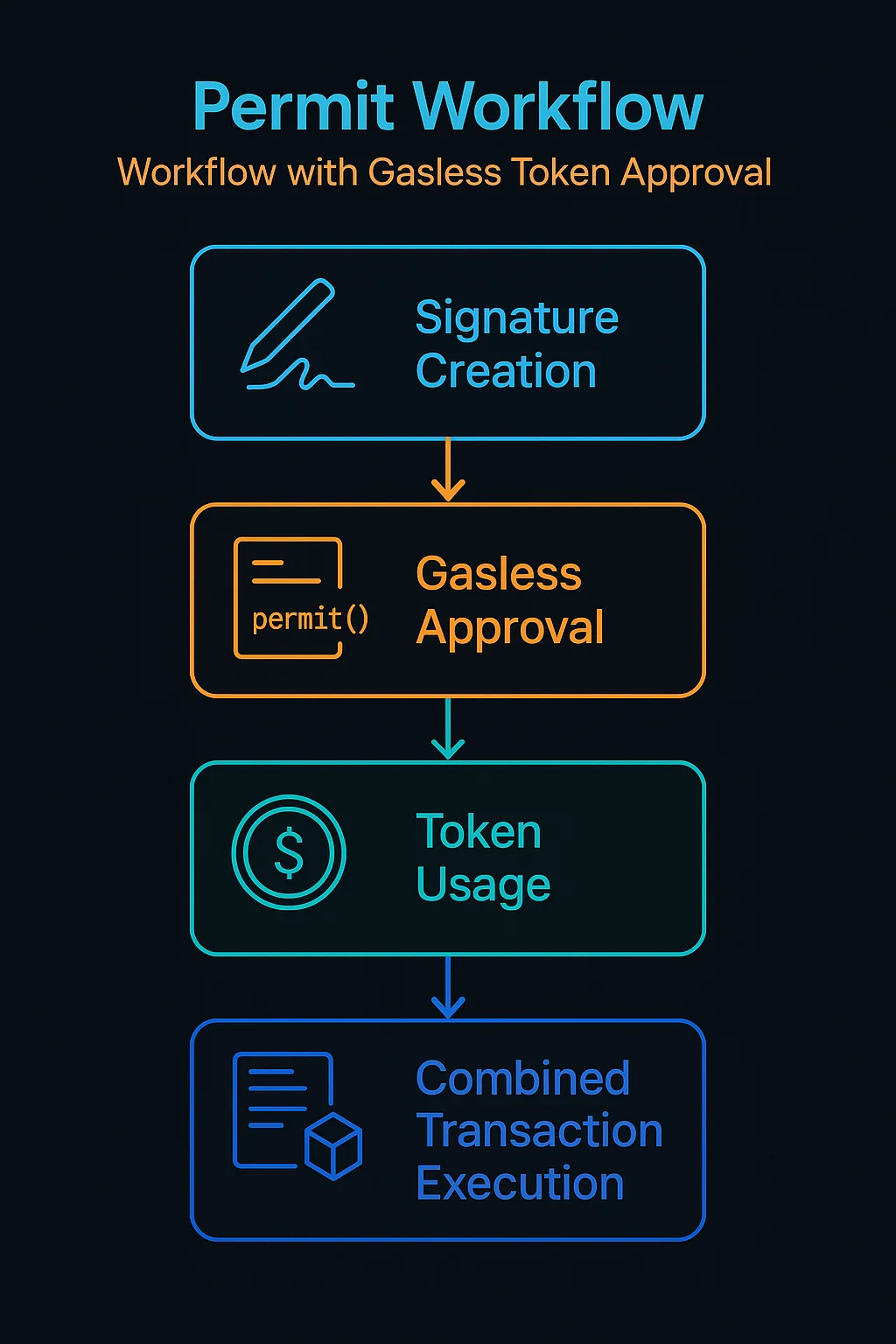
Permit workflow showing signature creation, gasless approval, token usage, and combined transaction execution

Real-World Examples

  • Uniswap V3 uses permits for gasless approval experiences in token swapping
  • 1inch implements permit functionality to reduce transaction steps and costs
  • Various DeFi protocols integrate permit to improve user onboarding and experience

Why Beginners Should Care

Better UX eliminates the two-step process of approve-then-spend that traditionally requires two separate transactions and gas payments.

Reduced costs by combining approval and usage into single transactions, cutting gas fees in half for many DeFi operations.

Security considerations require understanding permit signatures and ensuring you trust applications before signing token authorizations.

Related Terms: Token Approval, Gasless Transactions, EIP-2612

Similar Posts

  • Chain Split

    Chain Split: Blockchain Network DivisionA chain split occurs when a blockchain network divides into multiple incompatible chains, often due to disagreements about protocol changes. It's like a road splitting into different paths that can't be merged back together.A chain split refers to the division of a blockchain network into two or more incompatible chains, typically…

  • Liquidity

    Liquidity: How Easily You Can Buy or Sell Liquidity determines whether you can actually trade your crypto at fair prices. High liquidity means smooth trading. Low liquidity means getting rekt by slippage. Liquidity refers to how easily an asset can be bought or sold without significantly affecting its price. In crypto markets, liquidity comes from…

  • Zero-Knowledge Proof (ZKP)

    Zero-Knowledge Proof (ZKP): Proving Without Revealing Zero-knowledge proofs let you prove you know something without revealing what you know. It’s like proving you’re over 21 without showing your birth date, address, or any other personal information. A zero-knowledge proof (ZKP) is a cryptographic method that allows one party to prove they possess certain information without…

  • Bridge Aggregator

    Bridge Aggregator: Cross-Chain Route OptimizationBridge aggregators find the best routes for moving assets between blockchain networks by comparing multiple bridge options. They're like travel booking sites that find the cheapest flights across different airlines.A bridge aggregator is a service that compares multiple cross-chain bridge options to find optimal routes for transferring assets between different blockchain…

  • Full Node

    Full Node: Complete Blockchain ParticipantA full node maintains a complete copy of the blockchain and validates all transactions independently. It's like having the complete library instead of just borrowing books when you need them.A full node is a computer that downloads, stores, and validates the complete blockchain history while participating in network consensus and transaction…

  • Token Distribution

    Token Distribution: Allocating Digital AssetsToken distribution refers to how cryptocurrency tokens are allocated among different stakeholders and released into circulation. It's like deciding how to divide up a pie among various groups of people.Token distribution encompasses the initial allocation and ongoing release of cryptocurrency tokens to various stakeholder groups including founders, investors, community members, and…