
NFT (Non-Fungible Token)

NFT (Non-Fungible Token): Digital Ownership Certificates

NFTs transformed JPEGs into million-dollar assets and made digital ownership mainstream. Love them or hate them, they’re reshaping how we think about digital property.

A Non-Fungible Token (NFT) is a unique digital certificate stored on a blockchain that proves ownership of a specific digital asset. Unlike cryptocurrencies where each token is identical, every NFT is one-of-a-kind and cannot be replicated or substituted.

How NFTs Work

Smart contracts create NFTs by minting unique token IDs linked to digital files. The blockchain stores ownership records, not the actual image or video – most NFT files live on separate storage systems.

Metadata describes what the NFT represents – the image, attributes, and properties. This metadata can be stored on-chain (expensive but permanent) or off-chain (cheaper but potentially changeable).

Transferring ownership happens through blockchain transactions. When you buy an NFT, the smart contract updates to show you as the new owner, creating an immutable ownership record.
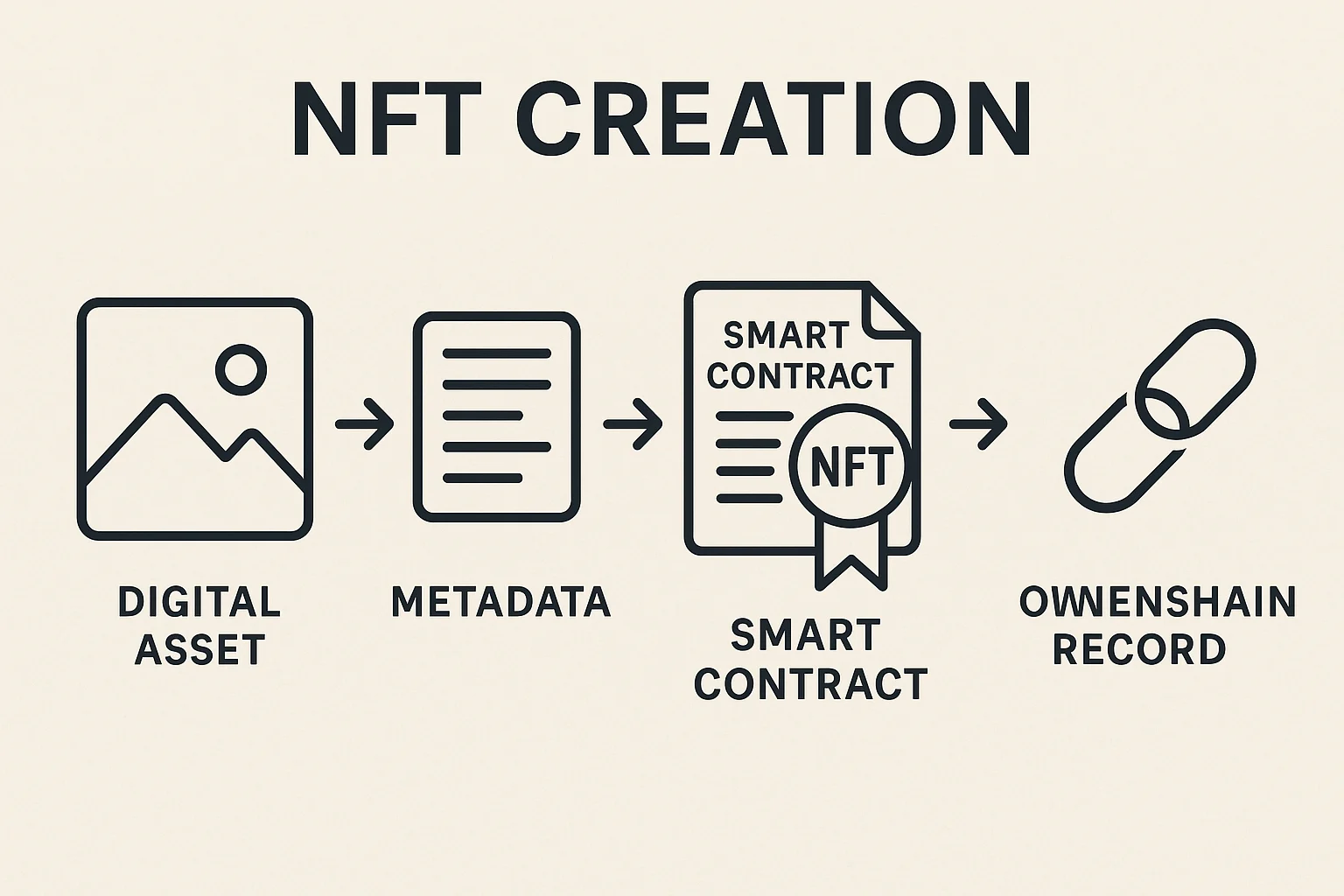
Infographic showing the NFT creation process: digital asset, metadata, smart contract minting, and blockchain ownership record

Real-World Examples

  • Bored Ape Yacht Club – 10,000 unique ape avatars selling for tens of thousands each
  • NBA Top Shot – Video highlights packaged as collectible NFT moments
  • Domain names like .eth addresses that function as decentralized websites

Why Beginners Should Care

NFTs prove that digital scarcity is possible and valuable. They enable new business models for artists, musicians, and content creators who can monetize digital work directly.

Utility matters more than hype. The best NFT projects provide ongoing value through community access, gaming benefits, or real-world perks rather than just speculative trading.

Most NFT projects fail long-term, so treat them like collectibles or entertainment rather than guaranteed investments.

Related Terms: Minting, Smart Contract, Floor Price, Metadata

Back to Crypto Glossary

Similar Posts

  • Launchpad

    Launchpad: The Crypto Startup Accelerator Launchpads are platforms that help new crypto projects raise funds and launch tokens. They’re like Kickstarter for cryptocurrencies, but with more speculation and less product delivery. A launchpad is a platform that facilitates fundraising and token launches for new cryptocurrency projects. They provide infrastructure, marketing, and community access to help…

  • Minting

    Minting: Creating New Tokens or NFTs Minting is the moment digital assets come into existence. Whether it’s new cryptocurrency tokens or unique NFTs, minting transforms code into valuable digital property. Minting is the process of creating new tokens or NFTs by executing a smart contract function that adds them to a blockchain. It’s like printing…

  • Smart Contract Audit

    Smart Contract Audit: Code Security ReviewSmart contract audits involve professional security reviews of blockchain code to identify vulnerabilities before deployment. It's like having building inspectors for digital architecture.A smart contract audit is a comprehensive security review of blockchain application code conducted by experts to identify vulnerabilities, bugs, and potential attack vectors before public deployment. These reviews…

  • Airdrop

    Airdrop: Free Tokens From the Sky Airdrops distribute free tokens to wallet addresses, usually to reward early users or generate buzz for new projects. Some are worth pennies, others change lives. An airdrop is the distribution of free cryptocurrency tokens to wallet addresses, typically as a marketing strategy, reward for early adoption, or method of…

  • Buyback

    Buyback: Token Repurchase ProgramsBuyback refers to projects repurchasing their own tokens from the open market, often to reduce supply or return value to token holders. It's like a company buying back its own stock to increase the value of remaining shares.Buyback describes the process where cryptocurrency projects repurchase their own tokens from the open market…

  • Wallet Signature Spoofing

    Wallet Signature Spoofing: Fake Authorization Attacks Wallet signature spoofing tricks users into signing malicious transactions that appear legitimate but actually authorize harmful actions. It’s like signing a contract where the fine print changes after you sign. Wallet signature spoofing involves presenting misleading information about transaction contents to trick users into signing authorizations for unintended actions….