
DeFi Composability

DeFi Composability: Building Block Finance

DeFi composability allows protocols to integrate seamlessly, creating complex financial products by combining simpler components. It’s like financial Lego blocks that snap together perfectly.

DeFi composability refers to the ability of decentralized finance protocols to interact and build upon each other, creating more complex financial products through modular integration. This enables innovation through combining existing building blocks.

How DeFi Composability Works

Standardized interfaces like ERC-20 tokens and common smart contract patterns enable protocols to interact without custom integration work.

Permissionless innovation allows anyone to build on existing protocols without asking permission, creating rapid ecosystem development.

Yield stacking combines multiple protocols to optimize returns, such as lending tokens that earn yield while being used as collateral elsewhere.
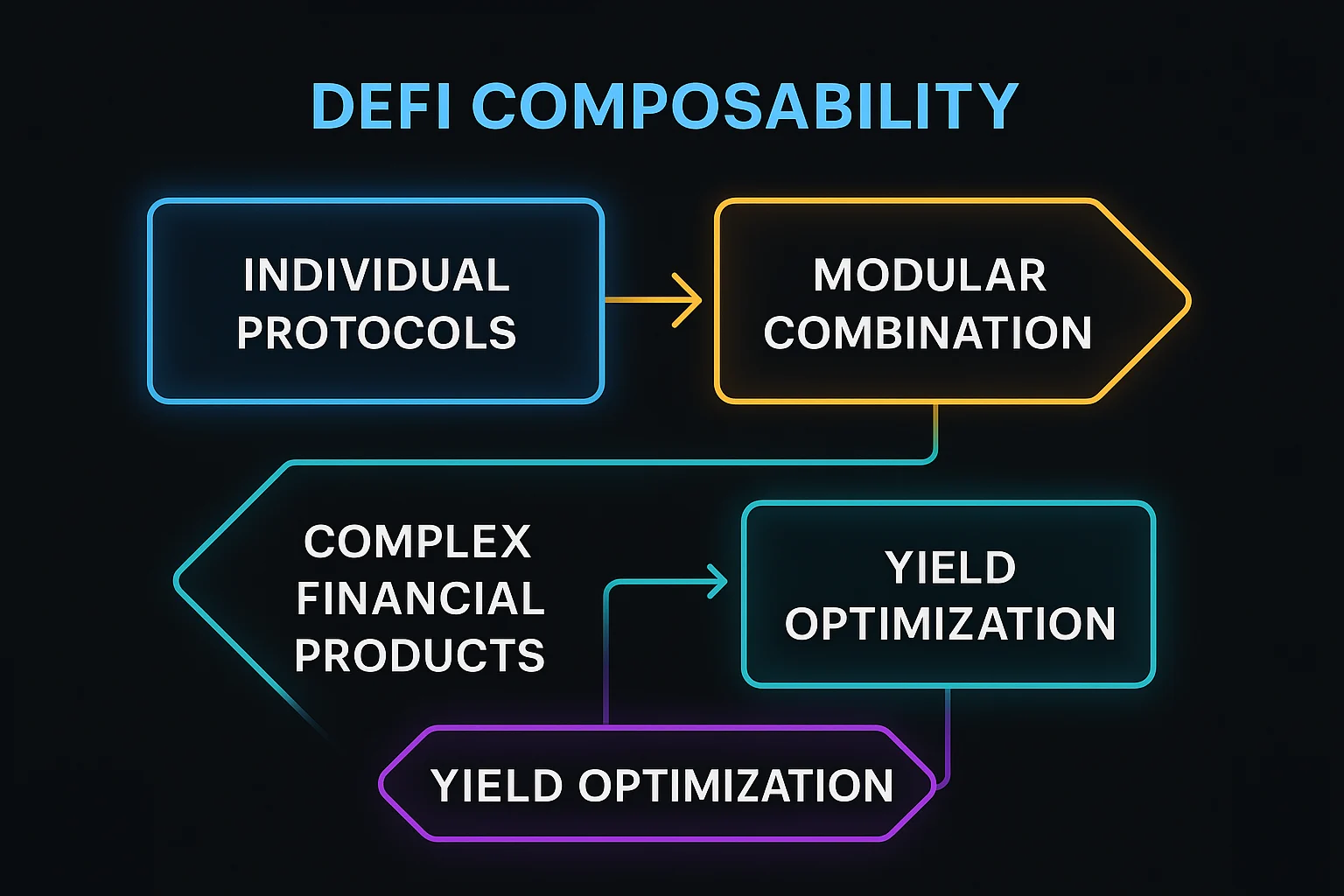
DeFi composability diagram showing individual protocols, modular combination, complex financial products, and yield optimization

Real-World Examples

  • Yearn Finance combines lending, farming, and trading protocols to optimize yields automatically
  • Convex Finance builds on Curve to enhance liquidity mining rewards
  • Index protocols create diversified portfolios using multiple DeFi primitives

Why Beginners Should Care

Innovation acceleration as new protocols can leverage existing infrastructure rather than rebuilding everything from scratch.

Systemic risks from interconnected protocols where failures can cascade across multiple applications and user positions.

Complexity management becomes crucial as composed strategies may be difficult to understand and evaluate for risk.

Related Terms: DeFi Primitives, Yield Stacking, Smart Contract

Back to Crypto Glossary

Similar Posts

  • LayerZero

    LayerZero: Omnichain Interoperability Protocol LayerZero is an interoperability protocol that enables applications to send messages and transfer assets across different blockchains. It’s like having a universal translator for blockchain networks. LayerZero is a cross-chain communication protocol that enables decentralized applications to operate across multiple blockchains seamlessly. It provides infrastructure for omnichain applications that can access…

  • Smart Order Routing

    Smart Order Routing: Optimal Trade Execution Smart order routing automatically finds the best prices across multiple exchanges and liquidity sources for each trade. It’s like having a shopping bot that checks every store for the best deal. Smart order routing is an algorithmic system that automatically splits and routes orders across multiple trading venues to…

  • Dark Web

    Dark Web: Hidden Internet NetworksThe dark web consists of encrypted online networks accessible only through specialized software like Tor. It's where privacy advocates and criminals both hang out, but for very different reasons.The dark web refers to encrypted online content that exists on overlay networks requiring specific software, configurations, or authorization to access. Unlike the regular…

  • Gas Optimization

    Gas Optimization: Reducing Transaction CostsGas optimization involves techniques to minimize the computational cost of blockchain transactions and smart contracts. It's like finding the most fuel-efficient route for your digital transactions.Gas optimization refers to practices and techniques used to reduce the gas consumption of blockchain transactions and smart contract operations. This minimizes transaction costs and improves application…

  • Two-Factor Authentication (2FA)

    Two-Factor Authentication (2FA): Your Crypto’s Second Lock 2FA is the minimum security standard for any crypto account worth protecting. If you’re not using it, you’re basically leaving your front door unlocked. Two-factor authentication (2FA) requires two different verification methods to access your account – typically something you know (password) plus something you have (phone or…

  • Capital Efficiency

    Capital Efficiency: Maximizing Resource UtilizationCapital efficiency measures how effectively investments generate returns relative to the amount of capital deployed. It's like getting the most miles per gallon from your investment fuel.Capital efficiency refers to maximizing returns or utility from invested capital through optimal allocation, leverage, or innovative strategies that reduce required capital while maintaining or…