
Rehypothecation

Rehypothecation: Reusing Collateral Multiple Times

Rehypothecation involves using the same collateral to back multiple obligations simultaneously. It’s like using your house as collateral for three different loans at the same time.

Rehypothecation is the practice of using customer assets as collateral for the institution’s own borrowing or trading activities. In DeFi, this creates leverage and capital efficiency but increases systemic risk.

How Rehypothecation Works

Collateral reuse allows deposited assets to be lent out or used as backing for additional positions, creating multiple claims on the same underlying assets.

Leverage amplification enables institutions to take larger positions than their actual capital would normally allow through reusing customer deposits.

Chain reactions can occur when asset values decline, triggering margin calls across multiple positions backed by the same underlying collateral.
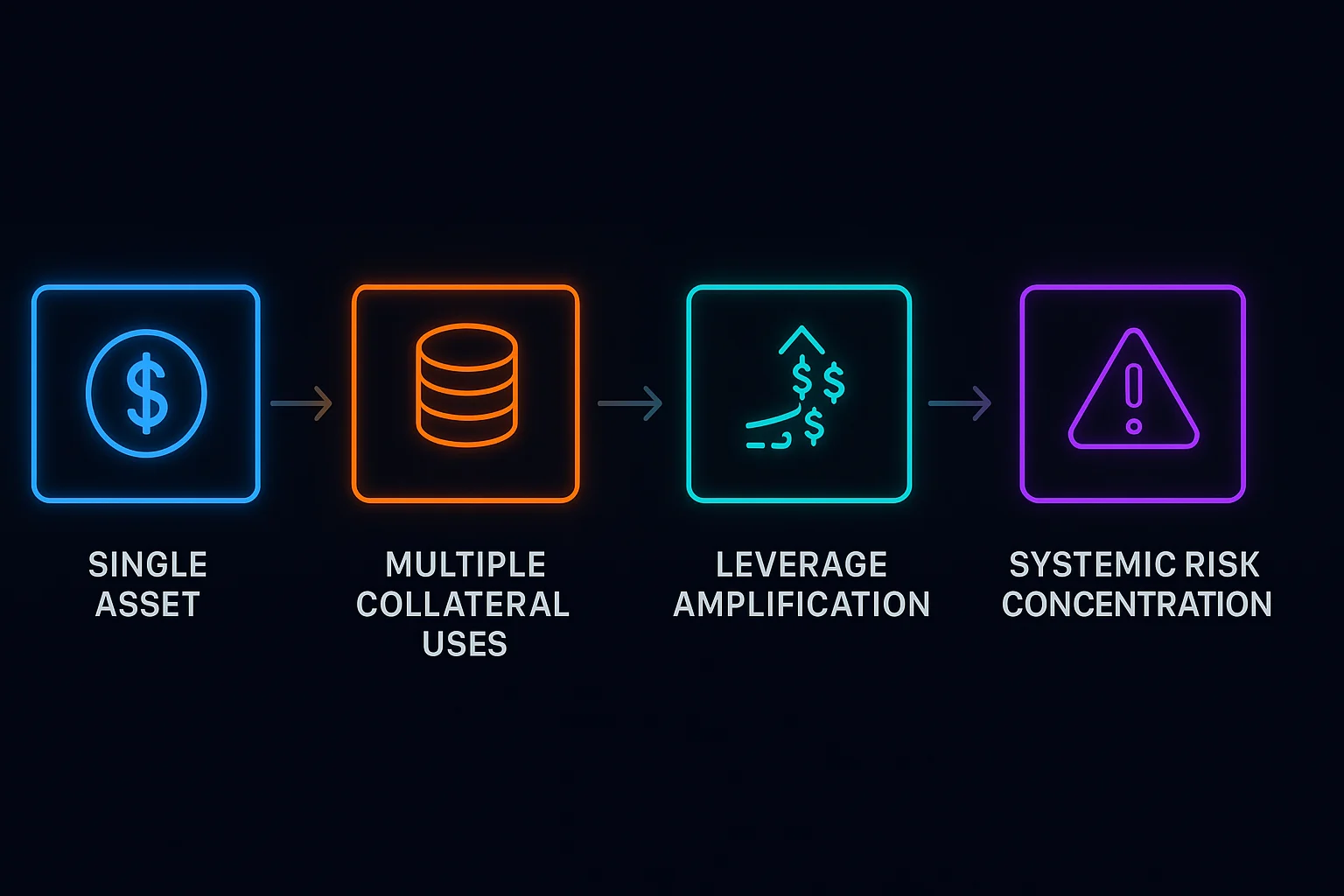
Rehypothecation chain showing single asset, multiple collateral uses, leverage amplification, and systemic risk concentration

Real-World Examples

  • Celsius allegedly rehypothecated customer deposits for high-risk trading activities before bankruptcy
  • Traditional finance has used rehypothecation extensively, contributing to the 2008 financial crisis
  • Some DeFi protocols enable rehypothecation-like mechanics through recursive borrowing

Why Beginners Should Care

Hidden leverage in the system that may not be apparent until market stress reveals the extent of rehypothecation.

Counterparty risk increases when your deposits are being used to back other people’s risky positions without your knowledge.

Regulatory attention as rehypothecation practices often violate customer protection laws in traditional finance.

Related Terms: Leverage, Counterparty Risk, Systemic Risk, Asset Rehypothecation

Back to Crypto Glossary

Similar Posts

  • Soft Fork

    Soft Fork: Backward-Compatible Upgrades Soft forks tighten blockchain rules without breaking compatibility. They’re the diplomatic approach to network upgrades – everyone can still participate even if they don’t upgrade immediately. A soft fork is a backward-compatible change to blockchain protocol rules that makes previously valid blocks invalid while keeping previously invalid blocks invalid. Old nodes…

  • Proof of Humanity

    Proof of Humanity: Verifying Human Uniqueness Proof of Humanity creates registries of verified unique humans to prevent Sybil attacks in voting and distribution systems. It’s like having a bouncer who knows everyone isn’t wearing a disguise. Proof of Humanity is a system for creating verifiable registries of unique human beings to prevent individuals from claiming…

  • Supply Schedule

    Supply Schedule: Token Issuance TimelineA supply schedule defines when and how many new tokens will be created over time. It's like a release calendar that shows exactly when new cryptocurrency will enter circulation.A supply schedule is a predetermined plan that specifies the timing and quantity of new token issuance over time. This schedule provides transparency about…

  • Tornado Cash

    Tornado Cash: The Controversial Privacy Protocol Tornado Cash was Ethereum’s most popular mixing service until U.S. sanctions shut it down. It used zero-knowledge proofs to enable private transactions on a transparent blockchain. Tornado Cash was a decentralized mixing protocol on Ethereum that used zero-knowledge proofs to enable private transactions by breaking the link between sender…

  • Arbitrage

    Arbitrage: Risk-Free Profit from Price DifferencesArbitrage involves simultaneously buying and selling the same asset on different markets to profit from price differences. It's like buying wholesale and selling retail, but happening instantly.Arbitrage is the practice of taking advantage of price differences for the same asset across different markets or exchanges to generate risk-free profits. This activity…

  • Spam

    Spam: Unwanted Blockchain TransactionsSpam in cryptocurrency refers to unwanted or low-value transactions that clog networks and waste resources. It's like junk mail but for blockchain networks.Spam consists of unwanted transactions, messages, or data that consume network resources without providing legitimate value. These activities can degrade network performance and increase costs for legitimate users.How Crypto Spam WorksNetwork…