
ZK-EVM

ZK-EVM: Zero-Knowledge Ethereum Compatibility

ZK-EVM provides Ethereum compatibility while using zero-knowledge proofs for scalability and privacy. It’s like having Ethereum that’s faster, cheaper, and more private.

ZK-EVM is a zero-knowledge rollup that maintains full compatibility with Ethereum’s execution environment while using ZK proofs for validation. This enables existing Ethereum applications to run without modification while benefiting from ZK scalability.

How ZK-EVM Works

EVM compatibility ensures existing smart contracts, tools, and applications work without changes, providing seamless migration from Ethereum.

Zero-knowledge proofs validate transaction execution without revealing details, enabling both scalability and privacy simultaneously.

Bytecode execution processes Ethereum transactions and smart contracts identically to mainnet while generating cryptographic proofs of correctness.
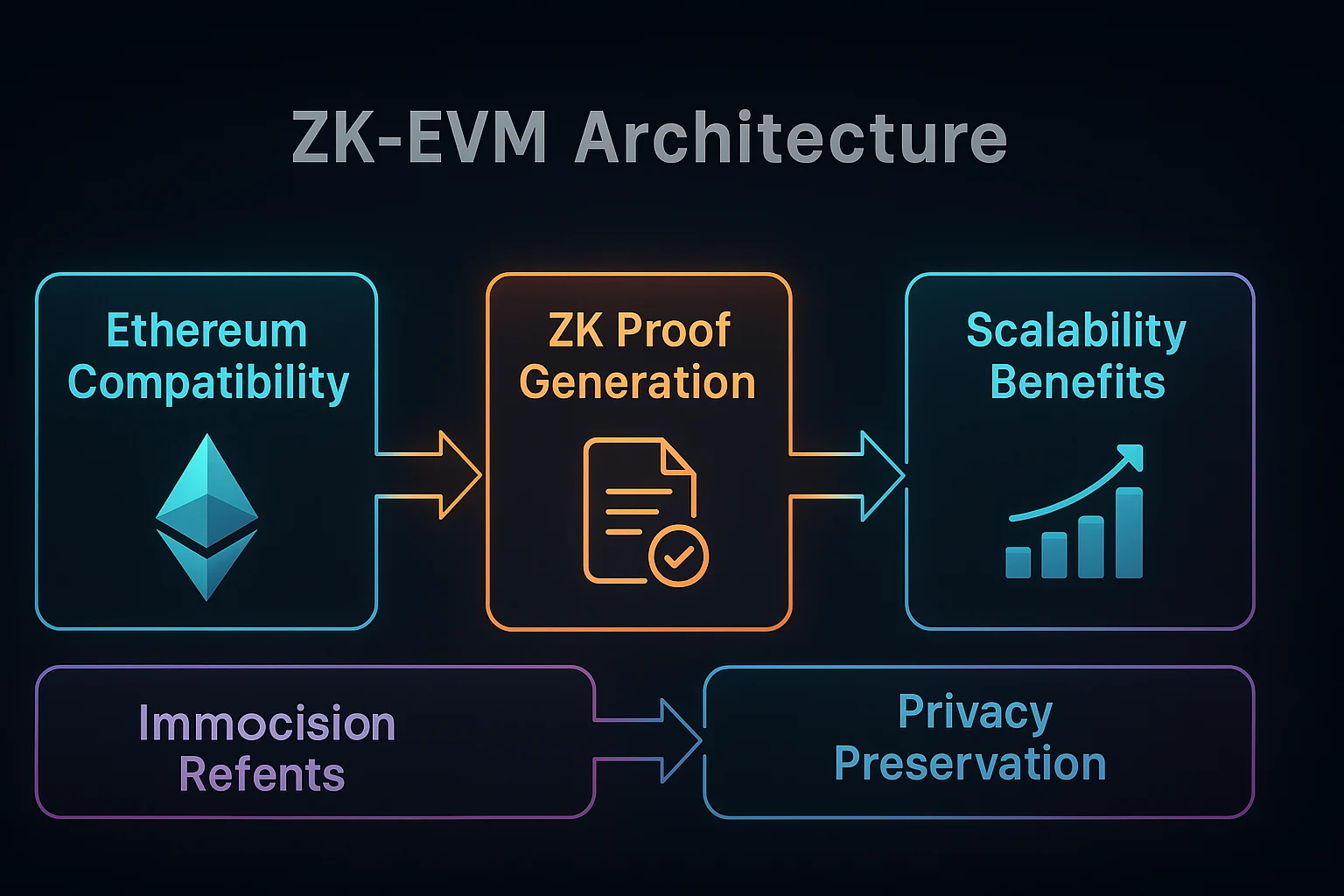
ZK-EVM architecture showing Ethereum compatibility, ZK proof generation, scalability benefits, and privacy preservation

Real-World Examples

  • Polygon zkEVM provides full Ethereum compatibility with ZK proof validation
  • Scroll implements native zkEVM with focus on maintaining exact Ethereum behavior
  • Linea (ConsenSys) offers enterprise-focused zkEVM infrastructure

Why Beginners Should Care

Best of both worlds combining Ethereum’s mature ecosystem with ZK rollup benefits of speed, cost, and privacy.

Developer experience remains identical to Ethereum, enabling easy migration of existing applications and tools.

Technical complexity in ZK proof generation creates different trade-offs compared to optimistic rollups in terms of finality and computational requirements.

Related Terms: Zero-Knowledge Proof, EVM, Layer 2, Smart Contract Compatibility

Back to Crypto Glossary

Similar Posts

  • Payment Channel

    Payment Channel: Off-Chain Transaction RoutingPayment channels enable fast, cheap cryptocurrency transactions between parties without recording every transaction on the blockchain. They're like running a tab at a restaurant instead of paying for each item separately.A payment channel is an off-chain mechanism that allows two parties to conduct multiple cryptocurrency transactions without broadcasting each one to…

  • Restaking

    Restaking: Double-Duty for Staked Assets Restaking allows already-staked cryptocurrency to secure additional networks and earn extra rewards. It’s like getting paid twice for the same job, but with twice the risk. Restaking is a mechanism that allows staked cryptocurrency to simultaneously secure multiple networks or protocols, earning additional rewards beyond the base staking yield. Validators…

  • Token Approval

    Token Approval: Granting Spending PermissionToken approval allows smart contracts to spend tokens on behalf of users through explicit permission mechanisms. It's like giving someone permission to use your credit card with specific spending limits.Token approval is a mechanism that grants smart contracts permission to transfer specific amounts of tokens from user wallets without requiring signatures…

  • Marketplace

    Marketplace: Digital Trading PlatformsMarketplaces are platforms where users can buy, sell, and trade digital assets like NFTs, tokens, or services. They're like eBay but for blockchain-based items.A marketplace is a platform that facilitates buying, selling, and trading of digital assets between users, typically including discovery, pricing, and transaction features. These platforms often specialize in specific asset…

  • Immutability

    Immutability: Unchangeable Record KeepingImmutability refers to the property of blockchain data that makes it extremely difficult or impossible to alter once recorded. It's like writing in permanent ink that can't be erased.Immutability is the characteristic of blockchain networks that makes recorded transactions and data extremely resistant to modification or deletion. This property ensures historical accuracy and…

  • Anonymity

    Anonymity: Hiding Identity in Digital TransactionsAnonymity in cryptocurrency refers to the ability to conduct transactions without revealing personal identity. It's like wearing a mask that completely hides who you are during financial transactions.Anonymity refers to the state of being unidentifiable in cryptocurrency transactions and blockchain interactions. True anonymity means that transaction participants cannot be linked to…