
Synthetic Yield

Synthetic Yield: Engineered Return Products

Synthetic yield creates artificial return streams through derivatives and structured products rather than underlying asset productivity. It’s like manufacturing dividends through financial engineering.

Synthetic yield refers to returns generated through derivative strategies, structured products, or financial engineering rather than from the underlying asset’s inherent productivity. These products create yield where none naturally exists.

How Synthetic Yield Works

Derivative construction uses options, futures, or swaps to create income streams from assets that don’t naturally produce yield.

Structured products combine multiple financial instruments to engineer specific risk-return profiles that meet investor yield requirements.

Risk transformation converts one type of exposure into yield-generating positions through sophisticated trading strategies and financial instruments.
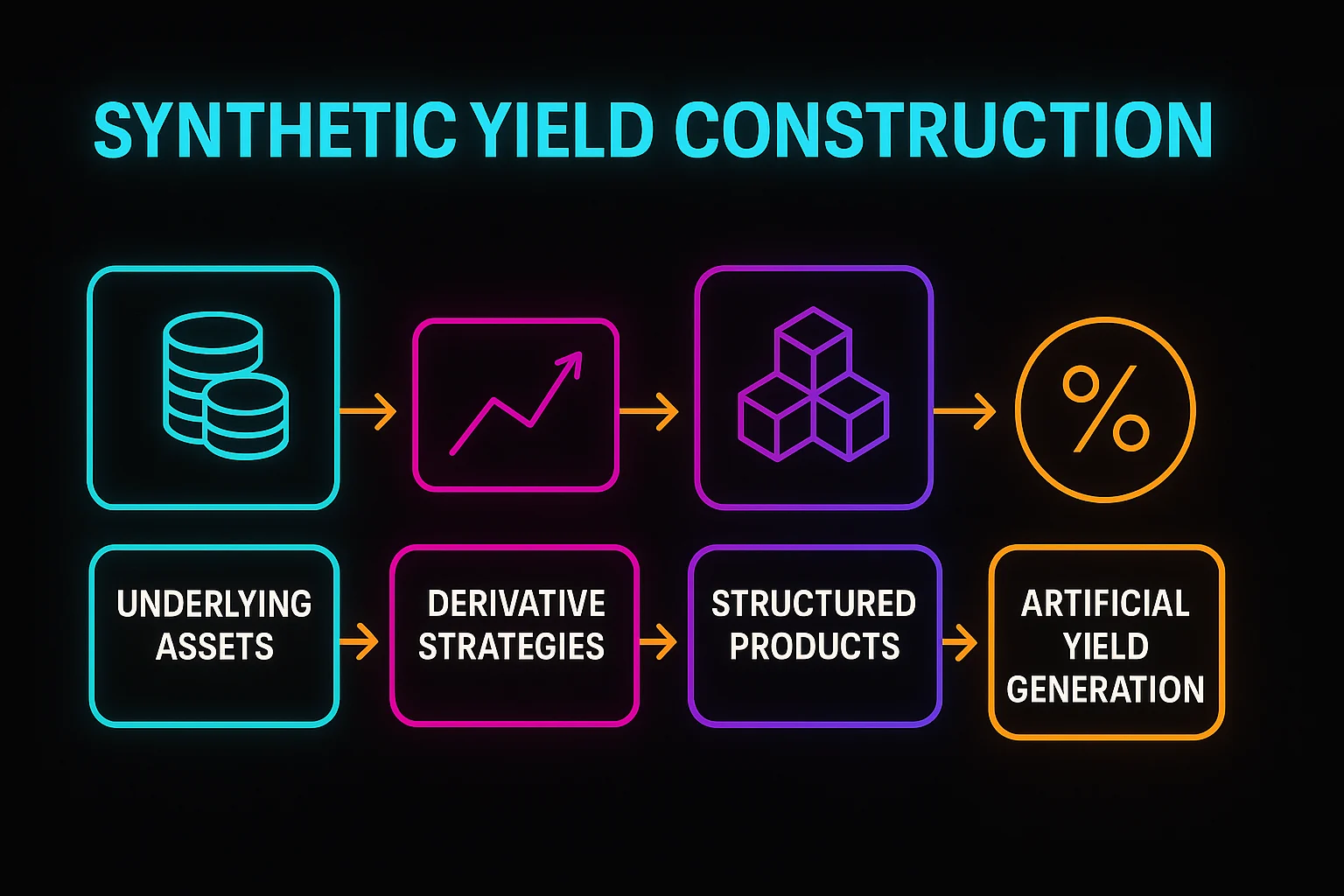
Synthetic yield construction flow showing underlying assets, derivative strategies, structured products, and artificial yield generation

Real-World Examples

  • Covered call strategies on Bitcoin that generate yield by selling call options
  • Structured products that provide yield on non-productive assets like gold or commodities
  • Yield tokens that split assets into principal and yield components for separate trading

Why Beginners Should Care

Yield availability on assets that don’t naturally produce returns, expanding income opportunities beyond traditional yield-bearing investments.

Complexity risks as synthetic products often involve multiple moving parts that can behave unexpectedly during market stress.

Understanding requirements for evaluating the true risks and potential returns of engineered yield products versus natural yield sources.

Related Terms: Derivatives, Structured Products, Yield Engineering

Back to Crypto Glossary

Similar Posts

  • Community

    Community: Decentralized Project StakeholdersCommunity refers to the users, developers, investors, and supporters who participate in and contribute to cryptocurrency projects. They're like the citizens of a digital nation working toward common goals.Community encompasses all stakeholders who participate in cryptocurrency projects including users, developers, investors, validators, and supporters who collectively contribute to project success. Strong communities drive…

  • Credentials

    Credentials: Proof of Identity and QualificationsCredentials are verifiable proofs of identity, qualifications, or achievements that can be digitally verified without contacting issuing authorities. They're like diplomas that anyone can instantly authenticate.Credentials refer to digital or physical documents that prove identity, qualifications, achievements, or authorizations, increasingly being tokenized and verified through blockchain technology. These enable trustless verification…

  • Staking Rewards

    Staking Rewards: Earning from Network Security Staking rewards compensate users for locking up cryptocurrency to help secure proof-of-stake networks. It’s like earning interest for helping guard the bank vault. Staking rewards are cryptocurrency payments earned by users who lock up tokens to participate in proof-of-stake network consensus and security. These rewards incentivize honest participation while…

  • Transaction

    Transaction: Moving Value on the BlockchainA cryptocurrency transaction transfers value from one address to another on a blockchain network. It's like writing a check, but with mathematical guarantees instead of trust.A transaction is a digitally signed transfer of cryptocurrency from one wallet address to another, recorded permanently on the blockchain. Every transaction includes sender information, recipient…

  • Privacy Coin

    Privacy Coin: Digital Cash That Actually Hides Privacy coins use advanced cryptography to hide transaction details like amounts, senders, and receivers. They’re what Bitcoin was supposed to be before everyone realized blockchain transactions are completely transparent. Privacy coins are cryptocurrencies designed to provide anonymous or untraceable transactions through advanced cryptographic techniques. Unlike Bitcoin where all…

  • Regulation

    Regulation: Government Rules for CryptoCryptocurrency regulation involves government rules and oversight for digital assets, exchanges, and blockchain businesses. It's the ongoing battle between innovation and compliance.Regulation refers to government laws, rules, and oversight mechanisms that govern cryptocurrency activities, including trading, taxation, anti-money laundering compliance, and consumer protection. Regulatory approaches vary significantly between jurisdictions.How Crypto Regulation WorksLicensing…