
Smart Contract

Smart Contract: Code That Enforces Agreements

Smart contracts are why crypto is bigger than just digital money. They’re agreements that execute themselves automatically when conditions are met.

A smart contract is computer code that automatically executes agreement terms when predetermined conditions are satisfied. No lawyers, no courts, no arguing – just math and code enforcing the deal.

How Smart Contracts Work

Think of a vending machine. You insert money, select a product, and the machine automatically gives you your snack. Smart contracts work similarly – they hold funds and release them when specific conditions are met.

These contracts run on blockchain networks like Ethereum. Once deployed, they can’t be changed or stopped, ensuring all parties get exactly what was programmed.

The code is public and auditable. Everyone can verify exactly how the contract works before interacting with it.
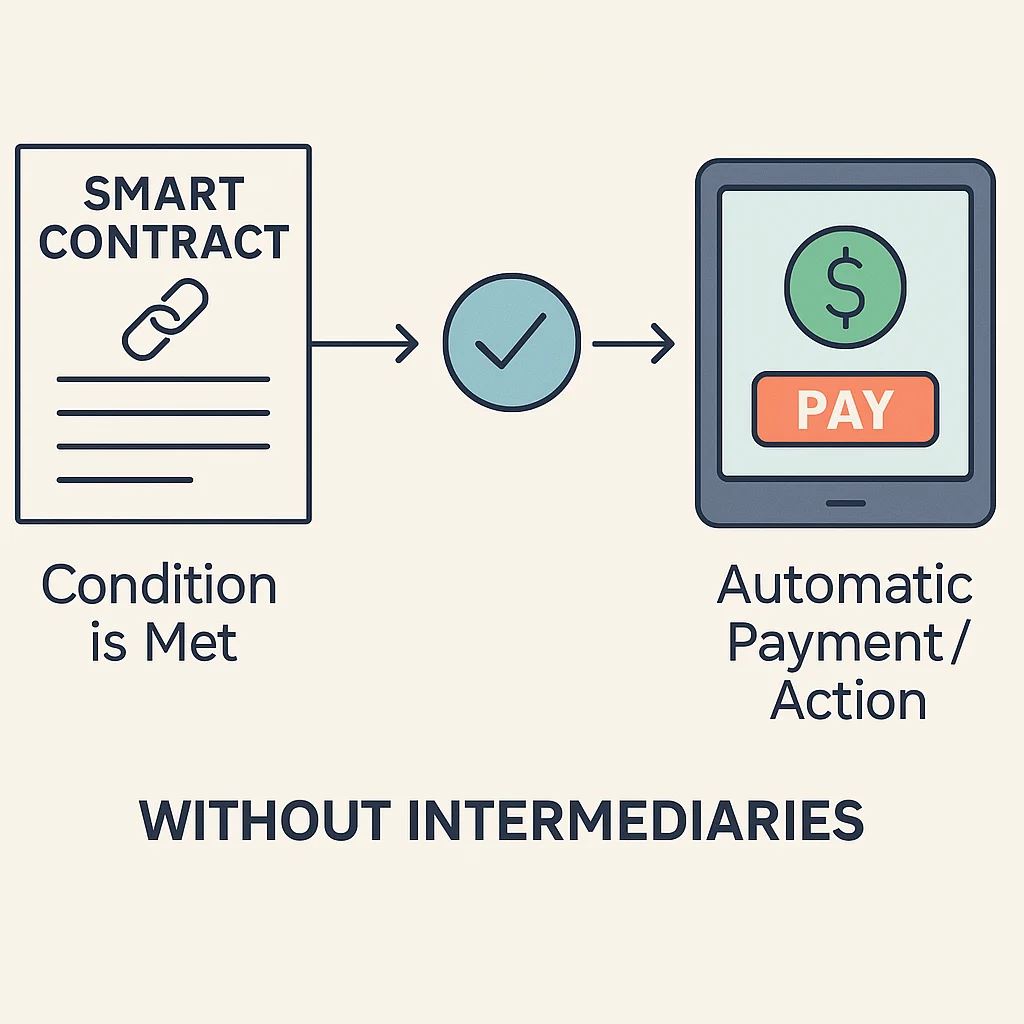
Flowchart showing smart contract triggering automatic payment/action when condition is met, without intermediaries

Real-World Examples

  • DeFi lending – Deposit collateral, automatically receive a loan
  • Insurance payouts – Flight delayed? Smart contract pays you automatically
  • NFT marketplaces – Buy NFT, payment and ownership transfer happen instantly

Why Beginners Should Care

Smart contracts eliminate middlemen who take fees and add delays. They create trustless systems where you don’t need to trust the other party – you trust the code.

This powers decentralized finance (DeFi), where you can lend, borrow, and trade without traditional banks. No credit checks, no paperwork, just code executing agreements fairly.

Related Terms: Ethereum, DeFi, Gas Fees, dApp

Back to Crypto Glossary

Similar Posts

  • Team Doxxing

    Team Doxxing: Revealing Anonymous IdentitiesTeam doxxing involves revealing the real identities of previously anonymous cryptocurrency project team members. It's like unmasking superheroes to show who's really behind the project.Team doxxing refers to the disclosure of real identities, backgrounds, and personal information of cryptocurrency project team members who were previously anonymous or pseudonymous. This can be voluntary…

  • Consensus Participation

    Consensus Participation: Supporting Network SecurityConsensus participation involves actively contributing to blockchain network security and decision-making through validation, voting, or other consensus mechanisms. It's like being a jury member for digital transactions.Consensus participation refers to active involvement in blockchain network consensus processes through validation, staking, mining, or other mechanisms that help secure networks and process transactions. Participants…

  • Gasless Transactions

    Gasless Transactions: Fee-Free User Experience Gasless transactions eliminate the need for users to hold native tokens for transaction fees by having third parties sponsor the gas costs. It’s like having someone else pay for your Uber rides. Gasless transactions enable users to interact with blockchain applications without holding native tokens for gas fees. Third parties,…

  • Wei

    Wei: Ethereum's Smallest UnitWei is the smallest denomination of Ethereum, similar to how cents are the smallest unit of dollars. It's like measuring distances in millimeters when you need precision, even though we usually think in meters or kilometers.Wei represents the smallest possible unit of Ethereum (ETH), with one ETH equal to 1,000,000,000,000,000,000 (10^18) wei. This…

  • Due Diligence

    Due Diligence: Research Before InvestmentDue diligence involves thoroughly researching and evaluating cryptocurrency projects before investing. It's like test driving a car and checking its history before buying.Due diligence refers to the comprehensive investigation and analysis of cryptocurrency projects, including technology, team, tokenomics, and market factors before making investment decisions. Proper due diligence helps identify opportunities and…

  • Transaction Verification

    Transaction Verification: Confirming Payment ValidityTransaction verification is the process of confirming that cryptocurrency transactions are valid before adding them to the blockchain. It's like having bank tellers check that signatures match and accounts have sufficient funds before processing checks.Transaction verification refers to the systematic process where network participants validate cryptocurrency transactions by checking digital signatures,…