
ATH (All-Time High)

ATH (All-Time High): Peak Performance Markers

ATH represents the highest price a cryptocurrency has ever reached. It’s the mountain top that everyone remembers and hopes to see again.

All-Time High (ATH) is the highest price level that a cryptocurrency has ever achieved throughout its entire trading history. ATHs become psychological resistance levels and reference points for measuring performance.

How ATH Impacts Markets

Psychological resistance forms around previous ATH levels. Many traders take profits near old ATHs, creating selling pressure that can halt or reverse upward momentum.

Media attention peaks around ATH breakthroughs. Breaking to new highs generates headlines and attracts new investors, often fueling further price increases.

FOMO intensifies as assets approach or break ATHs. Retail investors feel urgency to buy before missing out on further gains, often leading to overextended rallies.
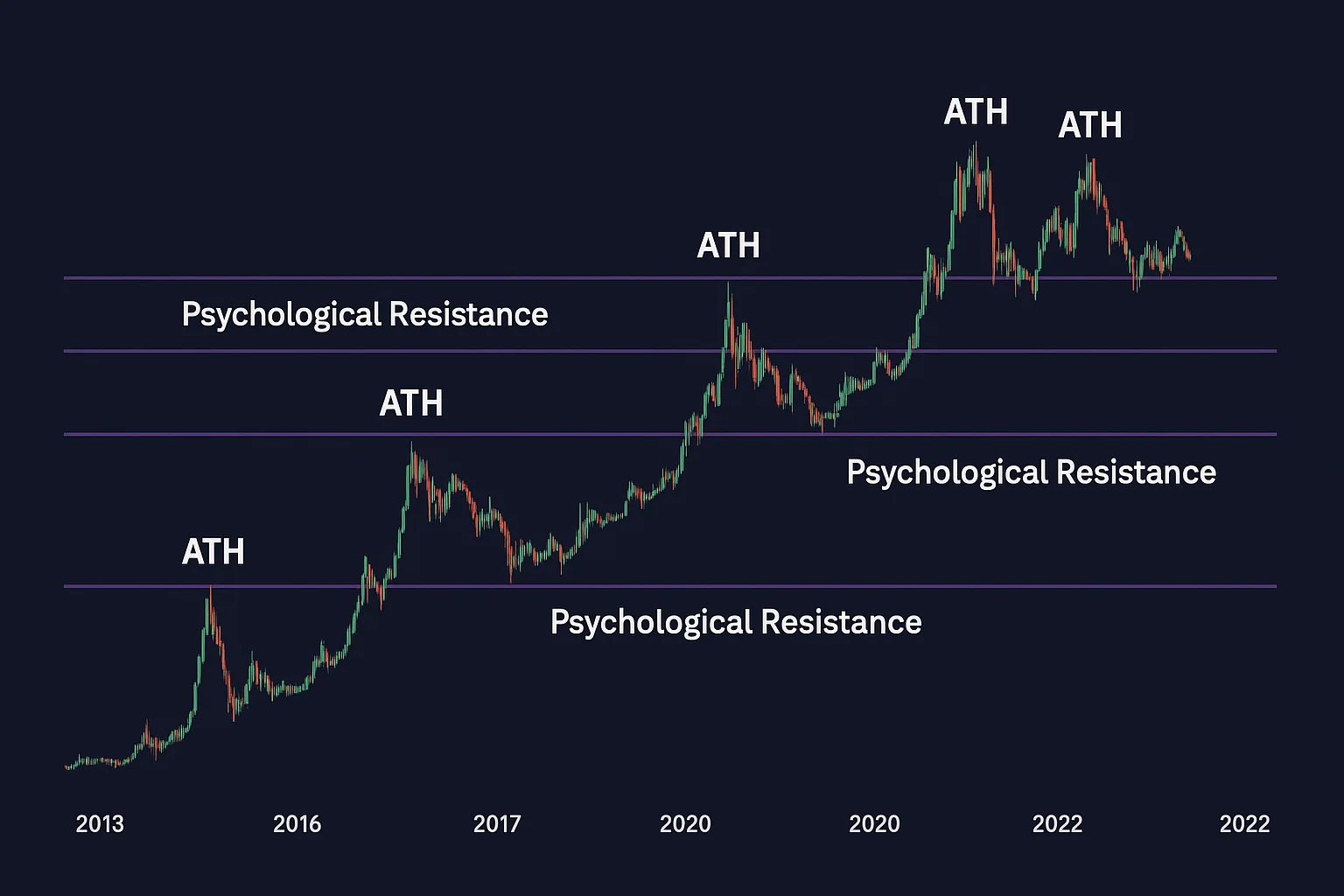
Price chart showing multiple cryptocurrency ATH levels over time with psychological resistance zones

Real-World Examples

  • Bitcoin’s $69,000 ATH in November 2021 remains a key resistance level
  • Ethereum’s $4,800 ATH created a ceiling that took months to break
  • Altcoin ATHs from 2021 remain 80-90% above current prices for most tokens

Why Beginners Should Care

ATHs mark major tops where early investors take profits and new buyers often get trapped. Buying at or near ATHs frequently results in significant losses.

Dollar cost averaging performs better than trying to time ATH breakouts. Consistent buying during accumulation phases beats FOMO buying at peaks.

Use ATH levels as reference points for profit-taking strategies rather than entry signals for new positions.

Related Terms: FOMO, Resistance, Bull Market, Profit Taking

Back to Crypto Glossary

Similar Posts

  • On-Chain Reputation

    On-Chain Reputation: Verifiable Digital Standing On-chain reputation tracks user behavior and achievements through permanent blockchain records. It’s like having a credit score built from your entire crypto transaction history. On-chain reputation systems create verifiable records of user behavior, achievements, and interactions that persist across applications and can’t be faked or manipulated. These systems enable trust…

  • Self-Sovereign Identity

    Self-Sovereign Identity: You Own Your Digital SelfSelf-sovereign identity puts you in complete control of your personal data and digital credentials. It's like having a passport that you issue and manage yourself, without needing government approval.Self-sovereign identity (SSI) is a digital identity model where individuals have complete control over their personal data, credentials, and identity verification…

  • Exit Scam

    Exit Scam: When Projects Disappear With Your Money Exit scams occur when project teams abandon their platforms after raising funds, taking investor money and disappearing. It’s the digital equivalent of skipping town with the cash register. An exit scam is when cryptocurrency project developers abandon their project after raising funds from investors, typically taking user…

  • Scalability

    Scalability: Handling Growing Network DemandScalability refers to a blockchain network's ability to handle increasing transaction volumes without degrading performance or significantly increasing costs. It's like building highways that don't get congested as more cars use them.Scalability describes how well blockchain networks can accommodate growing user bases and transaction volumes while maintaining reasonable fees and confirmation…

  • Capital Efficiency

    Capital Efficiency: Maximizing Resource UtilizationCapital efficiency measures how effectively investments generate returns relative to the amount of capital deployed. It's like getting the most miles per gallon from your investment fuel.Capital efficiency refers to maximizing returns or utility from invested capital through optimal allocation, leverage, or innovative strategies that reduce required capital while maintaining or…

  • Decentralized Identity (DID)

    Decentralized Identity (DID): Self-Sovereign Digital Identity DIDs give users control over their digital identity without relying on centralized authorities like governments or tech companies. It’s like having a passport that you issue and control yourself. Decentralized Identity (DID) is a digital identity framework that gives individuals control over their personal data and identity verification without…