
NFT (Non-Fungible Token)

NFT (Non-Fungible Token): Digital Ownership Certificates

NFTs transformed JPEGs into million-dollar assets and made digital ownership mainstream. Love them or hate them, they’re reshaping how we think about digital property.

A Non-Fungible Token (NFT) is a unique digital certificate stored on a blockchain that proves ownership of a specific digital asset. Unlike cryptocurrencies where each token is identical, every NFT is one-of-a-kind and cannot be replicated or substituted.

How NFTs Work

Smart contracts create NFTs by minting unique token IDs linked to digital files. The blockchain stores ownership records, not the actual image or video – most NFT files live on separate storage systems.

Metadata describes what the NFT represents – the image, attributes, and properties. This metadata can be stored on-chain (expensive but permanent) or off-chain (cheaper but potentially changeable).

Transferring ownership happens through blockchain transactions. When you buy an NFT, the smart contract updates to show you as the new owner, creating an immutable ownership record.
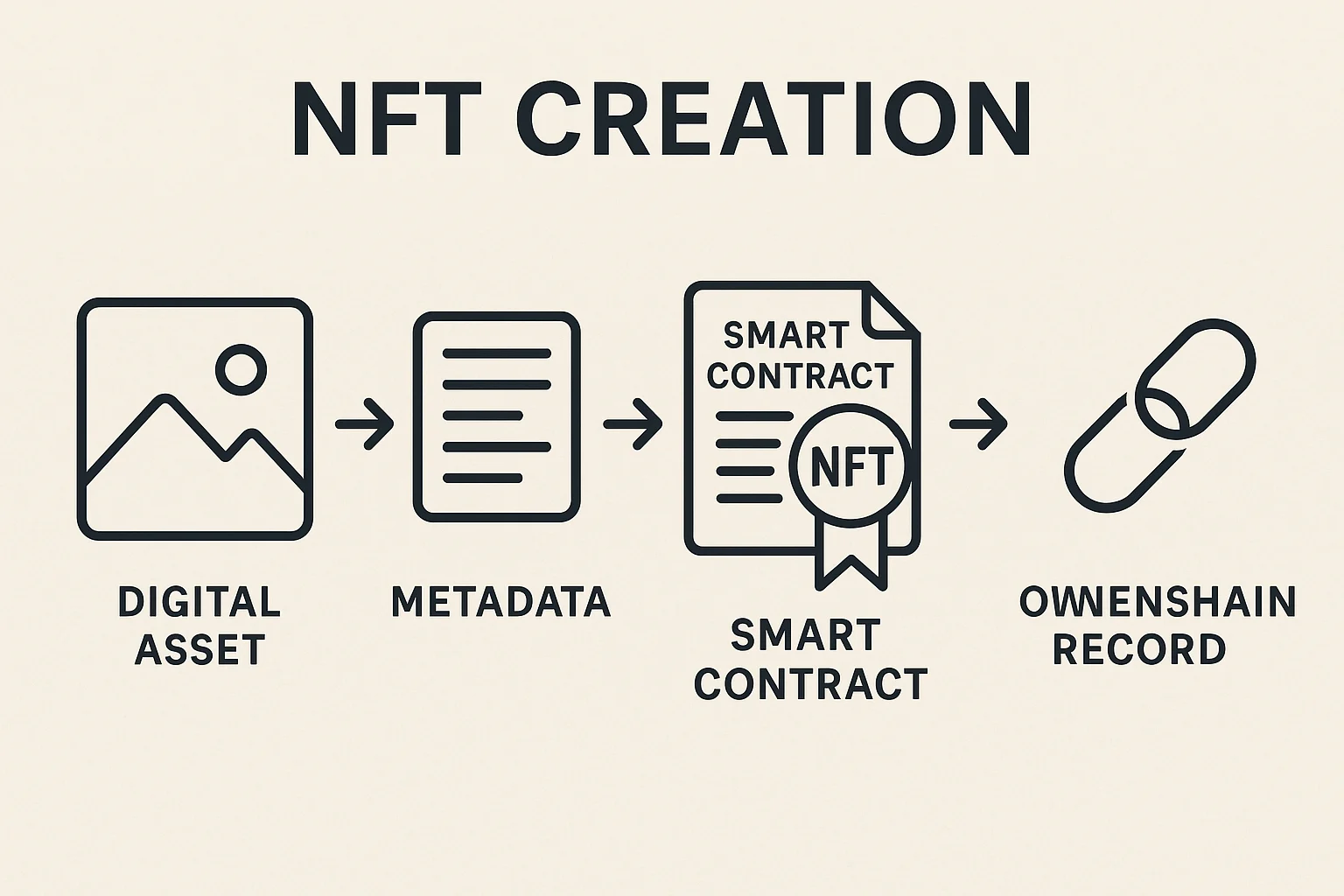
Infographic showing the NFT creation process: digital asset, metadata, smart contract minting, and blockchain ownership record

Real-World Examples

  • Bored Ape Yacht Club – 10,000 unique ape avatars selling for tens of thousands each
  • NBA Top Shot – Video highlights packaged as collectible NFT moments
  • Domain names like .eth addresses that function as decentralized websites

Why Beginners Should Care

NFTs prove that digital scarcity is possible and valuable. They enable new business models for artists, musicians, and content creators who can monetize digital work directly.

Utility matters more than hype. The best NFT projects provide ongoing value through community access, gaming benefits, or real-world perks rather than just speculative trading.

Most NFT projects fail long-term, so treat them like collectibles or entertainment rather than guaranteed investments.

Related Terms: Minting, Smart Contract, Floor Price, Metadata

Back to Crypto Glossary

Similar Posts

  • Wallet Drainer

    Wallet Drainer: Malicious Fund Extraction Wallet drainers are malicious smart contracts or applications designed to steal all assets from connected wallets through deceptive transaction approvals. They’re digital pickpockets with smart contract superpowers. A wallet drainer is malicious software that tricks users into signing transactions that grant unlimited access to their cryptocurrency holdings. These attacks often…

  • Layer 2

    Layer 2: Scaling Solutions for Expensive Blockchains Layer 2 networks solve Ethereum’s biggest problem – ridiculous gas fees. They process transactions cheaply and quickly while inheriting Ethereum’s security. Layer 2 is a separate blockchain or protocol built on top of a main blockchain (Layer 1) to improve scalability and reduce transaction costs. These solutions handle…

  • Application Layer

    Application Layer: User-Facing Blockchain AppsThe application layer consists of user-facing applications and services built on top of blockchain infrastructure. It's where users actually interact with blockchain technology.The application layer comprises decentralized applications (dApps), user interfaces, and services that provide end-user functionality built on blockchain infrastructure. This layer makes blockchain technology accessible and useful for everyday users.How…

  • Risk Management

    Risk Management: Protecting Your InvestmentsRisk management involves identifying, assessing, and controlling potential losses in cryptocurrency investments and activities. It's like wearing a seatbelt while driving through volatile markets.Risk management encompasses strategies and practices used to minimize potential losses and protect capital while participating in cryptocurrency markets. Effective risk management balances potential returns with acceptable loss levels.How…

  • Impermanent Loss

    Impermanent Loss: The Hidden Cost of Liquidity Providing Impermanent loss is the sneaky tax on liquidity providers. Your tokens can lose value even when the pool is profitable. It’s math, not magic – but it feels like getting robbed. Impermanent loss occurs when the price ratio of tokens in a liquidity pool changes compared to…

  • Slippage

    Slippage: The Cost of Market Impact Slippage is the difference between expected and actual trade prices. It’s the tax you pay for moving markets when your trade is large relative to available liquidity. Slippage occurs when the execution price of a trade differs from the expected price due to market movement or insufficient liquidity. Large…