
Metaverse

Metaverse: Digital Worlds Meet Real Money

The metaverse promises persistent digital worlds where your avatar’s clothes cost more than your real ones. It’s part virtual reality, part speculation, part genuine innovation.

The metaverse refers to interconnected virtual worlds where users can work, play, socialize, and own digital assets through avatars and blockchain-based economies. Think Ready Player One, but with NFT sneakers and play-to-earn jobs.

How the Metaverse Works

Virtual real estate gets bought and sold as NFTs, with prime locations near popular areas commanding premium prices. Some virtual land parcels have sold for millions of dollars.

Digital economies use cryptocurrency for transactions, enabling real income from virtual activities like creating content, providing services, or trading digital goods.

Interoperability goals aim to let users move avatars, items, and identities between different virtual worlds, though technical and business challenges remain significant.
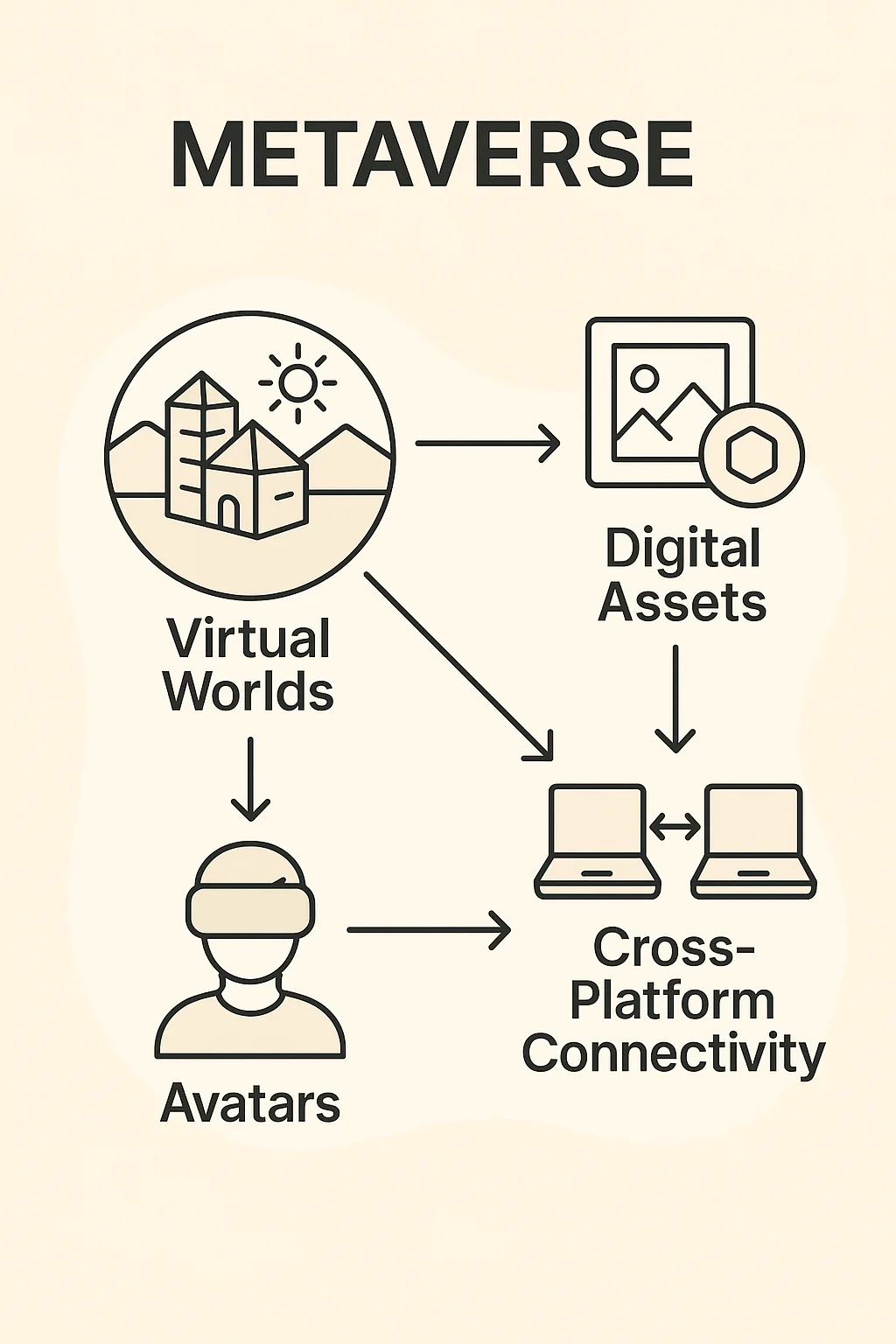
Infographic showing the metaverse ecosystem with elements like virtual worlds, digital assets, avatars, and cross-platform connectivity

Real-World Examples

  • Decentraland – Ethereum-based virtual world with user-owned land and experiences
  • The Sandbox – Gaming-focused metaverse with creation tools and SAND token economy
  • Horizon Worlds – Meta’s VR social platform (though not crypto-native)

Why Beginners Should Care

Metaverse investments are highly speculative. Virtual land and digital assets have no intrinsic value beyond what others will pay for them in these specific virtual environments.

Early adoption opportunities exist for creators who build audiences and businesses in virtual worlds before mainstream adoption arrives.

Technical limitations including VR hardware costs, internet bandwidth requirements, and user experience challenges still prevent mass adoption.

Related Terms: NFT, Virtual Real Estate, Play-to-Earn, Avatar

Back to Crypto Glossary

Similar Posts

  • Staking Rewards

    Staking Rewards: Earning from Network Security Staking rewards compensate users for locking up cryptocurrency to help secure proof-of-stake networks. It’s like earning interest for helping guard the bank vault. Staking rewards are cryptocurrency payments earned by users who lock up tokens to participate in proof-of-stake network consensus and security. These rewards incentivize honest participation while…

  • Liquid Staking

    Liquid Staking: Staking Without LockupsLiquid staking allows earning staking rewards while maintaining the ability to trade or use staked assets through tokenized representations. It's like having your cake and eating it too.Liquid staking enables users to stake cryptocurrency for rewards while receiving liquid tokens representing their staked position that can be traded or used in…

  • Digital Signature

    Digital Signature: Cryptographic Identity ProofDigital signatures provide mathematical proof of message authenticity and sender identity using cryptographic techniques. They're like unforgeable electronic signatures that prove who sent what.A digital signature is a cryptographic mechanism that verifies the authenticity of digital messages or documents and confirms the identity of the sender. Digital signatures are fundamental to blockchain…

  • HTLC

    HTLC: Hash Time-Locked ContractsHTLCs are smart contracts that lock cryptocurrency until specific conditions are met within time limits. They're like escrow services with built-in deadlines that automatically return funds if deals fall through.Hash Time-Locked Contracts (HTLCs) are smart contracts that require both cryptographic proof and time-based conditions to be met before cryptocurrency can be accessed. These…

  • Merkle Tree

    Merkle Tree: Efficient Data Verification Merkle trees enable efficient verification of large datasets without downloading everything. They’re like having a fingerprint for an entire library that proves any book belongs. A Merkle tree is a binary tree structure where each leaf represents a data element and each branch contains cryptographic hashes of its children. The…

  • Protocol Security

    Protocol Security: Protecting Blockchain InfrastructureProtocol security involves designing and maintaining blockchain networks to resist attacks, prevent exploits, and ensure reliable operation. It's like building a fortress with multiple defensive layers.Protocol security encompasses all measures taken to protect blockchain networks from technical attacks, economic manipulation, and operational failures. This includes consensus security, smart contract auditing, and network…