
Bagholder

Bagholder: Stuck with Worthless Tokens

A bagholder is someone stuck holding cryptocurrency that has lost most of its value with little hope of recovery. It’s crypto’s version of being left holding the bag.

A bagholder is an investor who continues holding a cryptocurrency that has significantly decreased in value, often because they’re unable or unwilling to realize the loss. The “bag” represents their depreciating investment that nobody else wants to buy.

How People Become Bagholders

FOMO buying near price peaks leaves investors with positions that immediately move against them as market sentiment shifts and prices crash.

Averaging down on failing investments can turn small losses into large ones as investors throw good money after bad, increasing their position size in declining assets.

Emotional attachment to projects or communities prevents rational selling decisions even when fundamental reasons for holding no longer exist.
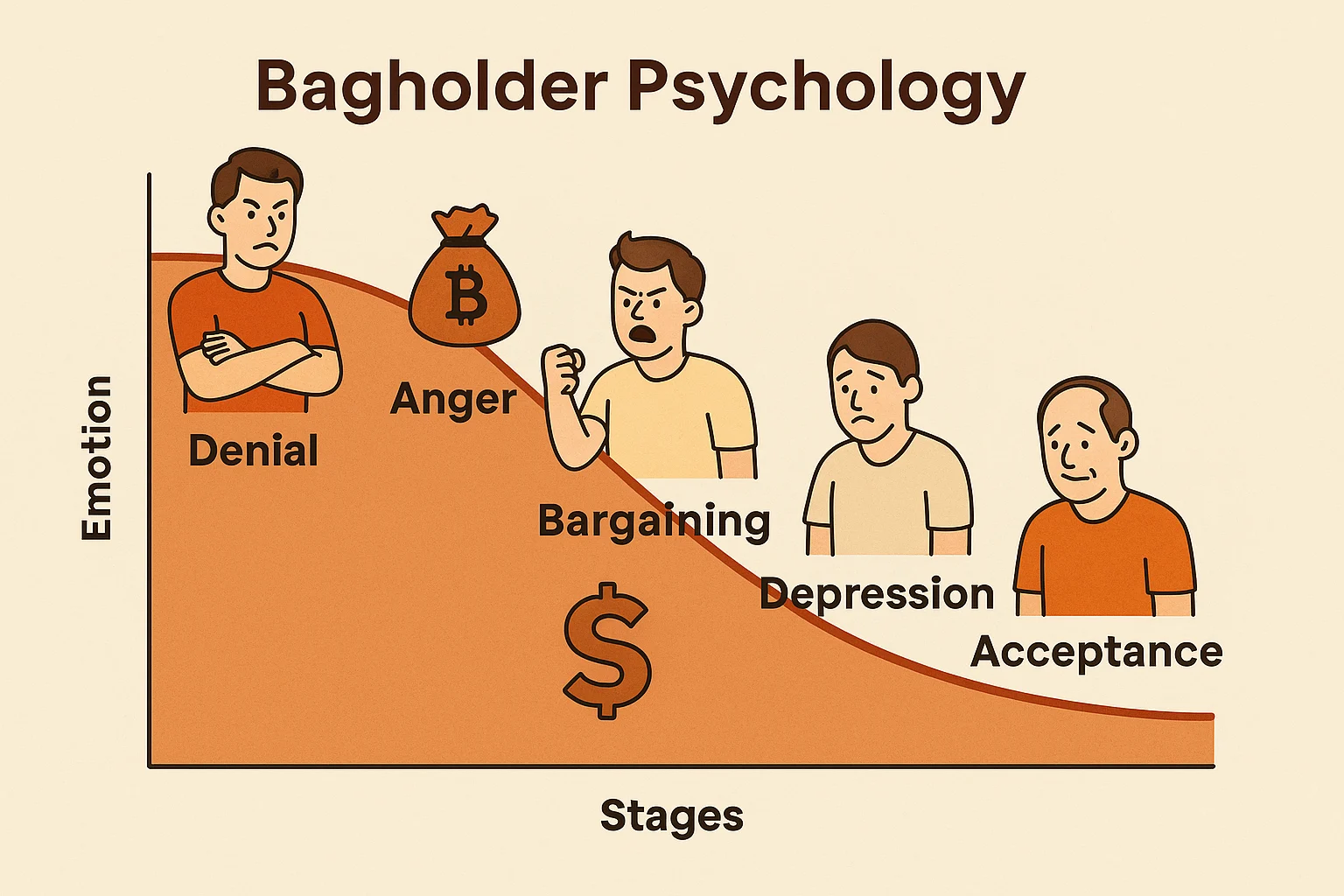
Infographic showing the emotional stages of a bagholder from denial to acceptance, illustrated with a descending curve and character expressions

Real-World Examples

  • ICO token holders from 2017-2018 who bought projects that never delivered working products
  • Terra Luna investors who held through the algorithmic stablecoin collapse
  • Various DeFi token holders who believed in projects that got abandoned or exploited

Why Beginners Should Care

Cutting losses is often the smart financial decision, but psychological factors make it difficult to admit mistakes and move on to better opportunities.

Opportunity cost of bagholding means missing other investments while holding depreciating assets that may never recover their previous values.

Tax strategies can make bagholding rational in some cases where realizing losses provides tax benefits that offset portfolio optimization concerns.

Related Terms: FOMO, Paper Hands, Sunk Cost, Exit Strategy

Back to Crypto Glossary

Similar Posts

  • Virtual Real Estate

    Virtual Real Estate: Digital Land OwnershipVirtual real estate refers to owning digital land parcels in metaverse worlds and virtual environments. It's like buying property in video game worlds that have real economic value.Virtual real estate consists of digital land parcels, buildings, or spaces within virtual worlds that can be owned, developed, and traded as NFTs. These…

  • Single-Sided Staking

    Single-Sided Staking: Simplified Yield Farming Single-sided staking lets you earn yield on individual tokens without providing liquidity pairs or facing impermanent loss. It’s like earning interest on a savings account without loan risk. Single-sided staking allows users to stake individual tokens to earn rewards without needing to provide paired assets or manage liquidity pool positions….

  • Metadata

    Metadata: Data About DataMetadata provides information about other data, such as describing what an NFT represents, when it was created, or what properties it has. It's like the label on a file folder that tells you what's inside.Metadata refers to descriptive information about digital assets, transactions, or other data that provides context, properties, and characteristics…

  • Profit Taking

    Profit Taking: Realizing Investment GainsProfit taking involves selling cryptocurrency holdings to lock in gains and convert unrealized profits into actual cash or other assets. It's like cashing out your casino chips while you're ahead.Profit taking refers to the strategic sale of cryptocurrency positions to realize gains and reduce exposure when investments have appreciated in value. This…

  • Gas Refund Token

    Gas Refund Token: Optimizing Transaction Costs Gas refund tokens exploit Ethereum’s gas refund mechanism to reduce transaction costs by clearing unused storage. They’re like getting paid to clean up the blockchain. A gas refund token uses Ethereum’s gas refund mechanism to partially offset transaction costs by clearing unused contract storage during token transfers. The protocol…

  • Payment Channel

    Payment Channel: Off-Chain Transaction RoutingPayment channels enable fast, cheap cryptocurrency transactions between parties without recording every transaction on the blockchain. They're like running a tab at a restaurant instead of paying for each item separately.A payment channel is an off-chain mechanism that allows two parties to conduct multiple cryptocurrency transactions without broadcasting each one to…