
Multi-Chain

Multi-Chain: Using Multiple Blockchain Networks

Multi-chain refers to applications, strategies, or ecosystems that operate across multiple different blockchain networks simultaneously. It’s like being multilingual in the blockchain world.

Multi-chain describes systems that utilize multiple different blockchain networks rather than being limited to a single chain. This approach leverages the unique strengths of different blockchains while diversifying risks and expanding capabilities.

How Multi-Chain Works

Cross-chain integration enables applications to operate on multiple blockchains, accessing different user bases, liquidity sources, and technological capabilities.

Bridge infrastructure connects different blockchain networks, allowing assets and data to move between chains through various technical mechanisms.

Strategic diversification spreads risks and opportunities across multiple networks rather than depending entirely on one blockchain’s success or failure.
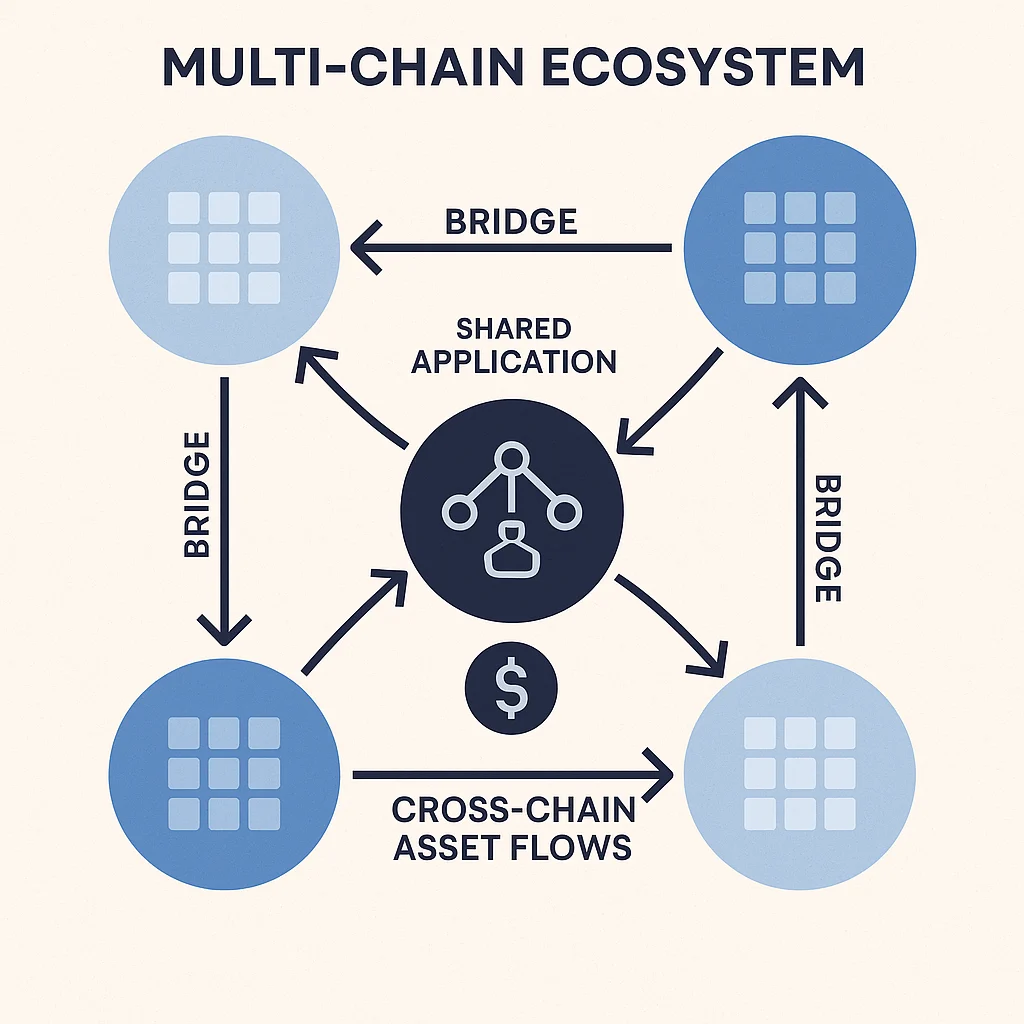
Infographic showing multi-chain ecosystem with interconnected blockchain networks, bridges, shared applications, and cross-chain asset flows

Real-World Examples

  • Aave operates lending markets on Ethereum, Polygon, Avalanche, and other networks
  • Uniswap has deployed on multiple chains to access different user communities
  • USDC stablecoin exists natively on over 15 different blockchain networks

Why Beginners Should Care

Diversified exposure reduces risks from any single blockchain network experiencing technical problems, regulatory issues, or adoption challenges.

Expanded opportunities as different chains offer unique applications, lower fees, or better performance for specific use cases.

Complexity management since multi-chain strategies require understanding multiple networks, bridge risks, and cross-chain coordination challenges.

Related Terms: Cross-Chain, Bridge, Interoperability, Chain Abstraction

Back to Crypto Glossary

Similar Posts

  • Appchain

    Appchain: Application-Specific Blockchains Appchains are blockchains designed for single applications or use cases rather than general-purpose smart contracts. They’re like having a dedicated highway for one type of vehicle instead of mixed traffic. An appchain is a blockchain optimized for a specific application or use case rather than supporting general-purpose smart contracts. This specialization enables…

  • Asset Rehypothecation

    Asset Rehypothecation: Reusing Collateral for Multiple PurposesAsset rehypothecation involves using the same collateral for multiple financial purposes simultaneously. It's like using your house as collateral for multiple loans at the same time.Asset rehypothecation refers to the practice of using deposited or pledged assets as collateral for additional financial activities beyond their original purpose. This can multiply…

  • Light Client

    Light Client: Lightweight Blockchain AccessA light client provides blockchain access without downloading the entire blockchain history. It's like having a summary instead of reading the entire encyclopedia.A light client is a blockchain node that maintains network connectivity and basic functionality without storing the complete blockchain history or state. This enables resource-constrained devices to participate in blockchain…

  • Preconfirmation (Pre-confirm)

    Preconfirmation (Pre-confirm): Faster Transaction Guarantees Preconfirmations provide early guarantees that transactions will be included in upcoming blocks before final confirmation. It’s like getting a reservation confirmation before the restaurant officially opens. Preconfirmation is a mechanism where validators or sequencers provide early commitments to include specific transactions in future blocks. This reduces user-perceived latency by providing…

  • Two Way Peg

    Two Way Peg: Bidirectional Asset TransferA two-way peg enables moving assets between different blockchain networks in both directions while maintaining value equivalence. It's like having a currency exchange that works both ways between different countries.A two-way peg is a mechanism that allows assets to move freely between two blockchain networks while maintaining equivalent value on…

  • Decentralized Identity (DID)

    Decentralized Identity (DID): Self-Sovereign Digital Identity DIDs give users control over their digital identity without relying on centralized authorities like governments or tech companies. It’s like having a passport that you issue and control yourself. Decentralized Identity (DID) is a digital identity framework that gives individuals control over their personal data and identity verification without…